ꯔꯨꯂꯦꯠ ꯆꯛꯔꯒꯤ ꯐꯤꯖꯤꯛꯁ
ꯔꯨꯂꯦꯠ ꯆꯛꯔꯒꯤ ꯐꯤꯖꯤꯛꯁ ꯍꯥꯌꯕꯁꯤ ꯔꯣꯇꯔ ꯑꯃꯥ, ꯅꯥꯛꯂꯕ ꯇ꯭ꯔꯦꯛ ꯑꯃꯗ ꯂꯩꯕ ꯕꯣꯜ ꯑꯃꯥ, ꯗꯤꯐ꯭ꯂꯦꯛꯇꯔ ꯅꯤꯄꯥꯟ ꯑꯃꯁꯨꯡ ꯌꯥꯝꯅ ꯆꯥꯎꯕ ꯐ꯭ꯔꯤꯛꯁꯟꯗ ꯂꯣꯏꯁꯤꯜꯂꯤ꯫

The ball slows on the track, moves inward and collides with deflectorsꯈꯨꯠꯂꯥꯏꯗꯤꯐ꯭ꯂꯦꯛꯇꯔꯇꯥꯗ꯭ꯔꯤꯕ ꯕꯣꯜ ꯑꯗꯨ ꯁꯟꯗꯣꯛꯍꯟꯕ ꯑꯦꯞꯔꯅꯗ ꯂꯩꯕ ꯃꯦꯇꯦꯂꯒꯤ ꯑꯊꯤꯡꯕꯁꯤꯡꯒꯤ ꯃꯅꯨꯡꯗ ꯑꯃꯥ꯫ ꯑꯇꯣꯞꯄ ꯃꯃꯤꯡ: ꯀꯦꯅꯨ, ꯗꯥꯏꯃꯟꯗ, ꯄꯤꯟ꯫ꯃꯄꯨꯡ ꯄꯥꯕꯤꯌꯨ → and pocket dividers. Those stages follow mechanics, but useful prediction requires measurements and a model that works under the actual conditions.
ꯐꯦꯖ ꯑꯍꯨꯝ
First the ballꯈꯨꯠꯂꯥꯏꯕꯣꯜꯔꯣꯇꯔꯒꯤ ꯃꯥꯌꯣꯛꯇ ꯇ꯭ꯔꯦꯛꯇ ꯊꯥꯗꯣꯛꯄ ꯑꯄꯤꯛꯄ ꯕꯣꯜ꯫ ꯍꯧꯖꯤꯛꯀꯤ ꯕꯣꯜꯁꯤꯡ ꯑꯥꯏꯚꯣꯔꯤꯟ ꯅꯠꯔꯒ ꯇꯦꯐ꯭ꯂꯣꯅꯅ ꯁꯦꯝꯃꯤ, 18–21 mm꯫ꯃꯄꯨꯡ ꯄꯥꯕꯤꯌꯨ → travels around the track. It then leaves the rim and moves toward the rotorꯈꯨꯠꯂꯥꯏꯔꯣꯇꯔꯄꯣꯀꯦꯠꯁꯤꯡ ꯄꯨꯔꯛꯄ ꯆꯛꯔꯒꯤ ꯀꯣꯏꯕ ꯁꯔꯨꯛ꯫ꯃꯄꯨꯡ ꯄꯥꯕꯤꯌꯨ →. Finally, collisions and rebounds determine where it settles. Splitting a spin into these stages helps explain it, but does not make the last stage physically random or wholly unpredictable.
ꯕꯣꯜ ꯑꯁꯤ ꯃꯄꯥꯟꯒꯤ ꯇ꯭ꯔꯦꯛꯇ ꯀꯣꯏꯅ ꯆꯠꯂꯤ꯫
ꯊꯤꯡꯕꯅ ꯃꯔꯝ ꯑꯣꯏꯗꯨꯅ ꯏꯅꯔꯖꯤ ꯃꯥꯡꯏ꯫
ꯕꯣꯜ ꯑꯁꯤ ꯃꯊꯛꯀꯤ ꯃꯃꯥꯏꯗꯒꯤ ꯃꯅꯨꯡ ꯊꯪꯅ ꯆꯠꯂꯛꯏ꯫
ꯗꯤꯐ꯭ꯂꯦꯛꯇꯔꯁꯤꯡ ꯑꯃꯁꯨꯡ ꯈꯥꯌꯗꯣꯛꯂꯤꯕꯁꯤꯡꯅ ꯃꯁꯤꯒꯤ ꯆꯠꯄ ꯍꯣꯡꯍꯜꯂꯤ꯫
ꯕꯣꯜ ꯑꯁꯤ ꯄꯣꯀꯦꯠ ꯑꯃꯗ ꯂꯦꯞꯂꯛꯏ꯫
ꯇ꯭ꯔꯦꯛ
A circular path requires inward acceleration v²/r. The contact forces depend on the track geometry and the ball’s motion. In an ideal level conical-track model, the departure threshold is v² = rg tan(α), with slope angle α measured from horizontal. Real geometry, tilt and losses can complicate that approximation.
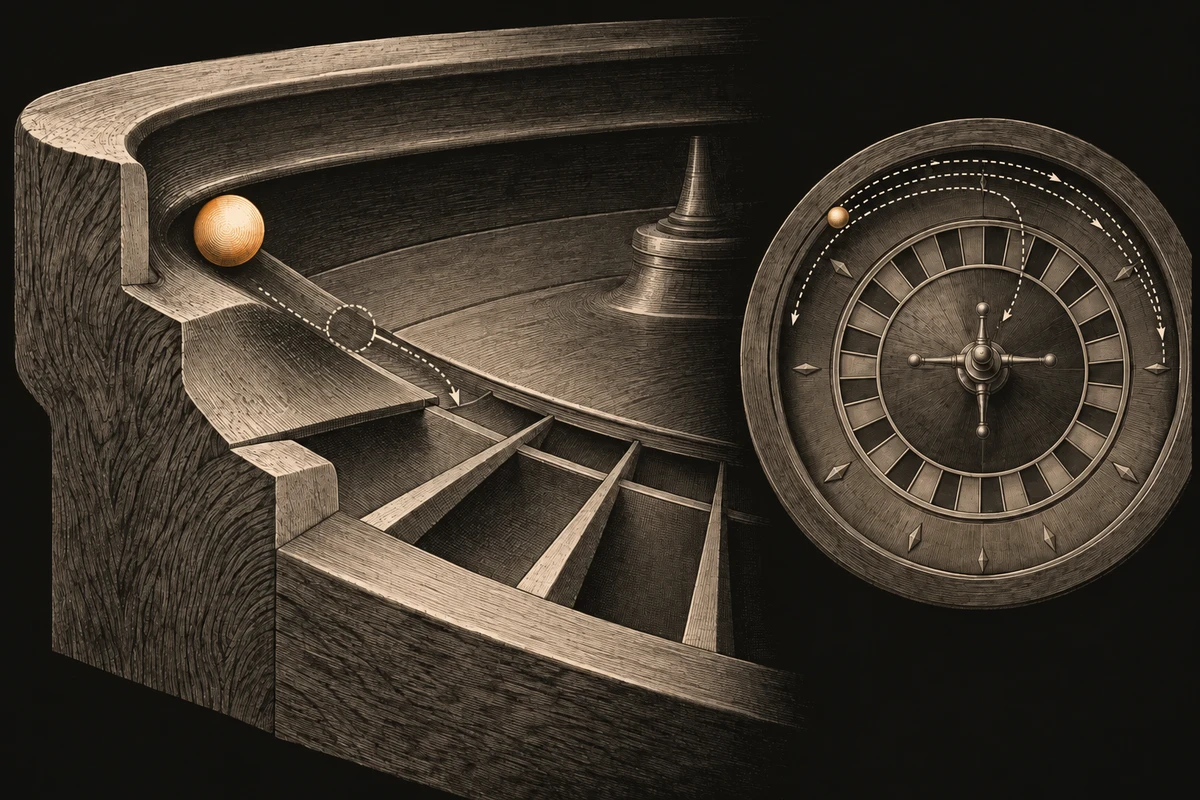
ꯔꯣꯇꯔ
If a 37-pocketꯈꯨꯠꯂꯥꯏꯄꯣꯀꯦꯠꯔꯣꯇꯔꯗ ꯂꯩꯕ ꯃꯁꯤꯡ ꯏꯔꯕ ꯀꯣꯠ 37 ꯒꯤ ꯃꯅꯨꯡꯗ ꯑꯃꯥ꯫ ꯑꯇꯣꯞꯄ ꯃꯃꯤꯡ: ꯁ꯭ꯂꯣꯠ, ꯀꯞ꯫ꯃꯄꯨꯡ ꯄꯥꯕꯤꯌꯨ → rotor turns at 0.4 revolutions per second, 14.8 pockets pass a fixed point each second. A 0.1-second timing error then corresponds to 1.48 pocket widths of rotor motion. This is an illustrative conversion, not a measured accuracy claim.
ꯗꯤꯐ꯭ꯂꯦꯛꯇꯔꯁꯤꯡ ꯑꯃꯁꯨꯡ ꯐ꯭ꯔꯦꯠꯁꯤꯡ
Collisions can amplify small differences in position, velocity or contact angle. The resulting scatter should be measured for the equipment and conditions of interest. Neither a universal 10-to-15-pocket spread nor a symmetric distribution can be assumed without data.
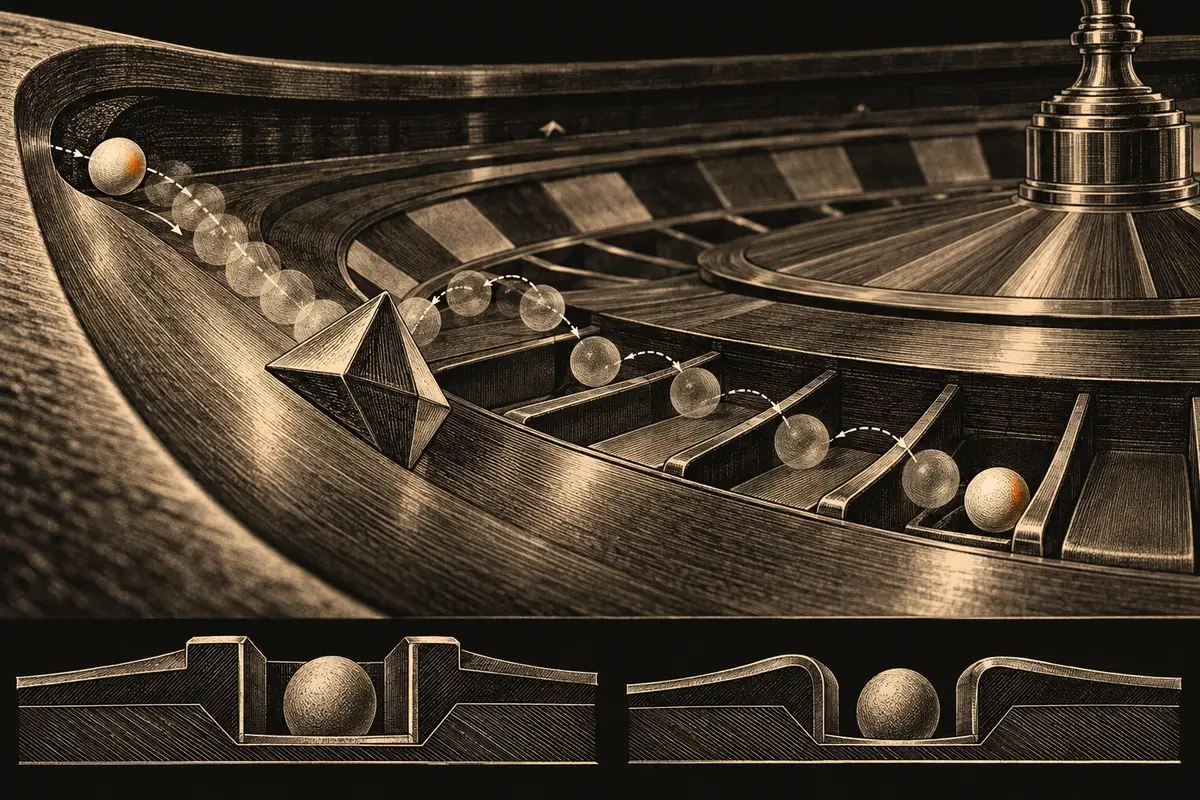
ꯐꯤꯖꯤꯛꯁꯅ ꯔꯨꯂꯦꯠ ꯃꯥꯏꯊꯤꯕ ꯄꯤꯕꯅ ꯑꯣꯗꯁ ꯀꯔꯤꯒꯤ ꯈꯔꯈꯛ ꯍꯣꯡꯗꯣꯛꯂꯤꯕꯅꯣ
The size of any predictive advantage is not fixed. Small and Tse’s 2012 experiment reports 13 successful target-half predictions in 22 trials, corresponding to an 18% sample return under their stated calculation. That small experiment is not a universal casino edge or a guarantee that a player can reproduce it.
ꯃꯊꯪꯗ ꯀꯗꯥꯏꯗ ꯆꯠꯀꯗꯒꯦ
ꯔꯨꯂꯦꯠ ꯆꯛꯔꯒꯤ ꯐꯤꯖꯤꯛꯁ ꯑꯁꯤ ꯕꯣꯜꯒꯤ ꯐꯤꯖꯤꯛꯁ, ꯊꯨꯅꯥ ꯍꯟꯊꯕ, ꯔꯣꯇꯔꯒꯤ ꯊꯨꯅꯥ ꯑꯃꯁꯨꯡ ꯕꯣꯜꯒꯤ ꯊꯨꯅꯥꯒꯤ ꯂꯃꯥꯏꯁꯤꯡꯗ ꯈꯥꯌꯗꯣꯛꯂꯤ, ꯃꯈꯣꯌꯅ ꯐꯦꯖ ꯈꯨꯗꯤꯡꯃꯛ ꯊꯥꯖꯕꯒ ꯂꯣꯌꯅꯅ ꯃꯊꯪ ꯃꯊꯪꯗ ꯇꯥꯛꯂꯤ꯫ ꯑꯦꯗꯚꯥꯟꯇꯦꯖ ꯄ꯭ꯂꯦꯒꯤ ꯂꯃꯥꯏꯗ ꯃꯤꯁꯤꯡꯅ ꯃꯈꯣꯌ ꯑꯁꯤꯅ ꯀꯔꯤ ꯇꯧꯈꯤꯕꯒꯦ ꯑꯃꯁꯨꯡ ꯀꯔꯤ ꯊꯣꯀꯈꯤꯕꯒꯦ ꯍꯥꯌꯕꯗꯨ ꯌꯥꯎꯏ꯫
ꯋꯥꯍꯪꯁꯤꯡ
ꯄꯣꯀꯦꯠ ꯑꯃꯥ ꯐꯥꯑꯣꯕ ꯉꯝꯗꯦ; ꯊꯥꯗꯣꯛꯄ ꯑꯗꯨ ꯌꯥꯝꯅ ꯄꯥꯛꯂꯤ꯫ ꯌꯥꯝꯅ ꯆꯨꯃꯊꯣꯛꯅ ꯇꯧꯔꯕꯗ ꯁꯦꯛꯇꯔ ꯑꯃꯥ ꯐꯥꯑꯣꯕ ꯌꯥꯔꯕꯥ ꯌꯥꯏ, ꯃꯁꯤ ꯗꯤꯂꯔꯒꯤ ꯁꯥꯏꯅꯦꯆꯔꯒꯤ ꯍꯥꯏꯄꯣꯊꯤꯁꯤꯁꯅꯤ꯫
ꯆꯍꯤꯆꯥ 19 ꯗꯒꯤ ꯍꯧꯔꯒ ꯂꯩꯔꯤꯕ ꯆꯠꯅꯕꯤꯅꯤ꯫ ꯍꯟꯊꯔꯕꯗ ꯊꯥꯗꯣꯛꯄ ꯍꯟꯊꯒꯅꯤ; ꯍꯦꯅꯒꯠꯂꯕꯗ ꯑꯦꯞꯔꯟ ꯑꯗꯨ ꯄꯤꯟꯕꯣꯜ ꯃꯦꯁꯤꯟ ꯑꯃꯥ ꯑꯣꯏꯔꯛꯀꯅꯤ꯫ ꯃꯥꯏꯀꯩ ꯍꯣꯡꯗꯨꯅ ꯊꯝꯕ ꯅꯤꯄꯥꯟ ꯑꯁꯤ ꯆꯠꯅꯕꯤꯒꯤ ꯃꯔꯛꯇꯒꯤ ꯈꯅꯈꯤꯕꯅꯤ꯫
ꯂꯩ, ꯇ꯭ꯔꯦꯀꯀꯤ ꯐ꯭ꯔꯤꯛꯁꯟꯗ; ꯃꯔꯝ ꯑꯗꯨꯅ ꯈꯪꯖꯤꯅꯕꯒꯤ ꯈꯨꯠꯂꯥꯏꯁꯤꯡꯅ ꯁ꯭ꯄꯤꯟ ꯈꯔ ꯈꯨꯗꯤꯡꯗ ꯑꯃꯨꯛ ꯍꯟꯅꯥ ꯀꯦꯂꯤꯕ꯭ꯔꯦꯠ ꯇꯧꯏ ꯑꯃꯁꯨꯡ ꯆꯛꯔ ꯑꯃꯈꯛ ꯑꯗꯨꯅ ꯅꯨꯃꯤꯠ ꯇꯣꯉꯥꯟ ꯇꯣꯉꯥꯟꯗ ꯇꯣꯉꯥꯟꯅ ꯆꯠꯂꯤ꯫
ꯅꯣꯛꯅꯕꯒꯤ ꯀꯃꯤꯛ
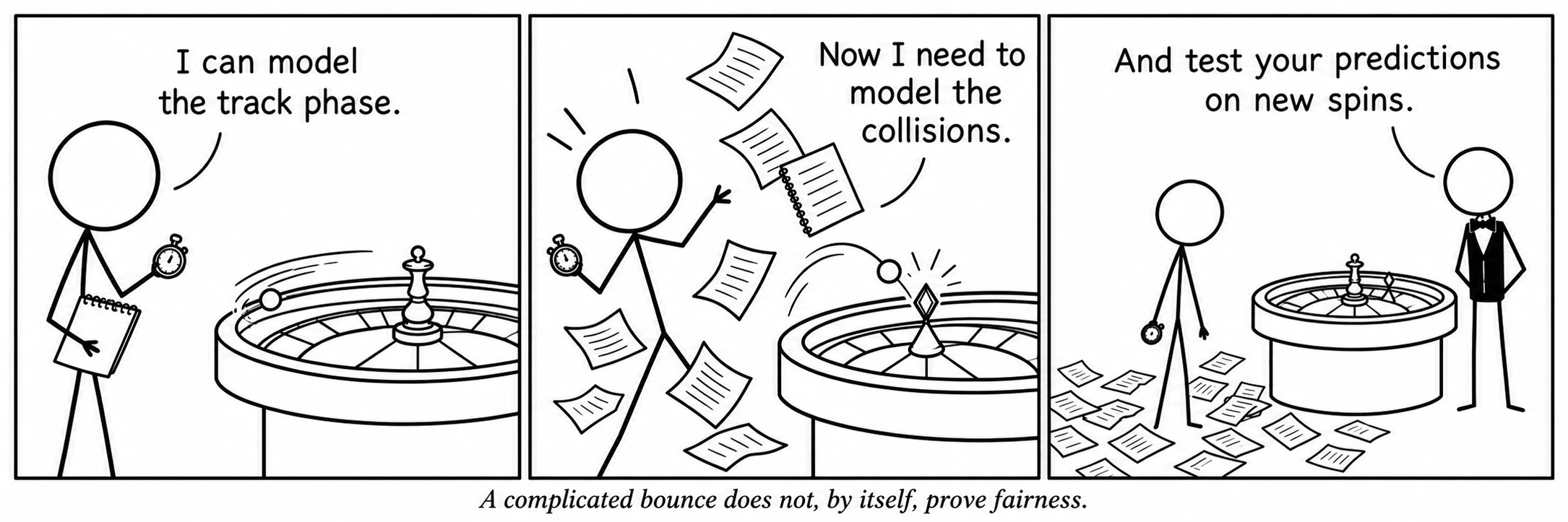
ꯑꯍꯥꯅꯕ ꯗꯤꯐ꯭ꯂꯦꯛꯇꯔ ꯐꯥꯑꯣꯕ ꯈꯪꯖꯤꯅꯕ ꯌꯥꯏ꯫ ꯃꯇꯨꯡꯗ ꯐꯤꯖꯤꯛꯁꯅ ꯀꯦꯁꯤꯅꯣꯒꯤ ꯃꯥꯏꯀꯩ ꯂꯧꯏ꯫
ꯍꯧꯔꯛꯐꯃꯁꯤꯡ
- Small, M. & Tse, C. K. “Predicting the outcome of roulette.”
- Bass, T. A. The Eudaemonic Pie.