ꯈꯣꯡꯊꯥꯡ ꯈꯣꯡꯊꯥꯡ: ꯁꯦꯛꯇꯔ ꯑꯃꯗ ꯕꯦꯠ ꯊꯝꯕ
Five $2 chips cover 17 and its two neighbors on each side. A fifty-spin worked example shows the result of seven hits.
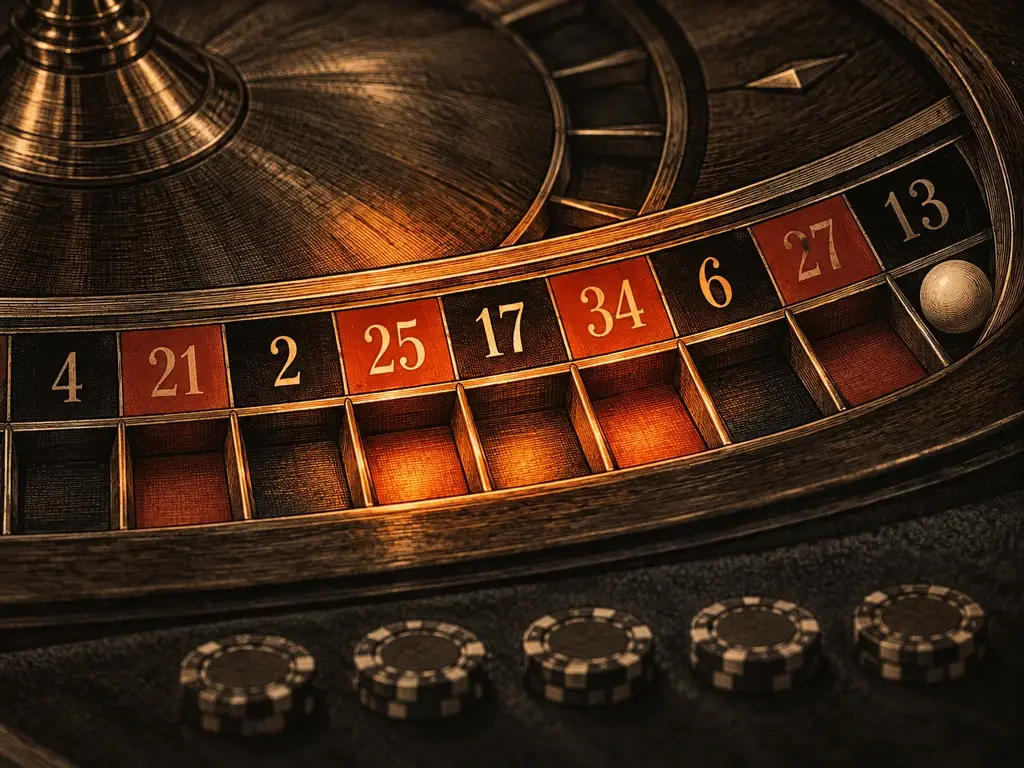
The selected five-pocketꯈꯨꯠꯂꯥꯏꯄꯣꯀꯦꯠꯔꯣꯇꯔꯗ ꯂꯩꯕ ꯃꯁꯤꯡ ꯏꯔꯕ ꯀꯣꯠ 37 ꯒꯤ ꯃꯅꯨꯡꯗ ꯑꯃꯥ꯫ ꯑꯇꯣꯞꯄ ꯃꯃꯤꯡ: ꯁ꯭ꯂꯣꯠ, ꯀꯞ꯫ꯃꯄꯨꯡ ꯄꯥꯕꯤꯌꯨ → arc is 2–25–17–34–6 on a European wheel. Seven hits and 43 misses at $10 total per spin produce a $4 gain. With fixed stakes and no early stop, the final total depends on the hit count, not the order of those hits.
ꯊꯧꯔꯥꯡ
Use a standard single-zeroꯆꯛꯔꯖꯤꯔꯣꯆꯞ ꯃꯥꯟꯅꯕ, ꯗꯖꯟ ꯅꯠꯔꯒ ꯀꯂꯝ ꯕꯦꯠ ꯑꯃꯠꯇꯅ ꯀꯨꯞꯇꯕ ꯑꯁꯪꯕ ꯄꯣꯀꯦꯠ ꯑꯃꯈꯛꯇ; ꯍꯥꯎꯁ ꯑꯦꯖꯀꯤ ꯍꯧꯔꯀꯐꯝꯅꯤ꯫ ꯑꯇꯣꯞꯄ ꯃꯃꯤꯡ: ꯁꯤꯡꯒꯜ ꯖꯤꯔꯣ, 0꯫ꯃꯄꯨꯡ ꯄꯥꯕꯤꯌꯨ → wheel and place $2 on each of 2, 25, 17, 34 and 6. This is 17 with two neighborsꯕꯦꯠꯌꯨꯝꯂꯣꯟꯅꯕ ꯕꯦꯠꯆꯛꯔꯗ ꯃꯁꯤꯡ ꯑꯃꯥ ꯑꯃꯁꯨꯡ ꯃꯗꯨꯒꯤ ꯅꯥꯀꯜ ꯑꯅꯤꯃꯛꯇ ꯂꯩꯕ ꯄꯣꯀꯦꯠ ꯑꯅꯤ ꯑꯅꯤ, ꯁ꯭ꯇ꯭ꯔꯦꯠ-ꯑꯞ ꯆꯤꯞ ꯃꯉꯥ꯫ꯃꯄꯨꯡ ꯄꯥꯕꯤꯌꯨ → on each side in the European wheel order. A hit wins $70 on one chipꯁꯦꯜꯆꯤꯞꯂꯦꯞꯂꯕ ꯁꯦꯜꯒꯤ ꯃꯃꯜ ꯇꯥꯛꯄ ꯇꯣꯀꯟ, ꯕꯦꯠ ꯊꯝꯅꯕ ꯂꯦꯑꯥꯎꯠꯇ ꯊꯝꯃꯤ꯫ ꯑꯇꯣꯞꯄ ꯃꯃꯤꯡ: ꯆꯦꯛ꯫ꯃꯄꯨꯡ ꯄꯥꯕꯤꯌꯨ → and loses $8 on the other four, for +$62 net. A miss loses $10. Hit probabilityꯃꯦꯊꯃꯦꯇꯤꯛꯁꯊꯣꯛꯄꯒꯤ ꯈꯨꯗꯣꯡꯆꯥꯕꯃꯍꯩ ꯑꯃꯥ ꯊꯣꯛꯄꯒꯤ ꯈꯨꯗꯣꯡꯆꯥꯕ, 0 ꯗꯒꯤ 1 ꯐꯥꯑꯣꯕ ꯅꯠꯔꯒ 0% ꯗꯒꯤ 100% ꯐꯥꯑꯣꯕ꯫ ꯃꯁꯤꯡ ꯑꯃꯥ: 1/37 = 2.70%꯫ꯃꯄꯨꯡ ꯄꯥꯕꯤꯌꯨ → is 5/37, about 13.51%. Check the table’s chip and minimum-bet rules before assuming these denominations are allowed.
ꯁ꯭ꯄꯤꯟ 1–15
The example starts with twelve misses, then hits 34 on spin 13 and misses on spins 14–15. Net after fifteen spins: $62 − 14×$10 = −$78. A particular twelve-spin run of misses has probability (32/37)¹², about 17.51%. This does not mean a hit is due next.
ꯁ꯭ꯄꯤꯟ 16–50
The other hits are 17 on spin 18, 2 on spin 23, 17 on spin 28, 6 on spin 35, 25 on spin 42 and 17 on spin 48. All other spins miss the sectorꯆꯛꯔꯁꯦꯛꯇꯔꯆꯛꯔꯗ ꯃꯔꯛ ꯂꯩꯇꯅ ꯃꯈꯥ ꯆꯠꯅꯅ ꯂꯩꯕ ꯄꯣꯀꯦꯠꯁꯤꯡꯒꯤ ꯁꯔꯨꯛ, ꯂꯦꯑꯥꯎꯠꯇ ꯂꯩꯕ ꯀꯥꯡꯂꯨꯞ ꯑꯃꯗꯒꯤ ꯇꯣꯉꯥꯟꯅ꯫ꯃꯄꯨꯡ ꯄꯥꯕꯤꯌꯨ →. Seven hits earn $434 and 43 misses lose $430, leaving +$4. Moving the same seven hits to other positions would change the path but not this fixed-stake final total, provided all fifty bets could still be placed.
ꯀꯔꯤꯒꯤ ꯁꯦꯛꯇꯔ
Total wagered: 50 × $10 = $500. Actual example result: +$4. For that fixed number of independent bets at the same stakes, expected result is −$13.51. The expected result is an average over possible sequences, not a fee deducted from this particular balance.
ꯕꯥꯏꯌꯥꯁ ꯁꯥꯟꯅꯔꯤꯕ ꯑꯃꯅ ꯈꯦꯟꯅꯅ ꯇꯧꯔꯃꯒꯗꯕ
The arc matters as a way to select numbers, not as an automatic advantage. On an independent uniform wheel, any five distinct numbers have the same payoutꯁꯦꯜꯄꯦꯑꯥꯎꯠꯃꯥꯏꯄꯥꯛꯄ ꯕꯦꯠ ꯑꯃꯅ ꯍꯜꯂꯛꯄ ꯁꯦꯜ, ꯍꯜꯂꯀꯄ ꯊꯝꯂꯕ ꯁꯦꯜꯒꯤ ꯃꯊꯛꯇ “X ꯗꯒꯤ 1” ꯍꯥꯌꯅ ꯍꯥꯌꯏ꯫ꯃꯄꯨꯡ ꯄꯥꯕꯤꯌꯨ → distribution at equal stakes. Seven hits in fifty spins are close to the expected 250/37, about 6.76, and do not establish a profitable bias. Testing a suspected physical bias requires a specified method, sufficient data and independent validation; there is no universal spin count that proves it.
ꯋꯥꯍꯪꯁꯤꯡ
ꯆꯛꯔ ꯑꯗꯨ ꯁꯔꯨꯛ ꯑꯗꯨꯗ ꯕꯥꯏꯌꯥꯁ ꯂꯩꯗ꯭ꯔꯕꯗꯤ ꯃꯥꯟꯅꯩ, ꯑꯃꯁꯨꯡ ꯃꯗꯨ ꯈꯉꯅꯕꯒꯤꯗꯃꯛ ꯁ꯭ꯄꯤꯟ ꯂꯤꯁꯤꯡ ꯀꯌꯥ ꯃꯊꯧ ꯇꯥꯏ꯫
With fifty fixed $10 bets, expected result is −$500/37, about −$13.51. The standard deviationꯃꯦꯊꯃꯦꯇꯤꯛꯁꯁ꯭ꯇꯦꯟꯗꯔꯗ ꯗꯤꯚꯤꯌꯦꯁꯟꯚꯦꯌꯔꯤꯌꯦꯟꯁꯀꯤ ꯁ꯭ꯀ꯭ꯋꯦꯌꯔ ꯔꯨꯠ; ꯃꯍꯩ ꯑꯃꯅ ꯐꯪꯒꯗꯕ ꯃꯃꯜꯗꯒꯤ ꯌꯥꯝꯅ ꯂꯥꯞꯄ ꯃꯑꯣꯡ꯫ꯃꯄꯨꯡ ꯄꯥꯕꯤꯌꯨ → is about $174.05. These describe a distribution, not a promised result.
That covers seven distinct pockets with seven equal straight-up chips. The hit probability is 7/37, about 18.92%. At the same total stake it has lower varianceꯃꯦꯊꯃꯦꯇꯤꯛꯁꯚꯦꯌꯔꯤꯌꯦꯟꯁꯃꯍꯩꯁꯤꯡ ꯐꯪꯒꯗꯕ ꯃꯃꯂꯒꯤ ꯑꯀꯣꯌꯕꯗ ꯀꯌꯥ ꯁꯟꯗꯣꯛꯅ ꯂꯩꯕꯒꯦ ꯍꯥꯌꯕꯒꯤ ꯆꯥꯡ꯫ ꯁ꯭ꯇ꯭ꯔꯦꯠ-ꯑꯞꯇ ꯋꯥꯡꯏ, ꯆꯞ ꯃꯥꯟꯅꯕ ꯕꯦꯠꯁꯤꯡꯗ ꯅꯦꯝꯏ꯫ꯃꯄꯨꯡ ꯄꯥꯕꯤꯌꯨ → than five-pocket coverage; at the same chip size it also costs more per spin.
ꯅꯣꯛꯅꯕꯒꯤ ꯀꯃꯤꯛ
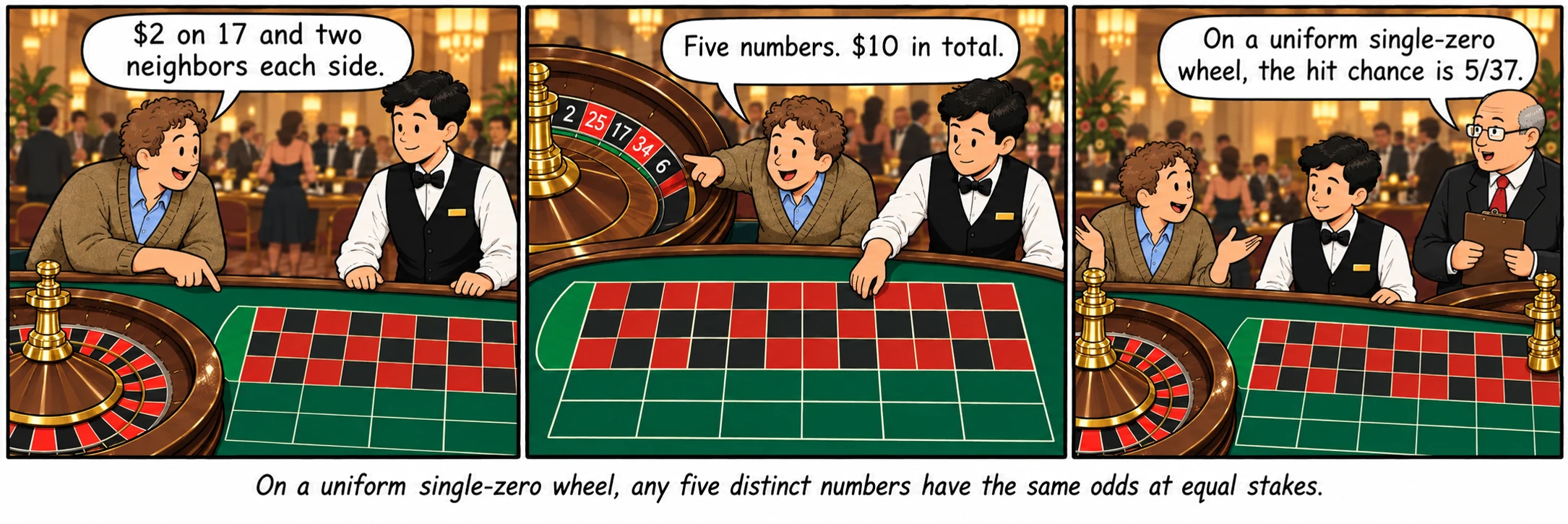
ꯋꯥꯔꯤ ꯑꯃꯥ ꯂꯩꯕ ꯁ꯭ꯇ꯭ꯔꯦꯠ-ꯑꯞ ꯃꯉꯥ꯫ ꯆꯛꯔꯅ ꯄꯥꯗꯦ꯫
ꯍꯧꯔꯛꯐꯃꯁꯤꯡ
- Barnhart, R. T. Beating the Wheel.
- Ethier, S. N. The Doctrine of Chances: Probabilistic Aspects of Gambling.