ꯈꯣꯡꯊꯥꯡ ꯈꯣꯡꯊꯥꯡ: ꯄꯥꯔꯣꯂꯤ ꯆꯠꯄ ꯑꯃꯥ
Ten dollars on black, doubled after a win and reset after three wins or any loss. Follow the chipsꯁꯦꯜꯆꯤꯞꯂꯦꯞꯂꯕ ꯁꯦꯜꯒꯤ ꯃꯃꯜ ꯇꯥꯛꯄ ꯇꯣꯀꯟ, ꯕꯦꯠ ꯊꯝꯅꯕ ꯂꯦꯑꯥꯎꯠꯇ ꯊꯝꯃꯤ꯫ ꯑꯇꯣꯞꯄ ꯃꯃꯤꯡ: ꯆꯦꯛ꯫ꯃꯄꯨꯡ ꯄꯥꯕꯤꯌꯨ → through a worked example.
ꯁꯤꯃꯨꯂꯦꯠ ꯇꯧꯔꯕ ꯁ꯭ꯄꯤꯟ 80 ꯒꯤ ꯄꯥꯔꯣꯂꯤ ꯁꯦꯁꯟ ꯑꯃꯥ꯫ ꯑꯍꯥꯅꯕ ꯁ꯭ꯄꯤꯟꯗ ꯃꯥꯏꯊꯤꯕ ꯇꯔꯥꯍꯨꯝ, ꯌꯥꯎꯊꯣꯛꯂꯕ ꯆꯠꯄ 24, ꯑꯃꯁꯨꯡ ꯈꯨꯗꯤꯡꯗ $70 ꯄꯤꯈꯤꯕ ꯂꯣꯏꯁꯤꯅꯈꯤꯕ ꯑꯍꯨꯝ ꯑꯍꯨꯝ꯫ $50 ꯀꯥꯟꯅꯕꯒꯤ ꯃꯇꯨꯡꯗ ꯃꯍꯩ −$160꯫ ꯌꯥꯝꯅ ꯃꯥꯏꯊꯤꯕ ꯑꯃꯁꯨꯡ ꯈꯟꯅ ꯃꯥꯏꯄꯥꯛꯄ ꯁꯤꯁ꯭ꯇꯦꯝ, ꯍꯤꯁꯥꯕꯅ ꯍꯥꯌꯔꯤꯕ ꯃꯑꯣꯡ ꯑꯗꯨꯃꯛꯇ꯫
ꯁꯤꯁ꯭ꯇꯦꯝ ꯑꯗꯨꯗ ꯆꯠꯄ
ꯃꯥꯏꯄꯥꯛꯄ ꯑꯃꯅ ꯈꯣꯡꯊꯥꯡ ꯑꯃꯥ ꯃꯃꯥꯡꯗ ꯆꯠꯍꯜꯂꯤ꯫ ꯃꯥꯏꯊꯤꯕ ꯑꯃꯅ ꯅꯠꯔꯒ ꯑꯍꯨꯃꯁꯨꯕ ꯃꯥꯏꯄꯥꯛꯄ ꯑꯃꯅ ꯑꯍꯧꯕꯗ ꯍꯜꯂꯛꯍꯜꯂꯤ꯫
ꯊꯝꯂꯕ ꯁꯦꯜ ꯑꯃꯁꯨꯡ ꯃꯍꯩꯁꯤꯡ ꯑꯁꯤ ꯍꯧꯔꯛꯐꯃꯒꯤ ꯕꯦꯠꯀꯤ ꯌꯨꯅꯤꯠꯇꯅꯤ꯫
ꯊꯧꯔꯥꯡ
Use a standard single-zeroꯆꯛꯔꯖꯤꯔꯣꯆꯞ ꯃꯥꯟꯅꯕ, ꯗꯖꯟ ꯅꯠꯔꯒ ꯀꯂꯝ ꯕꯦꯠ ꯑꯃꯠꯇꯅ ꯀꯨꯞꯇꯕ ꯑꯁꯪꯕ ꯄꯣꯀꯦꯠ ꯑꯃꯈꯛꯇ; ꯍꯥꯎꯁ ꯑꯦꯖꯀꯤ ꯍꯧꯔꯀꯐꯝꯅꯤ꯫ ꯑꯇꯣꯞꯄ ꯃꯃꯤꯡ: ꯁꯤꯡꯒꯜ ꯖꯤꯔꯣ, 0꯫ꯃꯄꯨꯡ ꯄꯥꯕꯤꯌꯨ → wheel. Start with $10 on blackꯕꯦꯠꯑꯃꯨꯕꯑꯃꯨꯕ ꯃꯁꯤꯡ 18 ꯗ ꯊꯝꯕ ꯆꯞ ꯃꯥꯟꯅꯕ ꯕꯦꯠ꯫ ꯐ꯭ꯔꯦꯟꯆ: ꯅꯣꯌꯥꯔ꯫ꯃꯄꯨꯡ ꯄꯥꯕꯤꯌꯨ →, then stake $20 and $40 after consecutive wins. Reset to $10 after the third win or any loss. A completed attempt gains $70; a failed attempt loses $10 relative to its starting balance. Once winnings are paid, they are yours: losing a $40 stake is a real $40 drop from the balance just before that spin.
ꯁ꯭ꯄꯤꯟ 1–25
The selected results are R B B R R B R B B R B B R R B R 0 B B B B R B B R. B wins our black bet; R and 0 lose. The table shows the first part of that sequence. It is a worked example, not a forecast or a record from a casino.
ꯁ꯭ꯄꯤꯟ 26–55
The three blacks at spins 18–20 complete the only successful attempt. Spin 21 starts a fresh attempt; it does not extend the earlier one. Across all 25 spins, the twelve attempts consist of four first-spin losses, three second-spin losses, four third-spin losses and one completed triple.
ꯁꯦꯟꯒꯤ ꯍꯤꯁꯥꯕ
The ledger totals $480 wagered and −$40 net, leaving $960 from a $1,000 starting balance. At each spin, the expected lossꯃꯦꯊꯃꯦꯇꯤꯛꯁꯃꯥꯡꯒꯗꯕ ꯁꯦꯜꯐꯪꯒꯗꯕ ꯃꯃꯂꯕꯨ ꯕꯦꯠ ꯊꯝꯂꯕ ꯁꯦꯜ ꯄꯨꯝꯅꯃꯛꯅ ꯃꯅꯥꯡꯕ; ꯁꯦꯁꯟ ꯅꯠꯔꯒ ꯃꯇꯝ ꯑꯃꯒꯤ ꯃꯅꯨꯡꯗ ꯃꯥꯡꯕ ꯑꯦꯚꯔꯦꯖ ꯁꯦꯜ꯫ꯃꯄꯨꯡ ꯄꯥꯕꯤꯌꯨ → under these standard single-zero rules is the stake divided by 37. Because later bets or stopping can depend on earlier results, expected session loss depends on expected total turnoverꯁꯦꯜꯇꯔꯅꯑꯣꯚꯔꯁꯦꯁꯟ ꯅꯠꯔꯒ ꯃꯇꯝ ꯑꯃꯒꯤ ꯃꯅꯨꯡꯗ ꯕꯦꯠ ꯊꯝꯂꯕ ꯁꯦꯜ ꯄꯨꯝꯅꯃꯛ, ꯑꯃꯨꯛ ꯍꯟꯅꯥ ꯊꯝꯂꯕ ꯃꯥꯏꯄꯥꯛꯇꯨꯅ ꯐꯪꯂꯕ ꯁꯦꯜꯁꯨ ꯌꯥꯎꯅ꯫ ꯑꯇꯣꯞꯄ ꯃꯃꯤꯡ: ꯍꯦꯟꯗꯜ, ꯑꯦꯛꯁꯟ꯫ꯃꯄꯨꯡ ꯄꯥꯕꯤꯌꯨ →. A single worked sequence does not establish the average session result.
ꯁꯦꯁꯟ ꯑꯁꯤꯅ ꯎꯠꯂꯤꯕ
Paroliꯊꯧꯔꯥꯡꯄꯥꯔꯣꯂꯤꯄꯣꯖꯤꯇꯤꯕ ꯄ꯭ꯔꯣꯒ꯭ꯔꯦꯁꯟ: ꯃꯥꯏꯄꯥꯛꯂꯕꯥ ꯃꯇꯨꯡꯗ ꯑꯅꯤ ꯊꯥꯛ ꯍꯦꯅꯒꯠꯍꯜꯂꯤ, ꯃꯥꯏꯊꯤꯔꯕꯥ ꯃꯇꯨꯡꯗ ꯅꯠꯔꯒ ꯃꯈꯥ ꯆꯠꯅꯅ ꯑꯃꯨꯛ ꯑꯍꯨꯝ ꯃꯥꯏꯄꯥꯛꯂꯕꯥ ꯃꯇꯨꯡꯗ ꯑꯍꯧꯕꯗ ꯍꯜꯂꯀꯏ꯫ ꯑꯇꯣꯞꯄ ꯃꯃꯤꯡ: ꯔꯤꯚꯔꯁ ꯃꯥꯔꯇꯤꯟꯒꯦꯜ꯫ꯃꯄꯨꯡ ꯄꯥꯕꯤꯌꯨ → limits the stake to $40 under this three-win rule. That is a useful distinction from doubling after losses, but it does not make the late bets free or guarantee a profitable session. Three black results starting now have probabilityꯃꯦꯊꯃꯦꯇꯤꯛꯁꯊꯣꯛꯄꯒꯤ ꯈꯨꯗꯣꯡꯆꯥꯕꯃꯍꯩ ꯑꯃꯥ ꯊꯣꯛꯄꯒꯤ ꯈꯨꯗꯣꯡꯆꯥꯕ, 0 ꯗꯒꯤ 1 ꯐꯥꯑꯣꯕ ꯅꯠꯔꯒ 0% ꯗꯒꯤ 100% ꯐꯥꯑꯣꯕ꯫ ꯃꯁꯤꯡ ꯑꯃꯥ: 1/37 = 2.70%꯫ꯃꯄꯨꯡ ꯄꯥꯕꯤꯌꯨ → (18/37)³, about 11.51%. This is per attempt, not a probability that every nine attempts contain exactly one triple.
ꯋꯥꯍꯪꯁꯤꯡ
It is the rule chosen for this example. Four consecutive wins would produce a $150 gain from a $10 starting stake, but occur with probability (18/37)⁴, about 5.60%, starting from a new attempt.
ꯅꯠꯇꯦ꯫ ꯃꯥꯏꯄꯥꯛꯄ ꯑꯃꯒꯤ ꯃꯇꯨꯡꯗ ꯇꯦꯕꯜꯗ ꯂꯩꯔꯤꯕ $20 ꯑꯗꯨ ꯅꯍꯥꯛꯀꯤꯅꯤ꯫ ꯊꯃꯍꯟꯕ ꯑꯃꯥ ꯃꯥꯡꯕ ꯑꯁꯤ ꯅꯍꯥꯛꯀꯤ ꯃꯁꯥꯒꯤ ꯁꯦꯜ ꯃꯥꯡꯕꯒꯨꯝ ꯎꯗꯕꯅꯥ ꯄꯥꯔꯣꯂꯤ ꯌꯥꯝꯅ ꯂꯥꯏꯕꯒꯨꯝ ꯐꯥꯑꯣꯏ꯫ ꯃꯗꯨ ꯃꯁꯥꯒꯤ ꯁꯦꯜꯅꯤ꯫
For these settings, Paroli has a smaller maximum stake. Comparing overall risk also requires a bankrollꯁꯦꯜꯕꯦꯡꯀꯔꯣꯜꯁꯥꯟꯅꯅꯕ ꯇꯣꯉꯥꯟꯅ ꯊꯝꯂꯕ ꯁꯦꯜ ꯄꯨꯝꯅꯃꯛ꯫ ꯕꯦꯡꯀꯔꯣꯜ ꯃꯦꯅꯦꯖꯃꯦꯟꯠ ꯍꯥꯌꯕꯁꯤ ꯃꯗꯨꯒꯤ ꯀꯌꯥ ꯕꯦꯠ ꯈꯨꯗꯤꯡꯗ ꯑꯃꯁꯨꯡ ꯁꯦꯁꯟ ꯈꯨꯗꯤꯡꯗ ꯈꯨꯗꯣꯡꯊꯤꯕꯗ ꯊꯃꯒꯗꯒꯦ ꯍꯥꯌꯕ ꯋꯥꯔꯦꯞ ꯂꯧꯕꯅꯤ꯫ꯃꯄꯨꯡ ꯄꯥꯕꯤꯌꯨ →, session length, limits and a definition of risk. Neither staking rule removes the house edgeꯃꯦꯊꯃꯦꯇꯤꯛꯁꯍꯥꯎꯁ ꯑꯦꯖꯊꯝꯂꯕ ꯁꯦꯜ ꯈꯨꯗꯤꯡꯗꯒꯤ ꯀꯦꯁꯤꯅꯣꯅ ꯑꯦꯚꯔꯦꯖꯗ ꯊꯃꯖꯤꯜꯂꯤꯕ ꯁꯔꯨꯛ: ꯌꯨꯔꯣꯄꯤꯌꯟ ꯔꯨꯂꯦꯠꯇ 2.70%꯫ꯃꯄꯨꯡ ꯄꯥꯕꯤꯌꯨ →.
ꯅꯣꯛꯅꯕꯒꯤ ꯀꯃꯤꯛ
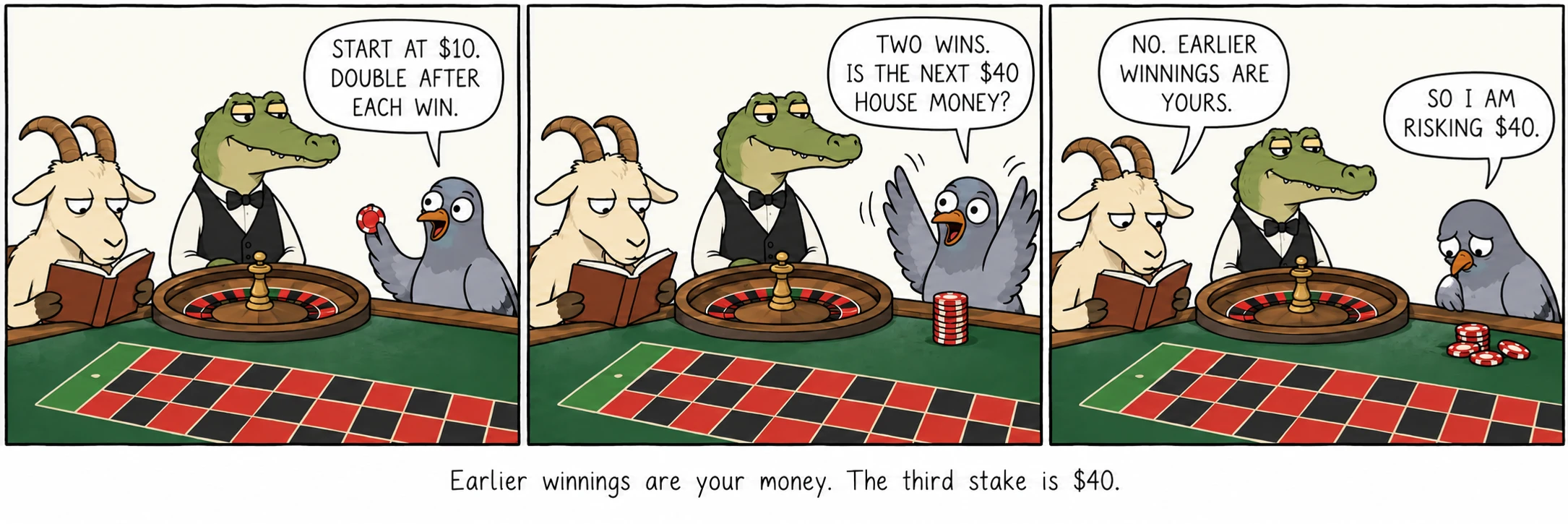
Earlier winnings are your money. The third stake is $40.
ꯍꯧꯔꯛꯐꯃꯁꯤꯡ
- Ethier, S. N. The Doctrine of Chances: Probabilistic Aspects of Gambling.