ꯈꯉꯅꯗꯕ ꯔꯨꯂꯦꯠ ꯆꯛꯔꯁꯤꯡ
ꯄꯣꯀꯦꯠ 18, 25, 26, 31, 40, 49, 62, 73 ꯅꯠꯔꯒ 105 ꯂꯩꯕ ꯆꯛꯔꯁꯤꯡ꯫ ꯅꯤꯌꯝ ꯑꯃꯈꯛꯇꯅ ꯃꯈꯣꯌ ꯄꯨꯝꯅꯃꯛꯀꯤ ꯃꯃꯜ ꯂꯦꯞꯄꯤ: ꯄꯦꯑꯥꯎꯠꯅ ꯌꯦꯡꯁꯤꯟꯗꯕ ꯄꯣꯀꯦꯠꯁꯤꯡꯒꯤ ꯁꯔꯨꯛ꯫
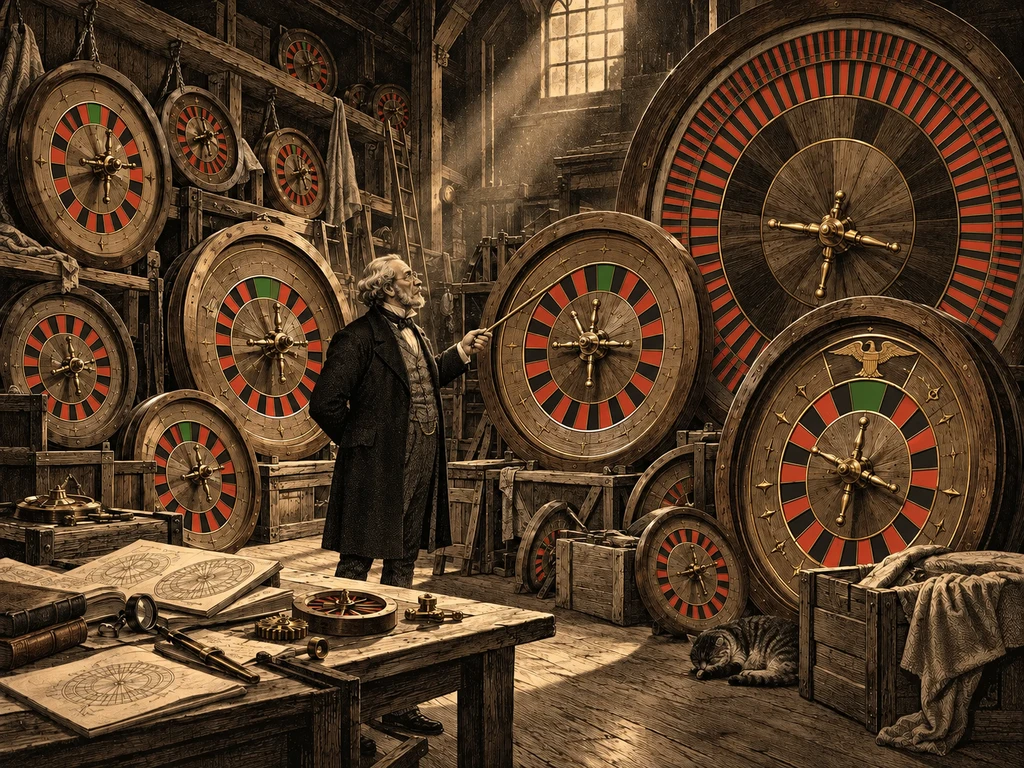
ꯀꯦꯁꯤꯅꯣꯒꯤ ꯄꯣꯀꯦꯠꯁꯤꯡ ꯂꯩꯇꯕꯒꯨꯝꯅ ꯄꯦꯑꯥꯎꯠ ꯂꯦꯞꯂꯕꯗ, ꯆꯛꯔꯒꯤ ꯆꯥꯎꯕ ꯀꯌꯥ ꯑꯣꯏꯔꯕꯁꯨ ꯍꯥꯎꯁ ꯑꯦꯖꯃꯦꯊꯃꯦꯇꯤꯛꯁꯍꯥꯎꯁ ꯑꯦꯖꯊꯝꯂꯕ ꯁꯦꯜ ꯈꯨꯗꯤꯡꯗꯒꯤ ꯀꯦꯁꯤꯅꯣꯅ ꯑꯦꯚꯔꯦꯖꯗ ꯊꯃꯖꯤꯜꯂꯤꯕ ꯁꯔꯨꯛ: ꯌꯨꯔꯣꯄꯤꯌꯟ ꯔꯨꯂꯦꯠꯇ 2.70%꯫ꯃꯄꯨꯡ ꯄꯥꯕꯤꯌꯨ → ꯑꯁꯤ ꯀꯦꯁꯤꯅꯣꯒꯤ ꯄꯣꯀꯦꯠꯁꯤꯡꯕꯨ ꯄꯣꯀꯦꯠ ꯄꯨꯝꯅꯃꯛꯅ ꯈꯥꯌꯗꯣꯛꯂꯕꯅꯤ꯫ ꯑꯉꯀꯄ ꯆꯛꯔ ꯌꯥꯝꯅꯥ ꯃꯁꯤꯡꯅ ꯅꯤꯌꯝ ꯑꯗꯨ ꯉꯥꯛꯏ꯫ ꯄꯨꯛꯅꯤꯡ ꯆꯤꯡꯁꯤꯟꯅꯕꯁꯤꯡꯅ ꯃꯁꯤ ꯊꯨꯒꯥꯏ: ꯃꯁꯤꯡ ꯌꯥꯎꯍꯟꯂꯕ ꯄꯦꯑꯥꯎꯠ, ꯕꯣꯅꯁ ꯔꯥꯎꯟꯗ, ꯅꯠꯔꯒ ꯁ꯭ꯄꯤꯟ ꯀꯌꯥꯒꯤ ꯃꯇꯝ ꯂꯩꯔꯤꯕ ꯕꯦꯠ꯫
ꯆꯛꯔ ꯈꯨꯗꯤꯡꯃꯛꯀꯤꯗꯃꯛ ꯅꯤꯌꯝ ꯑꯃꯈꯛꯇ
ꯌꯨꯔꯣꯄꯤꯌꯟ ꯔꯨꯂꯦꯠꯅꯃꯈꯜꯌꯨꯔꯣꯄꯤꯌꯟ ꯔꯨꯂꯦꯠꯁꯤꯡꯒꯜ ꯖꯤꯔꯣ ꯆꯛꯔ, ꯄꯣꯀꯦꯠ 37, ꯍꯥꯎꯁ ꯑꯦꯖ 2.70%꯫ ꯋꯦꯕꯁꯥꯏꯠ ꯑꯁꯤꯒꯤ ꯃꯔꯨꯑꯣꯏꯕ ꯃꯑꯣꯡꯅꯤ꯫ꯃꯄꯨꯡ ꯄꯥꯕꯤꯌꯨ → ꯆꯛꯔ ꯑꯗꯨꯗ ꯄꯣꯀꯦꯠꯈꯨꯠꯂꯥꯏꯄꯣꯀꯦꯠꯔꯣꯇꯔꯗ ꯂꯩꯕ ꯃꯁꯤꯡ ꯏꯔꯕ ꯀꯣꯠ 37 ꯒꯤ ꯃꯅꯨꯡꯗ ꯑꯃꯥ꯫ ꯑꯇꯣꯞꯄ ꯃꯃꯤꯡ: ꯁ꯭ꯂꯣꯠ, ꯀꯞ꯫ꯃꯄꯨꯡ ꯄꯥꯕꯤꯌꯨ → 36 ꯂꯩꯕꯒꯨꯝꯅ 35 ꯗꯒꯤ 1 ꯄꯤ꯫ ꯃꯁꯤꯗ 37 ꯂꯩ, ꯑꯃꯁꯨꯡ ꯌꯦꯡꯁꯤꯟꯗꯕ ꯄꯣꯀꯦꯠ ꯑꯗꯨ 2.70% ꯒꯤ ꯍꯥꯎꯁ ꯑꯦꯖꯅꯤ꯫ ꯅꯤꯌꯝ ꯑꯗꯨꯃꯛ ꯆꯛꯔ ꯀꯔꯤꯒꯨꯝꯕ ꯑꯃꯗ ꯊꯕꯛ ꯇꯧꯏ: ꯃꯁꯤꯡ N ꯑꯃꯁꯨꯡ ꯀꯦꯁꯤꯅꯣꯒꯤ ꯄꯣꯀꯦꯠ Z ꯂꯩꯔꯕꯗ, ꯃꯁꯤꯡ n ꯗ ꯊꯝꯂꯕ ꯑꯃꯁꯨꯡ (N − n)/n ꯗꯒꯤ 1 ꯄꯤꯕ ꯕꯦꯠ ꯑꯃꯒꯤ ꯍꯥꯎꯁ ꯑꯦꯖ Z/(N + Z) ꯑꯣꯏ꯫ ꯆꯥꯎꯕ ꯈꯨꯗꯤꯡꯃꯛꯀꯤ ꯆꯛꯔꯁꯤꯡ ꯅꯤꯌꯝ ꯑꯁꯤꯗ ꯌꯨꯝꯐꯝ ꯑꯣꯏꯗꯨꯅ ꯁꯦꯃꯈꯤ ꯅꯠꯔꯒ ꯄꯥꯎꯇꯥꯛ ꯄꯤꯈꯤ, ꯑꯃꯁꯨꯡ ꯇꯦꯕꯜ ꯑꯁꯤꯅ ꯃꯈꯣꯌꯕꯨ ꯃꯃꯜ ꯃꯇꯨꯡ ꯏꯟꯅ ꯊꯝꯂꯤ꯫ ꯃꯁꯤꯒꯤ ꯔꯣꯁꯤꯡꯅ ꯑꯣꯁ꯭ꯇ꯭ꯔꯦꯂꯤꯌꯥꯒꯤ ꯒꯦꯝ ꯑꯣꯏꯔꯤꯕ ꯔꯣꯌꯦꯜ ꯔꯨꯂꯦꯠ ꯀꯔꯝꯅ ꯁꯥꯟꯅꯒꯗꯒꯦ ꯍꯥꯌꯕꯒꯤ ꯑꯌꯨꯛꯀꯤ ꯋꯥꯐꯃꯁꯤꯡꯁꯨ ꯄꯤ: ꯃꯁꯤꯒꯤ ꯃꯁꯤꯡꯁꯤꯡ ꯑꯁꯤ 2 ꯗꯒꯤ ꯀꯤꯡ ꯐꯥꯑꯣꯕ ꯀꯥꯔꯗꯁꯤꯡꯅꯤ, ꯀꯦꯁꯤꯅꯣꯒꯤ ꯄꯣꯀꯦꯠ ꯑꯅꯤ ꯑꯁꯤ ꯑꯦꯁ ꯑꯃꯁꯨꯡ ꯖꯣꯀꯔꯅꯤ, ꯑꯃꯁꯨꯡ ꯀꯥꯔꯗ ꯑꯃꯈꯛꯇꯅ 47 ꯗꯒꯤ 1 ꯄꯤ꯫
ꯆꯥꯎꯔꯕꯁꯨ ꯌꯣꯝꯕ ꯌꯥꯏ
Players read a 62-pocket wheel as a longer shot and assume a worse game. With the proportional payoutsꯁꯦꯜꯄꯦꯑꯥꯎꯠꯃꯥꯏꯄꯥꯛꯄ ꯕꯦꯠ ꯑꯃꯅ ꯍꯜꯂꯛꯄ ꯁꯦꯜ, ꯍꯜꯂꯀꯄ ꯊꯝꯂꯕ ꯁꯦꯜꯒꯤ ꯃꯊꯛꯇ “X ꯗꯒꯤ 1” ꯍꯥꯌꯅ ꯍꯥꯌꯏ꯫ꯃꯄꯨꯡ ꯄꯥꯕꯤꯌꯨ → described here, the edge is the share of house pockets. Super 62 has two zerosꯆꯛꯔꯖꯤꯔꯣꯆꯞ ꯃꯥꯟꯅꯕ, ꯗꯖꯟ ꯅꯠꯔꯒ ꯀꯂꯝ ꯕꯦꯠ ꯑꯃꯠꯇꯅ ꯀꯨꯞꯇꯕ ꯑꯁꯪꯕ ꯄꯣꯀꯦꯠ ꯑꯃꯈꯛꯇ; ꯍꯥꯎꯁ ꯑꯦꯖꯀꯤ ꯍꯧꯔꯀꯐꯝꯅꯤ꯫ ꯑꯇꯣꯞꯄ ꯃꯃꯤꯡ: ꯁꯤꯡꯒꯜ ꯖꯤꯔꯣ, 0꯫ꯃꯄꯨꯡ ꯄꯥꯕꯤꯌꯨ →, like the American wheel, but they are 2 of 62 pockets rather than 2 of 38, so it costs 3.23% against 5.26%. Roulette 73, with 72 numbers and one zero, would cost 1.37%, about the same as French even money. The rule works the other way on a small wheel. Bollman pictures an antique wheel of 18 pockets, 1 to 16 plus 0 and 00. On the rule every bet would cost 2/18, 11.11%: two house pockets are a large share of a small wheel.
ꯅꯤꯌꯝ ꯊꯨꯒꯥꯏꯕ ꯃꯐꯝ: ꯃꯁꯤꯡ ꯌꯥꯎꯍꯟꯕ
Some pay tablesꯁꯦꯜꯄꯦꯑꯥꯎꯠ ꯇꯦꯕꯜꯕꯦꯠ ꯅꯠꯔꯒ ꯃꯍꯩ ꯈꯨꯗꯤꯡꯃꯛꯅ ꯀꯌꯥ ꯄꯤꯕꯒꯦ ꯍꯥꯌꯕꯒꯤ ꯂꯤꯁ꯭ꯠ꯫ ꯃꯦꯁꯤꯅꯁꯤꯡ ꯑꯃꯁꯨꯡ ꯁꯥꯏꯗ ꯕꯦꯠꯁꯤꯡꯗ ꯍꯥꯎꯁ ꯑꯦꯖ ꯂꯦꯞꯄꯤꯕ ꯃꯐꯝꯅꯤ꯫ꯃꯄꯨꯡ ꯄꯥꯕꯤꯌꯨ → round a fractional payout down. That raises the edge; it is not a mathematical requirement. 100 To 1 Roulette’s Avenue bet covers 15 pockets and should pay 5⅔ to 1; it pays 11 to 2, which raises its edge from 4.76% to 7.14%. On Super 62, seven numbers contain the digit 6 (6, 16, 26, 36, 46, 56, 60) and the bet on that digit pays 7 to 1, which makes it 9.68%, three times the rest of the layoutꯈꯨꯠꯂꯥꯏꯂꯦꯑꯥꯎꯠꯇꯦꯕꯜꯗ ꯏꯔꯕ ꯕꯦꯠ ꯊꯝꯕꯒꯤ ꯒ꯭ꯔꯤꯗ꯫ ꯑꯇꯣꯞꯄ ꯃꯃꯤꯡ: ꯇꯦꯕꯜ, ꯐꯦꯜꯠ, ꯀ꯭ꯂꯣꯊ꯫ꯃꯄꯨꯡ ꯄꯥꯕꯤꯌꯨ →. Riverboat Roulette’s White bet covers 8 numbers at 7 to 2; if a table rounds a $5 winner down to $17 instead of $17.50, the edge rises from 5.26% to 7.37%. The American five-number bet, at 7.89%, is the familiar case of the same thing.
ꯅꯤꯌꯝ ꯊꯨꯒꯥꯏꯕ ꯃꯐꯝ: ꯕꯣꯅꯁꯁꯤꯡ
The historical Fast Action Roulette version described by Bollman (2021) uses a real wheel with four zeros, which on its own would cost 10%. Ten Bonus numbers light up at random on every spin. A straight upꯕꯦꯠꯁ꯭ꯇ꯭ꯔꯦꯠ-ꯑꯞꯃꯁꯤꯡ ꯑꯃꯈꯛꯇ, 35:1 ꯄꯦꯑꯥꯎꯠ꯫ꯃꯄꯨꯡ ꯄꯥꯕꯤꯌꯨ → pays 35 to 1, 40 to 1 if its number is a Bonus number, and 80 to 1 if its whole row of four is Bonus, which brings it to 6.65%. The three bonus bets in that version cost more. Later rules differ; our bonus-round page explains the distinction. IGT’s Double Bonus Spin adds a yellow Bonus pocket, one and a half pockets wide, to an American wheel; when the ballꯈꯨꯠꯂꯥꯏꯕꯣꯜꯔꯣꯇꯔꯒꯤ ꯃꯥꯌꯣꯛꯇ ꯇ꯭ꯔꯦꯛꯇ ꯊꯥꯗꯣꯛꯄ ꯑꯄꯤꯛꯄ ꯕꯣꯜ꯫ ꯍꯧꯖꯤꯛꯀꯤ ꯕꯣꯜꯁꯤꯡ ꯑꯥꯏꯚꯣꯔꯤꯟ ꯅꯠꯔꯒ ꯇꯦꯐ꯭ꯂꯣꯅꯅ ꯁꯦꯝꯃꯤ, 18–21 mm꯫ꯃꯄꯨꯡ ꯄꯥꯕꯤꯌꯨ → lands there, every bet gets two free spins. Applying independent outcomes to Bollman’s stated bonus-payout model gives an edge between 1.94% (a straight up) and 2.73% (even money) for the usual non-basketꯕꯦꯠꯕꯥꯁ꯭ꯀꯦꯠꯁꯤꯡꯒꯜ ꯖꯤꯔꯣ ꯆꯛꯔꯗ: ꯆꯤꯞ ꯑꯃꯅ 0, 1, 2, 3, 8:1 ꯄꯦꯑꯥꯎꯠ꯫ ꯑꯇꯣꯞꯄ ꯃꯃꯤꯡ: ꯑꯍꯥꯅꯕ ꯃꯔꯤ, ꯀꯥꯠꯔ ꯄ꯭ꯔꯦꯃꯤꯌꯦ꯫ꯃꯄꯨꯡ ꯄꯥꯕꯤꯌꯨ → bets. The five-number bet is an exception at 4.72%. Bollman (2021) prints 3% to 16% for this game; his simplified formula has an algebra slip, and for even-money betsꯕꯦꯠꯆꯞ ꯃꯥꯟꯅꯕ ꯕꯦꯠꯑꯉꯥꯡꯕ/ꯑꯃꯨꯕ, ꯕꯤꯖꯣꯔ/ꯖꯣꯔ, ꯑꯋꯥꯡꯕ/ꯑꯅꯦꯝꯕ꯫ ꯃꯁꯤꯡ 18, 1:1 ꯄꯦꯑꯥꯎꯠ꯫ꯃꯄꯨꯡ ꯄꯥꯕꯤꯌꯨ → it implies that the free spins lose more than the stake, which they cannot.
ꯅꯤꯌꯝ ꯊꯨꯒꯥꯏꯕ ꯃꯐꯝ: ꯂꯩꯔꯤꯕ ꯕꯦꯠꯁꯤꯡ
Riverboat Roulette (2012) gave 32 numbers of an American wheel a second color. White marks the four pockets around each zero (1, 2, 9, 10, 13, 14, 27, 28). A bet on a color group wins if one of its numbers comes up before one of the eight White numbers. A White number is a “White Out” that clears every color bet. Every other number is a push: the bet stays up, and between spins it can be taken down or raised. Teal covers three numbers and pays 2 to 1. Per resolved bet it loses 2/11 of the stake, 18.18%. Per active spin its expected lossꯃꯦꯊꯃꯦꯇꯤꯛꯁꯃꯥꯡꯒꯗꯕ ꯁꯦꯜꯐꯪꯒꯗꯕ ꯃꯃꯂꯕꯨ ꯕꯦꯠ ꯊꯝꯂꯕ ꯁꯦꯜ ꯄꯨꯝꯅꯃꯛꯅ ꯃꯅꯥꯡꯕ; ꯁꯦꯁꯟ ꯅꯠꯔꯒ ꯃꯇꯝ ꯑꯃꯒꯤ ꯃꯅꯨꯡꯗ ꯃꯥꯡꯕ ꯑꯦꯚꯔꯦꯖ ꯁꯦꯜ꯫ꯃꯄꯨꯡ ꯄꯥꯕꯤꯌꯨ → is 2/38, or 5.26%. With independent uniform spins and the bet left up until it resolves, it stays active for an average of 38/11 spins, about 3.5.
ꯊꯣꯔꯄꯅ ꯃꯃꯥꯡꯗ ꯍꯥꯌꯕ ꯉꯝꯕ ꯆꯛꯔ: ꯕꯤꯒ ꯁꯤꯛꯁ
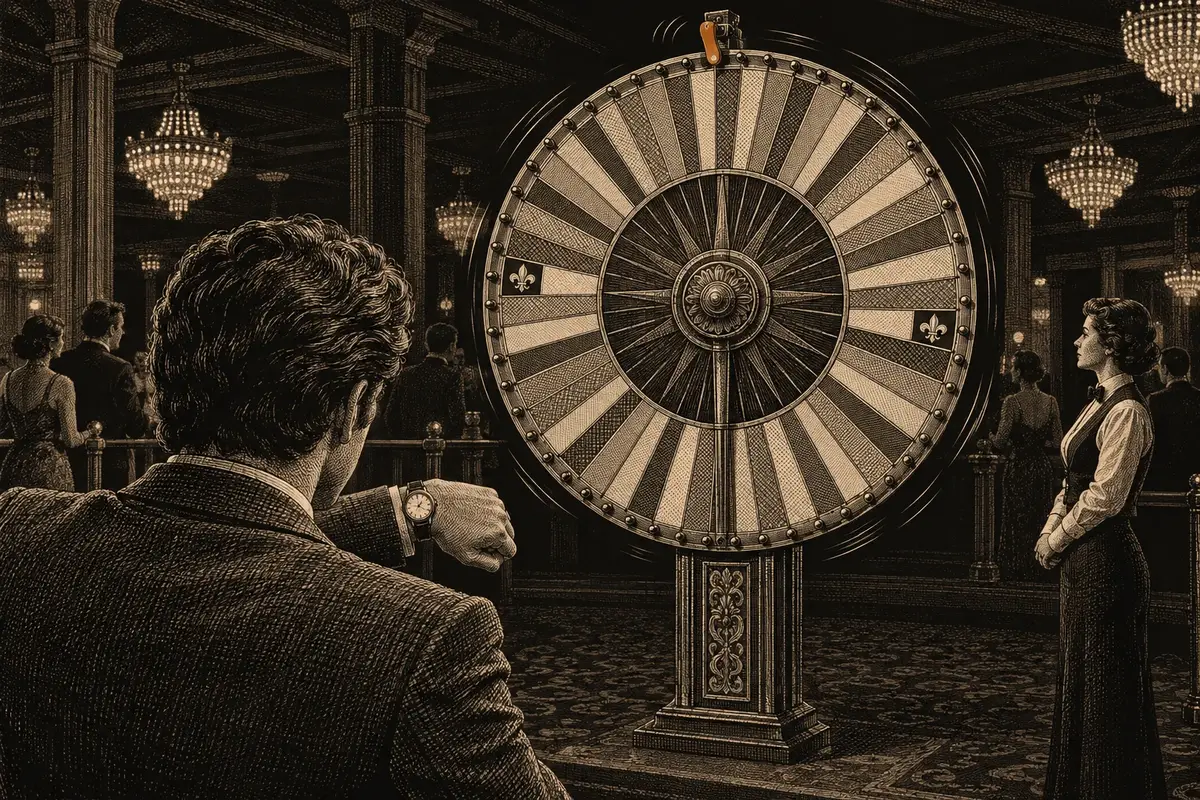
The Big Six, or wheel of fortune, is a large upright wheel with 54 slots: 24 pay 1 to 1, 15 pay 2 to 1, seven 5 to 1, four 10 to 1, two 20 to 1, and two logo slots pay 40 to 1. There is no zero; the house takes its share by paying short, and the edge runs from 11.1% on the slots that pay 1 to 1 to 24.1% on the logos. In 1961 Thorp built a matchbox-sized predictor for it, worked by a toe switch, and in October 1981 he timed a wheel at Caesars Tahoe with a wristwatch. He fitted a prediction curve to those observations, while warning that new spins would likely fit less closely. His worked example assumed errors stayed within five slots and estimated a net gain of 114 unitsꯁꯦꯜꯌꯨꯅꯤꯠꯁꯤꯁ꯭ꯇꯦꯝ ꯅꯠꯔꯒ ꯁꯥꯟꯅꯔꯤꯕ ꯑꯃꯅ ꯁꯤꯖꯤꯟꯅꯕ ꯃꯔꯨꯑꯣꯏꯕ ꯊꯝꯂꯕ ꯁꯦꯜ꯫ ꯄ꯭ꯔꯣꯒ꯭ꯔꯦꯁꯅꯁꯤꯡ ꯌꯨꯅꯤꯠꯇ ꯁꯟꯗꯣꯛꯂꯤ, ꯃꯔꯝ ꯑꯗꯨꯅ ꯃꯈꯣꯌ ꯀꯔꯤꯒꯨꯝꯕ ꯇꯦꯕꯜꯗ ꯆꯠꯂꯤ꯫ꯃꯄꯨꯡ ꯄꯥꯕꯤꯌꯨ → per 54 units wagered, about +211%, if bets were accepted after the wheel started. This was a conditional estimate, not a measured casino return. In his 1998 account, Thorp said the game had too little action to conceal the late bets his method needed. That historical account does not establish today’s betting cutoff or a current advantage.
ꯀꯔꯤꯒꯤ ꯃꯇꯧ ꯑꯁꯨꯛ ꯅꯦꯝꯅ ꯆꯠꯂꯤꯕꯅꯣ
Changing the pocket count requires different equipment; adding a side betꯕꯦꯠꯁꯥꯏꯗ ꯕꯦꯠꯃꯔꯨꯑꯣꯏꯕ ꯁꯥꯟꯅꯕꯗ ꯁꯝꯃꯤꯟꯅꯕ ꯊꯃꯒꯗꯕ ꯅꯠꯇꯕ ꯍꯦꯟꯅꯥ ꯊꯝꯕ ꯕꯦꯠ, ꯌꯥꯝꯅ ꯁ꯭ꯇ꯭ꯔꯤꯛ, ꯕꯣꯅꯁ ꯊꯧꯔꯝ ꯅꯠꯔꯒ ꯖꯦꯀꯄꯣꯠ ꯑꯃꯗ꯫ ꯌꯥꯝꯅ ꯃꯇꯃꯗ ꯃꯔꯨꯑꯣꯏꯕ ꯕꯦꯠꯁꯤꯡꯗꯒꯤ ꯃꯃꯜ ꯍꯦꯟꯅꯥ ꯆꯪꯏ꯫ꯃꯄꯨꯡ ꯄꯥꯕꯤꯌꯨ → can keep an existing wheel. The examples here show both approaches. Their value depends on the probabilities and payouts, not on how unusual the equipment looks.
ꯋꯥꯍꯪꯁꯤꯡ
ꯃꯁꯥꯃꯛ ꯈꯛꯇꯅ ꯅꯠꯇꯦ꯫ ꯍꯥꯎꯁ ꯑꯦꯖ ꯑꯁꯤ ꯀꯦꯁꯤꯅꯣꯒꯤ ꯄꯣꯀꯦꯠꯁꯤꯡꯒꯤ ꯁꯔꯨꯛꯅꯤ: 73 ꯗ 1 ꯑꯁꯤ 37 ꯗ 1 ꯗꯒꯤ ꯌꯣꯝꯃꯤ꯫
1.37% ꯑꯣꯏꯕ ꯔꯨꯂꯦꯠ 73, ꯑꯗꯨꯕꯨ ꯃꯁꯤ ꯅꯍꯥꯛꯅ ꯊꯤꯕ ꯐꯪꯒꯗꯕ ꯇꯦꯕꯜ ꯑꯃꯥ ꯅꯠꯇꯅ ꯐꯣꯡꯗꯣꯛꯂꯕ ꯗꯤꯖꯥꯏꯟ ꯑꯃꯅꯤ꯫ ꯁꯥꯟꯅꯔꯤꯕꯁꯤꯡꯗ ꯄꯤꯔꯝꯕ ꯆꯛꯔꯁꯤꯡꯒꯤ ꯃꯅꯨꯡꯗ, ꯌꯨꯔꯣꯄꯤꯌꯟ ꯑꯃꯁꯨꯡ ꯐ꯭ꯔꯦꯟꯆꯀꯤ ꯃꯇꯨꯡꯗ 3.23% ꯑꯣꯏꯕ ꯁꯨꯄꯔ 62 ꯂꯥꯛꯂꯤ꯫
A bonus does not automatically increase the edge. Calculate the return from the whole rule set: base payouts, bonus probabilityꯃꯦꯊꯃꯦꯇꯤꯛꯁꯊꯣꯛꯄꯒꯤ ꯈꯨꯗꯣꯡꯆꯥꯕꯃꯍꯩ ꯑꯃꯥ ꯊꯣꯛꯄꯒꯤ ꯈꯨꯗꯣꯡꯆꯥꯕ, 0 ꯗꯒꯤ 1 ꯐꯥꯑꯣꯕ ꯅꯠꯔꯒ 0% ꯗꯒꯤ 100% ꯐꯥꯑꯣꯕ꯫ ꯃꯁꯤꯡ ꯑꯃꯥ: 1/37 = 2.70%꯫ꯃꯄꯨꯡ ꯄꯥꯕꯤꯌꯨ →, bonus prizes and any separate stake. A bonus added without another change improves the expected return.
ꯃꯦꯊꯃꯦꯇꯤꯛꯁꯀꯥ ꯁꯥꯟꯅꯕ
ꯃꯁꯤꯁꯤꯡ ꯑꯍꯥꯅꯕꯗ ꯅꯍꯥꯛ ꯃꯁꯥꯃꯛꯅ ꯍꯣꯠꯅꯕꯤꯌꯨ꯫ ꯄꯥꯎꯈꯨꯝ ꯈꯨꯗꯤꯡꯃꯛ ꯊꯨꯡꯗꯨꯅ ꯊꯝꯂꯤ; ꯁꯦꯝ ꯁꯥꯔꯕ ꯃꯇꯃꯗ ꯍꯥꯡꯗꯣꯛꯄꯤꯌꯨ꯫
Consider a hypothetical uniform 50-pocketꯈꯨꯠꯂꯥꯏꯄꯣꯀꯦꯠꯔꯣꯇꯔꯗ ꯂꯩꯕ ꯃꯁꯤꯡ ꯏꯔꯕ ꯀꯣꯠ 37 ꯒꯤ ꯃꯅꯨꯡꯗ ꯑꯃꯥ꯫ ꯑꯇꯣꯞꯄ ꯃꯃꯤꯡ: ꯁ꯭ꯂꯣꯠ, ꯀꯞ꯫ꯃꯄꯨꯡ ꯄꯥꯕꯤꯌꯨ → wheel with 48 ordinary card symbols, one ace and one joker. Bets covering 1, 2, 3, 4, 6, 8, 12, 16 or 24 ordinary symbols pay 47, 23, 15, 11, 7, 5, 3, 2 or 1 to 1 respectively. What payoutꯁꯦꯜꯄꯦꯑꯥꯎꯠꯃꯥꯏꯄꯥꯛꯄ ꯕꯦꯠ ꯑꯃꯅ ꯍꯜꯂꯛꯄ ꯁꯦꯜ, ꯍꯜꯂꯀꯄ ꯊꯝꯂꯕ ꯁꯦꯜꯒꯤ ꯃꯊꯛꯇ “X ꯗꯒꯤ 1” ꯍꯥꯌꯅ ꯍꯥꯌꯏ꯫ꯃꯄꯨꯡ ꯄꯥꯕꯤꯌꯨ → pattern and house edgeꯃꯦꯊꯃꯦꯇꯤꯛꯁꯍꯥꯎꯁ ꯑꯦꯖꯊꯝꯂꯕ ꯁꯦꯜ ꯈꯨꯗꯤꯡꯗꯒꯤ ꯀꯦꯁꯤꯅꯣꯅ ꯑꯦꯚꯔꯦꯖꯗ ꯊꯃꯖꯤꯜꯂꯤꯕ ꯁꯔꯨꯛ: ꯌꯨꯔꯣꯄꯤꯌꯟ ꯔꯨꯂꯦꯠꯇ 2.70%꯫ꯃꯄꯨꯡ ꯄꯥꯕꯤꯌꯨ → do they share?
ꯄꯥꯎꯈꯨꯝ ꯎꯠꯄ
ꯄꯥꯎꯈꯨꯝ ꯀꯥꯔꯗ n ꯗ ꯊꯝꯕ ꯕꯦꯠ ꯈꯨꯗꯤꯡꯃꯛꯅ (48 − n)/n ꯗꯒꯤ 1 ꯄꯤ, ꯃꯔꯝ ꯑꯗꯨꯅ ꯕꯦꯠ ꯈꯨꯗꯤꯡꯃꯛꯀꯤ ꯃꯃꯜ 2/50 = 4% ꯂꯩ꯫
ꯕꯦꯠ ꯈꯔꯗ ꯅꯤꯌꯝ ꯑꯗꯨ ꯌꯦꯡꯕꯤꯌꯨ: 47/1 = 47, 36/12 = 3, 32/16 = 2, 24/24 = 1꯫ ꯃꯗꯨ ꯃꯥꯄꯟ ꯄꯨꯝꯅꯃꯛꯇ ꯆꯥꯟꯅꯩ꯫ ꯅꯤꯌꯝ ꯑꯗꯨꯅ ꯆꯛꯔ ꯑꯗꯨꯗ ꯄꯣꯀꯦꯠ 48 ꯂꯩꯕꯒꯨꯝ ꯃꯃꯜ ꯂꯧꯏ, ꯃꯔꯝ ꯑꯗꯨꯅ ꯑꯦꯁ ꯑꯃꯁꯨꯡ ꯖꯣꯀꯔ ꯑꯗꯨ ꯀꯦꯁꯤꯅꯣꯒꯤ ꯄꯣꯀꯦꯠ ꯑꯅꯤꯅꯤ, ꯑꯃꯦꯔꯤꯀꯟ ꯆꯛꯔꯗ 0 ꯑꯃꯁꯨꯡ 00 ꯑꯣꯏꯕꯒꯨꯝꯅ꯫
50 ꯒꯤ ꯃꯅꯨꯡꯗ ꯀꯦꯁꯤꯅꯣꯒꯤ ꯄꯣꯀꯦꯠ ꯑꯅꯤꯅ 4% ꯒꯤ ꯑꯦꯖ ꯄꯤ꯫ “ꯌꯨꯔꯣꯄꯤꯌꯟ” ꯃꯈꯜ ꯑꯃꯅ ꯖꯣꯀꯔ ꯑꯗꯨ ꯂꯧꯊꯣꯛꯇꯨꯅ ꯄꯦꯑꯥꯎꯠꯁꯤꯡ ꯍꯣꯡꯗꯣꯀꯗꯦ: 49 ꯗ ꯀꯦꯁꯤꯅꯣꯒꯤ ꯄꯣꯀꯦꯠ ꯑꯃꯥ, 2.04% ꯒꯤ ꯑꯦꯖ꯫
Design a digit bet on a fair American double-zeroꯆꯛꯔꯖꯤꯔꯣꯆꯞ ꯃꯥꯟꯅꯕ, ꯗꯖꯟ ꯅꯠꯔꯒ ꯀꯂꯝ ꯕꯦꯠ ꯑꯃꯠꯇꯅ ꯀꯨꯞꯇꯕ ꯑꯁꯪꯕ ꯄꯣꯀꯦꯠ ꯑꯃꯈꯛꯇ; ꯍꯥꯎꯁ ꯑꯦꯖꯀꯤ ꯍꯧꯔꯀꯐꯝꯅꯤ꯫ ꯑꯇꯣꯞꯄ ꯃꯃꯤꯡ: ꯁꯤꯡꯒꯜ ꯖꯤꯔꯣ, 0꯫ꯃꯄꯨꯡ ꯄꯥꯕꯤꯌꯨ → wheel. Count numbers from 1 to 36 containing each digit, and choose payouts that retain the standard 2/38 edge. Treat the zero pockets separately. Which payouts are whole unitsꯁꯦꯜꯌꯨꯅꯤꯠꯁꯤꯁ꯭ꯇꯦꯝ ꯅꯠꯔꯒ ꯁꯥꯟꯅꯔꯤꯕ ꯑꯃꯅ ꯁꯤꯖꯤꯟꯅꯕ ꯃꯔꯨꯑꯣꯏꯕ ꯊꯝꯂꯕ ꯁꯦꯜ꯫ ꯄ꯭ꯔꯣꯒ꯭ꯔꯦꯁꯅꯁꯤꯡ ꯌꯨꯅꯤꯠꯇ ꯁꯟꯗꯣꯛꯂꯤ, ꯃꯔꯝ ꯑꯗꯨꯅ ꯃꯈꯣꯌ ꯀꯔꯤꯒꯨꯝꯕ ꯇꯦꯕꯜꯗ ꯆꯠꯂꯤ꯫ꯃꯄꯨꯡ ꯄꯥꯕꯤꯌꯨ →?
ꯄꯥꯎꯈꯨꯝ ꯎꯠꯄ
ꯄꯥꯎꯈꯨꯝ Groups of three or four numbers give whole-unit payouts of 11:1 or 8:1. Groups of thirteen or ten need fractional payouts to preserve the same edge.
ꯃꯁꯤꯡꯁꯤꯡ ꯃꯁꯤꯡ ꯊꯤꯕꯤꯌꯨ꯫ ꯗꯤꯖꯤꯠ 1 ꯑꯁꯤ 1, 10 ꯗꯒꯤ 19, 21 ꯑꯃꯁꯨꯡ 31 ꯗ ꯂꯩ: ꯃꯁꯤꯡ 13꯫ ꯗꯤꯖꯤꯠ 2 ꯁꯨ ꯃꯁꯤꯡ 13 ꯗ ꯂꯩ ꯑꯃꯁꯨꯡ ꯗꯤꯖꯤꯠ 3 ꯃꯁꯤꯡ 10 ꯗ꯫ ꯗꯤꯖꯤꯠ 4, 5 ꯑꯃꯁꯨꯡ 6 ꯈꯨꯗꯤꯡꯃꯛ ꯃꯁꯤꯡ ꯃꯔꯤꯗ ꯂꯩ (4, 14, 24, 34), ꯑꯃꯁꯨꯡ 7, 8 ꯑꯃꯁꯨꯡ 9 ꯈꯨꯗꯤꯡꯃꯛ ꯑꯍꯨꯃꯗ꯫
ꯃꯁꯤꯡ n ꯗ ꯊꯝꯕ ꯕꯦꯠ ꯑꯃꯅ (36 − n)/n ꯗꯒꯤ 1 ꯄꯤꯔꯕꯗ ꯑꯃꯦꯔꯤꯀꯟ ꯑꯦꯖ ꯑꯗꯨ ꯊꯝꯃꯤ꯫ ꯃꯗꯨꯅ ꯃꯁꯤꯡ ꯃꯔꯤꯒꯤꯗꯃꯛ 8 ꯗꯒꯤ 1 ꯑꯃꯁꯨꯡ ꯑꯍꯨꯃꯒꯤꯗꯃꯛ 11 ꯗꯒꯤ 1 ꯄꯤ, ꯑꯅꯤꯃꯛ ꯃꯄꯨꯡ ꯐꯥꯕꯅꯤ꯫ ꯃꯁꯤꯡ 13 ꯒꯤꯗꯃꯛ 23/13, ꯈꯟꯊꯕꯗ 1.77 ꯗꯒꯤ 1, ꯑꯃꯁꯨꯡ ꯃꯁꯤꯡ 10 ꯒꯤꯗꯃꯛ 2.6 ꯗꯒꯤ 1 ꯄꯤ꯫ 1.77 ꯕꯨ 7 ꯗꯒꯤ 4 ꯐꯥꯑꯣꯕ ꯍꯟꯊꯍꯜꯂꯕꯗ ꯕꯦꯠ ꯑꯗꯨꯒꯤ ꯃꯃꯜ 5.92% ꯂꯩ; 2 ꯗꯒꯤ 1 ꯐꯥꯑꯣꯕ ꯍꯥꯞꯂꯕꯗ ꯁꯥꯟꯅꯔꯤꯕ ꯑꯗꯨꯅ 2.63% ꯒꯤ ꯑꯦꯖ ꯐꯪꯏ꯫ 2.6 ꯕꯨ 5 ꯗꯒꯤ 2 ꯐꯥꯑꯣꯕ ꯍꯟꯊꯍꯜꯂꯕꯗ 7.89% ꯑꯣꯏ꯫
ꯗꯤꯖꯤꯠ 0 ꯗꯤ ꯈꯅꯕꯒꯤ ꯋꯥꯐꯃꯅꯤ: 10, 20 ꯑꯃꯁꯨꯡ 30 ꯈꯛꯇꯅ 11 ꯗꯒꯤ 1 ꯄꯤ, 5.26% ꯗ; 0 ꯑꯃꯁꯨꯡ 00 ꯍꯥꯄꯆꯤꯜꯂꯕꯗ ꯃꯁꯤꯡ ꯃꯉꯥꯒꯤ ꯕꯦꯠ ꯑꯣꯏꯔꯛꯏ, 6 ꯗꯒꯤ 1, 7.89% ꯗ, ꯕꯥꯁ꯭ꯀꯦꯠꯕꯦꯠꯕꯥꯁ꯭ꯀꯦꯠꯁꯤꯡꯒꯜ ꯖꯤꯔꯣ ꯆꯛꯔꯗ: ꯆꯤꯞ ꯑꯃꯅ 0, 1, 2, 3, 8:1 ꯄꯦꯑꯥꯎꯠ꯫ ꯑꯇꯣꯞꯄ ꯃꯃꯤꯡ: ꯑꯍꯥꯅꯕ ꯃꯔꯤ, ꯀꯥꯠꯔ ꯄ꯭ꯔꯦꯃꯤꯌꯦ꯫ꯃꯄꯨꯡ ꯄꯥꯕꯤꯌꯨ → ꯒꯨꯝꯅ꯫
ꯗꯤꯖꯤꯠꯃꯁꯤꯡꯁꯤꯡꯅꯤꯌꯝꯅ ꯍꯥꯌꯔꯤꯕꯄꯤꯕ ꯌꯥꯕꯍꯥꯎꯁ ꯑꯦꯖ1, 2131.77 ꯗꯒꯤ 17 ꯗꯒꯤ 45.92%3102.6 ꯗꯒꯤ 15 ꯗꯒꯤ 27.89%4, 5, 648 ꯗꯒꯤ 18 ꯗꯒꯤ 15.26%7, 8, 9311 ꯗꯒꯤ 111 ꯗꯒꯤ 15.26%Suppose a uniform wheel has 100 numbered pockets and five house symbols. Bets covering 1, 2, 3, 4, 5, 10, 15, 20 or 50 numbered pockets pay 100, 49, 32, 24, 19, 9, 11/2, 4 or 1 to 1. Besides the one-pocket and fifteen-pocket bets, which payout differs from (100−n)/n, and what is its edge?
ꯄꯥꯎꯈꯨꯝ ꯎꯠꯄ
ꯄꯥꯎꯈꯨꯝ ꯄꯣꯀꯦꯠ ꯑꯍꯨꯃꯒꯤ ꯕꯦꯠ: ꯅꯤꯌꯝꯅ 32⅓ ꯗꯒꯤ 1 ꯍꯥꯌꯔꯤ, ꯃꯁꯤꯅ 32 ꯗꯒꯤ 1 ꯄꯤ, ꯑꯃꯁꯨꯡ 4.76% ꯒꯤ ꯃꯍꯨꯠꯇ 5.71% ꯃꯃꯜ ꯂꯩ꯫
Check each payout against the rule: 98/2 = 49, 96/4 = 24, 95/5 = 19, 90/10 = 9, 80/20 = 4 and 50/50 = 1 all fit. For three pockets the rule gives 97/3 = 32⅓, a fractional payout. The stated table instead pays 32.
The bet wins 3 times in 105 spins and then returns 33 units including the stake: 3 × 33 = 99 units back for every 105 staked, a loss of 6/105 = 5.71%.
Consider a uniform 73-pocket model with 72 ordinary numbers and zero. A bet covering n numbers pays (72−n)/n to 1. Four straight-ups and ten non-overlapping splitsꯕꯦꯠꯁ꯭ꯞꯂꯤꯠꯌꯨꯝꯂꯣꯟꯅꯕ ꯃꯁꯤꯡ ꯑꯅꯤ, 17:1 ꯄꯦꯑꯥꯎꯠ꯫ꯃꯄꯨꯡ ꯄꯥꯕꯤꯌꯨ → cover 24 distinct gray numbers with 14 equal chipsꯁꯦꯜꯆꯤꯞꯂꯦꯞꯂꯕ ꯁꯦꯜꯒꯤ ꯃꯃꯜ ꯇꯥꯛꯄ ꯇꯣꯀꯟ, ꯕꯦꯠ ꯊꯝꯅꯕ ꯂꯦꯑꯥꯎꯠꯇ ꯊꯝꯃꯤ꯫ ꯑꯇꯣꯞꯄ ꯃꯃꯤꯡ: ꯆꯦꯛ꯫ꯃꯄꯨꯡ ꯄꯥꯕꯤꯌꯨ →. What is the spread’s edge?
ꯄꯥꯎꯈꯨꯝ ꯎꯠꯄ
ꯄꯥꯎꯈꯨꯝ ꯆꯤꯞ 14 ꯒꯤ 1.37%, ꯆꯛꯔ ꯑꯗꯨꯒꯤ ꯑꯇꯩ ꯕꯦꯠ ꯈꯨꯗꯤꯡꯃꯛꯒꯨꯝꯅ꯫
The long way: a straight upꯕꯦꯠꯁ꯭ꯇ꯭ꯔꯦꯠ-ꯑꯞꯃꯁꯤꯡ ꯑꯃꯈꯛꯇ, 35:1 ꯄꯦꯑꯥꯎꯠ꯫ꯃꯄꯨꯡ ꯄꯥꯕꯤꯌꯨ → pays 71 to 1 and a split 35 to 1. If one of the 4 straight-up numbers comes in, you win 71 and lose the other 13 chips: +58. If one of the 20 split numbers comes in: +35 − 13 = +22. On the other 49 pockets you lose all 14. On average over 73 spins: 4 × 58 + 20 × 22 − 49 × 14 = 232 + 440 − 686 = −14 units, which is 1/73 of each chip.
The short way: expected valuesꯃꯦꯊꯃꯦꯇꯤꯛꯁꯐꯪꯒꯗꯕ ꯃꯃꯜꯃꯇꯝ ꯁꯥꯡꯅ ꯌꯦꯡꯂꯕꯗ ꯕꯦꯠ ꯑꯃꯒꯤ ꯑꯦꯚꯔꯦꯖ ꯃꯍꯩ꯫ ꯃꯔꯨꯑꯣꯏꯕ ꯌꯨꯔꯣꯄꯤꯌꯟ ꯕꯦꯠ ꯈꯨꯗꯤꯡꯗ ꯊꯝꯂꯕ ꯁꯦꯜꯒꯤ −1/37꯫ꯃꯄꯨꯡ ꯄꯥꯕꯤꯌꯨ → add. Each chip is an ordinary bet that loses 1/73 of itself, so 14 chips lose 14/73. Here combining bets keeps the edge per chip at 1/73, while the expected lossꯃꯦꯊꯃꯦꯇꯤꯛꯁꯃꯥꯡꯒꯗꯕ ꯁꯦꯜꯐꯪꯒꯗꯕ ꯃꯃꯂꯕꯨ ꯕꯦꯠ ꯊꯝꯂꯕ ꯁꯦꯜ ꯄꯨꯝꯅꯃꯛꯅ ꯃꯅꯥꯡꯕ; ꯁꯦꯁꯟ ꯅꯠꯔꯒ ꯃꯇꯝ ꯑꯃꯒꯤ ꯃꯅꯨꯡꯗ ꯃꯥꯡꯕ ꯑꯦꯚꯔꯦꯖ ꯁꯦꯜ꯫ꯃꯄꯨꯡ ꯄꯥꯕꯤꯌꯨ → in chips grows with the total stake.
ꯁꯨꯄꯔ 62 ꯗ ꯃꯁꯤꯡ 60, 0 ꯑꯃꯁꯨꯡ 00 ꯂꯩ, ꯑꯃꯁꯨꯡ (60 − n)/n ꯗꯒꯤ 1 ꯄꯤ꯫ ꯃꯁꯤꯒꯤ ꯗꯤꯖꯥꯏꯅꯔꯁꯤꯡꯅ ꯀꯦꯁꯤꯅꯣꯒꯤ ꯄꯣꯀꯦꯠ ꯑꯃꯥ, ꯑꯍꯨꯝ ꯑꯃꯁꯨꯡ ꯃꯔꯤ ꯂꯩꯕ ꯃꯈꯂꯁꯤꯡꯁꯨ ꯌꯦꯛꯈꯤ꯫ ꯑꯦꯂꯐꯥꯕꯦꯇꯤꯛ ꯔꯨꯂꯦꯠꯅ ꯄꯣꯀꯦꯠ 25 ꯗ (24 − n)/n ꯗꯒꯤ 1 ꯄꯤ, ꯑꯃꯁꯨꯡ Y ꯑꯃꯁꯨꯡ Z ꯃꯁꯥꯒꯤ ꯄꯣꯀꯦꯠ ꯇꯣꯉꯥꯟꯅ ꯂꯩꯕ ꯃꯈꯜ ꯑꯃꯁꯨ ꯂꯩ꯫ ꯃꯉꯥ ꯄꯨꯝꯅꯃꯛꯀꯤ ꯃꯃꯜ ꯊꯤꯕꯤꯌꯨ꯫
ꯄꯥꯎꯈꯨꯝ ꯎꯠꯄ
ꯄꯥꯎꯈꯨꯝ With payout base 60 and one to four house pockets: 1.64%, 3.23%, 4.76% and 6.25%. With payout base 24: 4% on 25 pockets and 7.69% on 26.
ꯃꯈꯣꯌ ꯈꯨꯗꯤꯡꯃꯛꯅ ꯄꯦꯑꯥꯎꯠꯁꯤꯡ ꯊꯝꯃꯤ ꯑꯃꯁꯨꯡ ꯀꯦꯁꯤꯅꯣꯒꯤ ꯄꯣꯀꯦꯠꯀꯤ ꯃꯁꯤꯡ ꯈꯛꯇ ꯍꯣꯡꯗꯣꯀꯏ, ꯃꯔꯝ ꯑꯗꯨꯅ ꯑꯦꯖ ꯑꯗꯨ ꯀꯦꯁꯤꯅꯣꯒꯤ ꯄꯣꯀꯦꯠ ÷ ꯄꯣꯀꯦꯠ ꯄꯨꯝꯅꯃꯛ ꯑꯣꯏ꯫
ꯖꯤꯔꯣ ꯑꯃꯥ, ꯄꯣꯀꯦꯠ 61: 1/61 = 1.64%꯫ ꯑꯅꯤ, ꯄꯣꯀꯦꯠ 62: 2/62 = 3.23%꯫ ꯑꯍꯨꯝ, ꯄꯣꯀꯦꯠ 63: 3/63 = 4.76%꯫ ꯃꯔꯤ, ꯄꯣꯀꯦꯠ 64: 4/64 = 6.25%꯫ ꯍꯥꯄꯆꯤꯜꯂꯕ ꯖꯤꯔꯣ ꯈꯨꯗꯤꯡꯃꯛꯅ ꯈꯟꯊꯕꯗ ꯄꯣꯏꯟꯠ ꯑꯃꯥ ꯁꯔꯨꯛ ꯍꯥꯟꯗ ꯃꯃꯜ ꯍꯦꯅꯒꯠꯍꯜꯂꯤ꯫
ꯑꯦꯂꯐꯥꯕꯦꯇꯤꯛꯅ ꯃꯌꯦꯛ 24 ꯂꯩꯕꯒꯨꯝ ꯄꯦꯑꯥꯎꯠ ꯄꯤ꯫ Y ꯑꯃꯁꯨꯡ Z ꯄꯣꯀꯦꯠ ꯑꯃꯗ ꯂꯩꯃꯤꯟꯅꯔꯕꯗ ꯀꯦꯁꯤꯅꯣꯒꯤ 25 ꯗ 1 ꯂꯩ, 4%꯫ Y ꯑꯃꯁꯨꯡ Z ꯇꯣꯉꯥꯟꯅ ꯂꯩꯔꯕꯗ 26 ꯗ 2 ꯂꯩ, 7.69%, ꯇ꯭ꯔꯤꯄꯜ ꯖꯤꯔꯣ ꯆꯛꯔ ꯑꯃꯒꯨꯝꯅ꯫ ꯄꯣꯀꯦꯠ ꯑꯃꯥ ꯑꯅꯤꯗ ꯈꯥꯌꯕꯅ ꯃꯃꯜ ꯑꯗꯨ ꯈꯟꯊꯕꯗ ꯑꯅꯤ ꯁꯔꯨꯛ ꯑꯣꯏꯍꯜꯂꯦ꯫
ꯆꯛꯔꯄꯣꯀꯦꯠꯀꯦꯁꯤꯅꯣꯒꯤ ꯄꯣꯀꯦꯠꯍꯥꯎꯁ ꯑꯦꯖꯃꯁꯤꯡ 60, ꯖꯤꯔꯣ ꯑꯃꯥ6111.64%ꯁꯨꯄꯔ 626223.23%ꯃꯁꯤꯡ 60, ꯖꯤꯔꯣ ꯑꯍꯨꯝ6334.76%ꯁꯨꯄꯔ 646446.25%ꯑꯦꯂꯐꯥꯕꯦꯇꯤꯛ2514.00%ꯑꯦꯂꯐꯥꯕꯦꯇꯤꯛ, Y ꯑꯃꯁꯨꯡ Z ꯇꯣꯉꯥꯟꯅ2627.69%Design payouts for a hypothetical uniform 18-pocket wheel: 1–16, 0 and 00. Eight ordinary numbers are redꯕꯦꯠꯑꯉꯥꯡꯕꯑꯉꯥꯡꯕ ꯃꯁꯤꯡ 18 ꯗ ꯊꯝꯕ ꯆꯞ ꯃꯥꯟꯅꯕ ꯕꯦꯠ꯫ ꯐ꯭ꯔꯦꯟꯆ: ꯔꯨꯖ꯫ꯃꯄꯨꯡ ꯄꯥꯕꯤꯌꯨ → and eight blackꯕꯦꯠꯑꯃꯨꯕꯑꯃꯨꯕ ꯃꯁꯤꯡ 18 ꯗ ꯊꯝꯕ ꯆꯞ ꯃꯥꯟꯅꯕ ꯕꯦꯠ꯫ ꯐ꯭ꯔꯦꯟꯆ: ꯅꯣꯌꯥꯔ꯫ꯃꯄꯨꯡ ꯄꯥꯕꯤꯌꯨ →. The ordinary numbers form a four-by-four layoutꯈꯨꯠꯂꯥꯏꯂꯦꯑꯥꯎꯠꯇꯦꯕꯜꯗ ꯏꯔꯕ ꯕꯦꯠ ꯊꯝꯕꯒꯤ ꯒ꯭ꯔꯤꯗ꯫ ꯑꯇꯣꯞꯄ ꯃꯃꯤꯡ: ꯇꯦꯕꯜ, ꯐꯦꯜꯠ, ꯀ꯭ꯂꯣꯊ꯫ꯃꯄꯨꯡ ꯄꯥꯕꯤꯌꯨ →. What standard payout pattern gives an 11.11% edge, and what happens if red also wins on 0?
ꯄꯥꯎꯈꯨꯝ ꯎꯠꯄ
ꯄꯥꯎꯈꯨꯝ (16 − n)/n ꯗꯒꯤ 1 ꯄꯤꯕꯤꯌꯨ: ꯃꯁꯤꯡ ꯑꯃꯗ 15 ꯗꯒꯤ 1, ꯑꯅꯤꯗ 7, ꯃꯔꯤꯗ 3, ꯅꯤꯄꯥꯟꯗ 1꯫ ꯕꯦꯠ ꯈꯨꯗꯤꯡꯃꯛꯀꯤ ꯃꯃꯜ 11.11% ꯂꯩ꯫ 0 ꯅ ꯑꯉꯥꯡꯕꯒꯤ ꯕꯦꯠ ꯃꯥꯏꯄꯥꯛꯂꯕꯗꯤ, ꯑꯉꯥꯡꯕ ꯑꯁꯤ ꯆꯨꯝꯃꯤꯟꯅꯕ ꯕꯦꯠ ꯑꯃꯥ ꯑꯣꯏꯔꯛꯀꯅꯤ꯫
Price the wheel as if 0 and 00 were not there. A bet on n numbers wins n times in 18 and pays (16 − n)/n to 1, so it brings back 16 units, stake included, for every 18 staked. Every bet costs 2/18, 11.11%.
The layout’s natural bets come out whole: one number 15 to 1, two side by side 7 to 1, a row or a columnꯕꯦꯠꯀꯂꯝꯂꯦꯑꯥꯎꯠꯀꯤ ꯊꯣꯡꯅꯥꯡꯒꯤ ꯀꯂꯝ ꯑꯃꯗ ꯂꯩꯕ ꯃꯁꯤꯡ ꯇꯔꯥꯅꯤꯊꯣꯏ, 2:1 ꯄꯦꯑꯥꯎꯠ꯫ꯃꯄꯨꯡ ꯄꯥꯕꯤꯌꯨ → of four 3 to 1, and two rows, or the odd, even, low or high eight, 1 to 1. A three-number bet would need 4⅓ to 1; rounded down to 4 to 1, it costs 16.67%.
Red covers the eight odd numbers. If 0, being red, also won the red bet, red would cover 9 of the 18 pockets at 1 to 1: a fair gameꯃꯦꯊꯃꯦꯇꯤꯛꯁꯆꯨꯝꯃꯤꯟꯅꯕ ꯁꯥꯟꯅꯕꯀꯅꯥꯒꯨꯝꯕ ꯃꯥꯏꯀꯩ ꯑꯃꯠꯇꯗ ꯑꯦꯖ ꯂꯩꯇꯕ ꯁꯥꯟꯅꯕ: ꯕꯦꯠ ꯈꯨꯗꯤꯡꯃꯛꯀꯤ ꯐꯪꯒꯗꯕ ꯃꯃꯜ ꯖꯤꯔꯣꯅꯤ꯫ꯃꯄꯨꯡ ꯄꯥꯕꯤꯌꯨ → with no edge at all. In this model, excluding zero from the eight-number even-money betꯕꯦꯠꯆꯞ ꯃꯥꯟꯅꯕ ꯕꯦꯠꯑꯉꯥꯡꯕ/ꯑꯃꯨꯕ, ꯕꯤꯖꯣꯔ/ꯖꯣꯔ, ꯑꯋꯥꯡꯕ/ꯑꯅꯦꯝꯕ꯫ ꯃꯁꯤꯡ 18, 1:1 ꯄꯦꯑꯥꯎꯠ꯫ꯃꯄꯨꯡ ꯄꯥꯕꯤꯌꯨ → is what preserves its 11.11% edge. Payouts on zero itself also need to follow the specified rule.
ꯅꯣꯛꯅꯕꯒꯤ ꯀꯃꯤꯛ
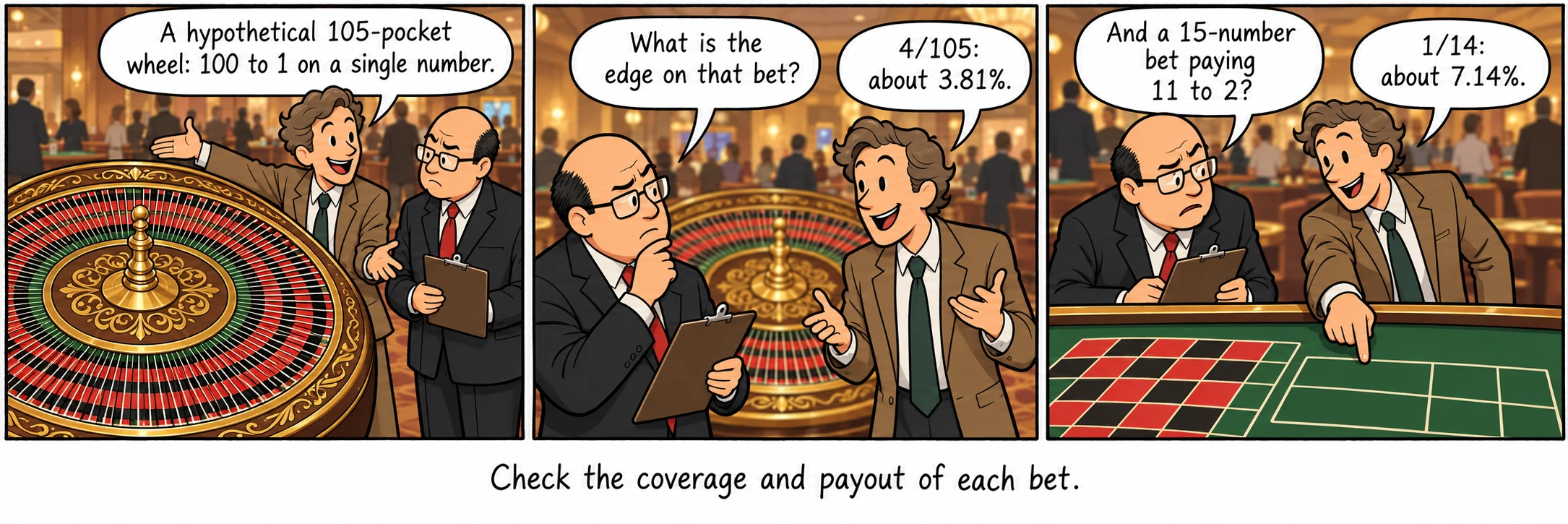
ꯀꯦꯁꯤꯅꯣꯒꯤ ꯄꯣꯀꯦꯠꯁꯤꯡ ꯃꯁꯤꯡ ꯊꯤꯕꯤꯌꯨ, ꯃꯇꯨꯡꯗ ꯃꯁꯤꯡ ꯌꯥꯎꯍꯟꯕ ꯑꯗꯨ ꯊꯤꯕꯤꯌꯨ꯫
ꯍꯧꯔꯛꯐꯃꯁꯤꯡ
- Bollman, M. Mathematics of the Big Four Casino Table Games: Blackjack, Baccarat, Craps, & Roulette.
- Ethier, S. N. The Doctrine of Chances: Probabilistic Aspects of Gambling.
- Thorp, E. O. The Mathematics of Gambling.
- Thorp, E. O. “The invention of the first wearable computer.”