ꯔꯨꯂꯦꯠꯀꯤ ꯍꯥꯎꯁ ꯑꯦꯖ
ꯊꯝꯂꯕ ꯁꯦꯜ ꯈꯨꯗꯤꯡꯗꯒꯤ ꯀꯦꯁꯤꯅꯣꯅ ꯑꯦꯚꯔꯦꯖꯗ ꯊꯃꯖꯤꯜꯂꯤꯕ ꯁꯔꯨꯛ꯫
ꯌꯨꯔꯣꯄꯤꯌꯟ ꯔꯨꯂꯦꯠ: ꯃꯍꯧꯁꯥꯒꯤ ꯕꯦꯠ ꯈꯨꯗꯤꯡꯃꯛꯇ 2.70%, ꯃꯔꯃꯗꯤ ꯄꯦꯑꯥꯎꯠꯁꯤꯡ ꯄꯣꯀꯦꯠ 36 ꯂꯩꯕ ꯃꯑꯣꯡꯗ ꯊꯤꯖꯤꯜꯂꯤ, ꯑꯗꯨꯕꯨ ꯄꯣꯀꯦꯠ 37 ꯂꯩ꯫
ꯊꯤꯖꯤꯟꯕꯒꯤ ꯃꯑꯣꯡ
ꯁ꯭ꯇ꯭ꯔꯦꯠ-ꯑꯞꯕꯦꯠꯁ꯭ꯇ꯭ꯔꯦꯠ-ꯑꯞꯃꯁꯤꯡ ꯑꯃꯈꯛꯇ, 35:1 ꯄꯦꯑꯥꯎꯠ꯫ꯃꯄꯨꯡ ꯄꯥꯕꯤꯌꯨ → ꯑꯃꯒꯤ ꯆꯨꯝꯃꯤꯟꯅꯕ ꯑꯣꯗꯁ 36 ꯗꯒꯤ 1 ꯑꯣꯏꯒꯗꯕꯅꯤ, ꯃꯔꯃꯗꯤ ꯃꯥꯏꯄꯥꯛꯄꯒꯤ ꯂꯝꯕꯤ ꯑꯃꯥ ꯈꯨꯗꯤꯡꯗ ꯃꯥꯏꯊꯤꯕꯒꯤ ꯂꯝꯕꯤ 36 ꯂꯩ꯫ ꯀꯦꯁꯤꯅꯣꯅ 35 ꯗꯒꯤ 1 ꯄꯤ꯫ ꯋꯥꯠꯂꯤꯕ ꯌꯨꯅꯤꯠꯁꯦꯜꯌꯨꯅꯤꯠꯁꯤꯁ꯭ꯇꯦꯝ ꯅꯠꯔꯒ ꯁꯥꯟꯅꯔꯤꯕ ꯑꯃꯅ ꯁꯤꯖꯤꯟꯅꯕ ꯃꯔꯨꯑꯣꯏꯕ ꯊꯝꯂꯕ ꯁꯦꯜ꯫ ꯄ꯭ꯔꯣꯒ꯭ꯔꯦꯁꯅꯁꯤꯡ ꯌꯨꯅꯤꯠꯇ ꯁꯟꯗꯣꯛꯂꯤ, ꯃꯔꯝ ꯑꯗꯨꯅ ꯃꯈꯣꯌ ꯀꯔꯤꯒꯨꯝꯕ ꯇꯦꯕꯜꯗ ꯆꯠꯂꯤ꯫ꯃꯄꯨꯡ ꯄꯥꯕꯤꯌꯨ → ꯑꯗꯨ ꯈꯨꯗꯣꯡꯆꯥꯕ ꯃꯥꯟꯅꯕ ꯃꯍꯩ 37 ꯗ ꯁꯟꯗꯣꯛꯂꯕꯗ ꯁ꯭ꯄꯤꯟ ꯈꯨꯗꯤꯡꯗ ꯊꯝꯂꯕ ꯁꯦꯜꯒꯤ 1/37 = 2.70% ꯑꯣꯏ꯫ ꯋꯥꯠꯄ ꯑꯁꯤꯃꯛ ꯄꯦꯑꯥꯎꯠꯁꯦꯜꯄꯦꯑꯥꯎꯠꯃꯥꯏꯄꯥꯛꯄ ꯕꯦꯠ ꯑꯃꯅ ꯍꯜꯂꯛꯄ ꯁꯦꯜ, ꯍꯜꯂꯀꯄ ꯊꯝꯂꯕ ꯁꯦꯜꯒꯤ ꯃꯊꯛꯇ “X ꯗꯒꯤ 1” ꯍꯥꯌꯅ ꯍꯥꯌꯏ꯫ꯃꯄꯨꯡ ꯄꯥꯕꯤꯌꯨ → ꯈꯨꯗꯤꯡꯃꯛꯇ ꯎꯏ, ꯃꯔꯃꯗꯤ ꯄꯦꯑꯥꯎꯠ ꯈꯨꯗꯤꯡꯃꯛꯅ 36/n − 1 ꯅꯤꯌꯝ ꯁꯤꯖꯤꯟꯅꯩ: ꯁ꯭ꯞꯂꯤꯠꯕꯦꯠꯁ꯭ꯞꯂꯤꯠꯌꯨꯝꯂꯣꯟꯅꯕ ꯃꯁꯤꯡ ꯑꯅꯤ, 17:1 ꯄꯦꯑꯥꯎꯠ꯫ꯃꯄꯨꯡ ꯄꯥꯕꯤꯌꯨ → ꯑꯃꯅ 17.5 ꯒꯤ ꯃꯍꯨꯠꯇ 17, ꯗꯖꯟꯕꯦꯠꯗꯖꯟ1–12, 13–24 ꯅꯠꯔꯒ 25–36, 2:1 ꯄꯦꯑꯥꯎꯠ꯫ꯃꯄꯨꯡ ꯄꯥꯕꯤꯌꯨ → ꯑꯃꯅ 2.083 ꯒꯤ ꯃꯍꯨꯠꯇ 2, ꯑꯉꯥꯡꯕꯅꯕꯦꯠꯑꯉꯥꯡꯕꯑꯉꯥꯡꯕ ꯃꯁꯤꯡ 18 ꯗ ꯊꯝꯕ ꯆꯞ ꯃꯥꯟꯅꯕ ꯕꯦꯠ꯫ ꯐ꯭ꯔꯦꯟꯆ: ꯔꯨꯖ꯫ꯃꯄꯨꯡ ꯄꯥꯕꯤꯌꯨ → 1.056 ꯒꯤ ꯃꯍꯨꯠꯇ 1 ꯄꯤ꯫ ꯋꯥꯠꯄ ꯑꯗꯨ ꯃꯇꯝ ꯄꯨꯝꯅꯃꯛꯇ ꯃꯥꯏꯄꯥꯛꯄ ꯈꯨꯗꯤꯡꯗ ꯌꯨꯅꯤꯠ 1/n ꯅꯤ, ꯑꯃꯁꯨꯡ ꯁ꯭ꯄꯤꯟ ꯈꯨꯗꯤꯡꯗ ꯃꯥꯏꯄꯥꯛꯄ n/37 ꯂꯩ, ꯃꯔꯝ ꯑꯗꯨꯅ ꯃꯇꯝ ꯄꯨꯝꯅꯃꯛꯇ ꯁ꯭ꯄꯤꯟ ꯈꯨꯗꯤꯡꯗ 1/37 ꯅꯤ꯫
ꯑꯦꯖ ꯑꯃꯁꯨꯡ ꯍꯣꯜꯗ
House edgeꯃꯦꯊꯃꯦꯇꯤꯛꯁꯍꯥꯎꯁ ꯑꯦꯖꯊꯝꯂꯕ ꯁꯦꯜ ꯈꯨꯗꯤꯡꯗꯒꯤ ꯀꯦꯁꯤꯅꯣꯅ ꯑꯦꯚꯔꯦꯖꯗ ꯊꯃꯖꯤꯜꯂꯤꯕ ꯁꯔꯨꯛ: ꯌꯨꯔꯣꯄꯤꯌꯟ ꯔꯨꯂꯦꯠꯇ 2.70%꯫ꯃꯄꯨꯡ ꯄꯥꯕꯤꯌꯨ → is expected lossꯃꯦꯊꯃꯦꯇꯤꯛꯁꯃꯥꯡꯒꯗꯕ ꯁꯦꯜꯐꯪꯒꯗꯕ ꯃꯃꯂꯕꯨ ꯕꯦꯠ ꯊꯝꯂꯕ ꯁꯦꯜ ꯄꯨꯝꯅꯃꯛꯅ ꯃꯅꯥꯡꯕ; ꯁꯦꯁꯟ ꯅꯠꯔꯒ ꯃꯇꯝ ꯑꯃꯒꯤ ꯃꯅꯨꯡꯗ ꯃꯥꯡꯕ ꯑꯦꯚꯔꯦꯖ ꯁꯦꯜ꯫ꯃꯄꯨꯡ ꯄꯥꯕꯤꯌꯨ → divided by the amount wagered. Table-game hold compares actual casino win with the money bought in or dropped, depending on the reporting definition. They have different denominators. Completing 200 standard single-zeroꯆꯛꯔꯖꯤꯔꯣꯆꯞ ꯃꯥꯟꯅꯕ, ꯗꯖꯟ ꯅꯠꯔꯒ ꯀꯂꯝ ꯕꯦꯠ ꯑꯃꯠꯇꯅ ꯀꯨꯞꯇꯕ ꯑꯁꯪꯕ ꯄꯣꯀꯦꯠ ꯑꯃꯈꯛꯇ; ꯍꯥꯎꯁ ꯑꯦꯖꯀꯤ ꯍꯧꯔꯀꯐꯝꯅꯤ꯫ ꯑꯇꯣꯞꯄ ꯃꯃꯤꯡ: ꯁꯤꯡꯒꯜ ꯖꯤꯔꯣ, 0꯫ꯃꯄꯨꯡ ꯄꯥꯕꯤꯌꯨ → spins at $10 creates $2,000 of turnoverꯁꯦꯜꯇꯔꯅꯑꯣꯚꯔꯁꯦꯁꯟ ꯅꯠꯔꯒ ꯃꯇꯝ ꯑꯃꯒꯤ ꯃꯅꯨꯡꯗ ꯕꯦꯠ ꯊꯝꯂꯕ ꯁꯦꯜ ꯄꯨꯝꯅꯃꯛ, ꯑꯃꯨꯛ ꯍꯟꯅꯥ ꯊꯝꯂꯕ ꯃꯥꯏꯄꯥꯛꯇꯨꯅ ꯐꯪꯂꯕ ꯁꯦꯜꯁꯨ ꯌꯥꯎꯅ꯫ ꯑꯇꯣꯞꯄ ꯃꯃꯤꯡ: ꯍꯦꯟꯗꯜ, ꯑꯦꯛꯁꯟ꯫ꯃꯄꯨꯡ ꯄꯥꯕꯤꯌꯨ → and an expected loss of $54.05. The actual loss may be very different, and a $100 starting bankrollꯁꯦꯜꯕꯦꯡꯀꯔꯣꯜꯁꯥꯟꯅꯅꯕ ꯇꯣꯉꯥꯟꯅ ꯊꯝꯂꯕ ꯁꯦꯜ ꯄꯨꯝꯅꯃꯛ꯫ ꯕꯦꯡꯀꯔꯣꯜ ꯃꯦꯅꯦꯖꯃꯦꯟꯠ ꯍꯥꯌꯕꯁꯤ ꯃꯗꯨꯒꯤ ꯀꯌꯥ ꯕꯦꯠ ꯈꯨꯗꯤꯡꯗ ꯑꯃꯁꯨꯡ ꯁꯦꯁꯟ ꯈꯨꯗꯤꯡꯗ ꯈꯨꯗꯣꯡꯊꯤꯕꯗ ꯊꯃꯒꯗꯒꯦ ꯍꯥꯌꯕ ꯋꯥꯔꯦꯞ ꯂꯧꯕꯅꯤ꯫ꯃꯄꯨꯡ ꯄꯥꯕꯤꯌꯨ → may run out before all 200 spins are completed.
ꯀꯔꯤꯒꯤ ꯕꯦꯠ ꯈꯨꯗꯤꯡꯃꯛꯀꯤ ꯑꯦꯖ ꯃꯥꯟꯅꯕꯒꯦ
Standard single-zero payouts follow 36/n − 1, which gives the same 1/37 expected loss per unit on each bet. A fair single-zero straight-up payout would be 36 to 1, giving neither side an expected profit. Other rules need separate calculations: the American five-number bet has a 7.89% edge, while la partageꯅꯤꯌꯝꯂꯥ ꯄꯥꯔꯇꯥꯖꯐ꯭ꯔꯦꯟꯆ ꯅꯤꯌꯝ: ꯖꯤꯔꯣ ꯊꯣꯛꯂꯕꯗꯤ ꯆꯞ ꯃꯥꯟꯅꯕ ꯕꯦꯠꯀꯤ ꯊꯝꯂꯕ ꯁꯦꯜꯒꯤ ꯁꯔꯨꯛ ꯑꯍꯦꯟꯕ ꯍꯜꯂꯀꯏ꯫ ꯕꯦꯠ ꯑꯗꯨꯁꯤꯡꯒꯤ ꯍꯥꯎꯁ ꯑꯦꯖ 1.35% ꯐꯥꯑꯣꯕ ꯁꯔꯨꯛ ꯑꯅꯤꯗ ꯊꯥꯖꯤꯜꯂꯤ꯫ꯃꯄꯨꯡ ꯄꯥꯕꯤꯌꯨ → reduces the edge on single-zero even-money betsꯕꯦꯠꯆꯞ ꯃꯥꯟꯅꯕ ꯕꯦꯠꯑꯉꯥꯡꯕ/ꯑꯃꯨꯕ, ꯕꯤꯖꯣꯔ/ꯖꯣꯔ, ꯑꯋꯥꯡꯕ/ꯑꯅꯦꯝꯕ꯫ ꯃꯁꯤꯡ 18, 1:1 ꯄꯦꯑꯥꯎꯠ꯫ꯃꯄꯨꯡ ꯄꯥꯕꯤꯌꯨ → to 1.35%.
ꯔꯨꯂꯦꯠꯀꯤ ꯑꯦꯖ ꯑꯁꯤ ꯀꯔꯤ ꯅꯠꯇꯕꯒꯦ
It is not the probabilityꯃꯦꯊꯃꯦꯇꯤꯛꯁꯊꯣꯛꯄꯒꯤ ꯈꯨꯗꯣꯡꯆꯥꯕꯃꯍꯩ ꯑꯃꯥ ꯊꯣꯛꯄꯒꯤ ꯈꯨꯗꯣꯡꯆꯥꯕ, 0 ꯗꯒꯤ 1 ꯐꯥꯑꯣꯕ ꯅꯠꯔꯒ 0% ꯗꯒꯤ 100% ꯐꯥꯑꯣꯕ꯫ ꯃꯁꯤꯡ ꯑꯃꯥ: 1/37 = 2.70%꯫ꯃꯄꯨꯡ ꯄꯥꯕꯤꯌꯨ → of losing a session. For example, exactly 100 independent, fixed-stake bets on red on a fair single-zero wheel finish in profit about 35.53% of the time. The edge is not a fixed session fee: expected loss scales with the total amount wagered. Combining standard bets does not reduce it; their expected losses add.
ꯁꯦꯜꯗ
Per $1,000 wagered the expected loss is $27.03 in European rouletteꯃꯈꯜꯌꯨꯔꯣꯄꯤꯌꯟ ꯔꯨꯂꯦꯠꯁꯤꯡꯒꯜ ꯖꯤꯔꯣ ꯆꯛꯔ, ꯄꯣꯀꯦꯠ 37, ꯍꯥꯎꯁ ꯑꯦꯖ 2.70%꯫ ꯋꯦꯕꯁꯥꯏꯠ ꯑꯁꯤꯒꯤ ꯃꯔꯨꯑꯣꯏꯕ ꯃꯑꯣꯡꯅꯤ꯫ꯃꯄꯨꯡ ꯄꯥꯕꯤꯌꯨ →, $52.63 in American, $13.51 on even-money bets with la partage. Wagering $500 per session, twice a week for 52 weeks, creates $52,000 of turnover. On standard single-zero bets the expected loss is about $1,405; the actual result can differ substantially.
ꯁ꯭ꯄꯤꯟ ꯈꯨꯗꯤꯡꯗ ꯅꯠꯔꯒ ꯂꯣꯏꯁꯤꯜꯂꯕ ꯕꯦꯠ ꯈꯨꯗꯤꯡꯗ
Standard roulette bets settle on one spin. A bet that stays on the layoutꯈꯨꯠꯂꯥꯏꯂꯦꯑꯥꯎꯠꯇꯦꯕꯜꯗ ꯏꯔꯕ ꯕꯦꯠ ꯊꯝꯕꯒꯤ ꯒ꯭ꯔꯤꯗ꯫ ꯑꯇꯣꯞꯄ ꯃꯃꯤꯡ: ꯇꯦꯕꯜ, ꯐꯦꯜꯠ, ꯀ꯭ꯂꯣꯊ꯫ꯃꯄꯨꯡ ꯄꯥꯕꯤꯌꯨ → after a push needs two measures: expected loss per spin and expected loss per completed bet. In the Riverboat Roulette rules described by Michael Shackleford, teal covers three of 38 pocketsꯈꯨꯠꯂꯥꯏꯄꯣꯀꯦꯠꯔꯣꯇꯔꯗ ꯂꯩꯕ ꯃꯁꯤꯡ ꯏꯔꯕ ꯀꯣꯠ 37 ꯒꯤ ꯃꯅꯨꯡꯗ ꯑꯃꯥ꯫ ꯑꯇꯣꯞꯄ ꯃꯃꯤꯡ: ꯁ꯭ꯂꯣꯠ, ꯀꯞ꯫ꯃꯄꯨꯡ ꯄꯥꯕꯤꯌꯨ → and pays 2:1. Eight white pockets lose; the other 27 outcomes push.
Assuming independent, equally likely outcomes and leaving the bet up until it settles, the expected loss is 2/11 of the original stake per completed bet (18.18%). While the bet is active, its expected loss per spin is 2/38 (5.26%). It takes an average of 38/11 spins to settle. To estimate an hourly cost, you also need the stake and the number of spins for which it stays active; neither percentage predicts an actual session result.
ꯀꯦꯁꯤꯅꯣ ꯑꯃꯅ ꯃꯃꯜ ꯑꯔꯥꯅꯕ ꯂꯦꯞꯄꯥ ꯃꯇꯃꯗ
A payout error can give players a mathematical advantage. Hunacek (2025), citing Bollman, describes an October 1994 Grand Casino Biloxi bet paying 80 to 1 on three dice totaling 4. Three dice fall 216 ways and only 3 of them total 4, so the bet returned 81 × 3/216 = 1.125 for every unit staked: a 12.5% edge to the player. The account says the casino lost about $180,000 in a day and later lowered the payout to 60 to 1. That payout turns the same 3 chances in 216 into a 15.3% house edge. These historical details are a published account, not a result established by the calculation. The lesson is to calculate the expected return from the actual rules and payout table.
ꯑꯇꯣꯞꯄ ꯇꯦꯕꯜ ꯒꯦꯃꯁꯤꯡꯒꯤ ꯁꯥꯏꯗ ꯕꯦꯠꯁꯤꯡ
The examples below compare main bets with selected side betsꯕꯦꯠꯁꯥꯏꯗ ꯕꯦꯠꯃꯔꯨꯑꯣꯏꯕ ꯁꯥꯟꯅꯕꯗ ꯁꯝꯃꯤꯟꯅꯕ ꯊꯃꯒꯗꯕ ꯅꯠꯇꯕ ꯍꯦꯟꯅꯥ ꯊꯝꯕ ꯕꯦꯠ, ꯌꯥꯝꯅ ꯁ꯭ꯇ꯭ꯔꯤꯛ, ꯕꯣꯅꯁ ꯊꯧꯔꯝ ꯅꯠꯔꯒ ꯖꯦꯀꯄꯣꯠ ꯑꯃꯗ꯫ ꯌꯥꯝꯅ ꯃꯇꯃꯗ ꯃꯔꯨꯑꯣꯏꯕ ꯕꯦꯠꯁꯤꯡꯗꯒꯤ ꯃꯃꯜ ꯍꯦꯟꯅꯥ ꯆꯪꯏ꯫ꯃꯄꯨꯡ ꯄꯥꯕꯤꯌꯨ → described by Bollman (2021). In these examples, the blackjack, baccarat and craps side bets have higher edges than the main bets. That is not a rule for every side bet or every set of conditions. Colors and WINGO illustrate the reverse: their quoted edges are below the 5.26% on standard American rouletteꯃꯈꯜꯑꯃꯦꯔꯤꯀꯟ ꯔꯨꯂꯦꯠ0 ꯑꯃꯁꯨꯡ 00 ꯂꯩꯕ ꯆꯛꯔ, ꯄꯣꯀꯦꯠ 38, ꯍꯥꯎꯁ ꯑꯦꯖ 5.26%꯫ ꯃꯁꯤ ꯋꯦꯕꯁꯥꯏꯠ ꯑꯁꯤꯒꯤ ꯃꯔꯨꯑꯣꯏꯕ ꯃꯑꯣꯡ ꯅꯠꯇꯦ꯫ꯃꯄꯨꯡ ꯄꯥꯕꯤꯌꯨ → bets.
ꯐꯣꯔꯃꯨꯂꯥ
ꯋꯥꯍꯪꯁꯤꯡ
ꯅꯠꯇꯦ꯫ ꯃꯁꯤ ꯅꯍꯥꯛꯅ ꯊꯝꯂꯤꯕ ꯁꯦꯜꯒꯤ 2.70% ꯅꯤ꯫ ꯁꯦꯜ ꯑꯗꯨꯃꯛ ꯑꯃꯨꯛ ꯍꯟꯅꯥ ꯊꯝꯂꯕꯗ ꯃꯗꯨ ꯑꯃꯨꯛ ꯍꯟꯅꯥ ꯊꯝꯕꯅꯤ꯫
ꯍꯣꯡꯗꯦ꯫ ꯃꯁꯤ ꯆꯥꯡ ꯑꯃꯅꯤ꯫ ꯗꯣꯂꯥꯔꯗ ꯃꯥꯡꯒꯗꯕ ꯁꯦꯜ ꯑꯗꯨ ꯊꯝꯂꯕ ꯁꯦꯜꯒꯥ ꯂꯣꯌꯅꯅ ꯍꯦꯅꯒꯠꯂꯀꯏ꯫
ꯑꯦꯖꯅ ꯊꯤꯖꯤꯟꯂꯕꯗ ꯌꯨꯔꯣꯄꯤꯌꯟꯒꯤ ꯃꯍꯧꯁꯥꯒꯤ ꯕꯦꯠ ꯄꯨꯝꯅꯃꯛ ꯃꯥꯟꯅꯩ; ꯃꯈꯣꯌ ꯀꯌꯥ ꯌꯥꯝꯅ ꯃꯥꯏꯄꯥꯛꯂꯤꯕꯒꯦ ꯑꯃꯁꯨꯡ ꯀꯌꯥ ꯄꯤꯕꯒꯦ ꯍꯥꯌꯕꯗꯈꯛ ꯈꯦꯠꯅꯩ꯫ ꯂꯥ ꯄꯥꯔꯇꯥꯖ ꯂꯩꯔꯕꯗ ꯆꯞ ꯃꯥꯟꯅꯕ ꯕꯦꯠꯁꯤꯡꯒꯤ ꯑꯦꯖ ꯑꯇꯣꯞꯄꯁꯤꯡꯒꯤ ꯁꯔꯨꯛ ꯑꯍꯦꯟꯕꯅꯤ꯫
ꯃꯦꯊꯃꯦꯇꯤꯛꯁꯀꯥ ꯁꯥꯟꯅꯕ
ꯃꯁꯤꯁꯤꯡ ꯑꯍꯥꯅꯕꯗ ꯅꯍꯥꯛ ꯃꯁꯥꯃꯛꯅ ꯍꯣꯠꯅꯕꯤꯌꯨ꯫ ꯄꯥꯎꯈꯨꯝ ꯈꯨꯗꯤꯡꯃꯛ ꯊꯨꯡꯗꯨꯅ ꯊꯝꯂꯤ; ꯁꯦꯝ ꯁꯥꯔꯕ ꯃꯇꯃꯗ ꯍꯥꯡꯗꯣꯛꯄꯤꯌꯨ꯫
On a fair single-zeroꯆꯛꯔꯖꯤꯔꯣꯆꯞ ꯃꯥꯟꯅꯕ, ꯗꯖꯟ ꯅꯠꯔꯒ ꯀꯂꯝ ꯕꯦꯠ ꯑꯃꯠꯇꯅ ꯀꯨꯞꯇꯕ ꯑꯁꯪꯕ ꯄꯣꯀꯦꯠ ꯑꯃꯈꯛꯇ; ꯍꯥꯎꯁ ꯑꯦꯖꯀꯤ ꯍꯧꯔꯀꯐꯝꯅꯤ꯫ ꯑꯇꯣꯞꯄ ꯃꯃꯤꯡ: ꯁꯤꯡꯒꯜ ꯖꯤꯔꯣ, 0꯫ꯃꯄꯨꯡ ꯄꯥꯕꯤꯌꯨ → wheel with standard payoutsꯁꯦꯜꯄꯦꯑꯥꯎꯠꯃꯥꯏꯄꯥꯛꯄ ꯕꯦꯠ ꯑꯃꯅ ꯍꯜꯂꯛꯄ ꯁꯦꯜ, ꯍꯜꯂꯀꯄ ꯊꯝꯂꯕ ꯁꯦꯜꯒꯤ ꯃꯊꯛꯇ “X ꯗꯒꯤ 1” ꯍꯥꯌꯅ ꯍꯥꯌꯏ꯫ꯃꯄꯨꯡ ꯄꯥꯕꯤꯌꯨ →, why do a straight-up bet and redꯕꯦꯠꯑꯉꯥꯡꯕꯑꯉꯥꯡꯕ ꯃꯁꯤꯡ 18 ꯗ ꯊꯝꯕ ꯆꯞ ꯃꯥꯟꯅꯕ ꯕꯦꯠ꯫ ꯐ꯭ꯔꯦꯟꯆ: ꯔꯨꯖ꯫ꯃꯄꯨꯡ ꯄꯥꯕꯤꯌꯨ → both have a house edgeꯃꯦꯊꯃꯦꯇꯤꯛꯁꯍꯥꯎꯁ ꯑꯦꯖꯊꯝꯂꯕ ꯁꯦꯜ ꯈꯨꯗꯤꯡꯗꯒꯤ ꯀꯦꯁꯤꯅꯣꯅ ꯑꯦꯚꯔꯦꯖꯗ ꯊꯃꯖꯤꯜꯂꯤꯕ ꯁꯔꯨꯛ: ꯌꯨꯔꯣꯄꯤꯌꯟ ꯔꯨꯂꯦꯠꯇ 2.70%꯫ꯃꯄꯨꯡ ꯄꯥꯕꯤꯌꯨ → of 1/37?
ꯄꯥꯎꯈꯨꯝ ꯎꯠꯄ
ꯄꯥꯎꯈꯨꯝ Both return 36/37 of the stake on average, despite their different win probabilities.
For a one-unitꯁꯦꯜꯌꯨꯅꯤꯠꯁꯤꯁ꯭ꯇꯦꯝ ꯅꯠꯔꯒ ꯁꯥꯟꯅꯔꯤꯕ ꯑꯃꯅ ꯁꯤꯖꯤꯟꯅꯕ ꯃꯔꯨꯑꯣꯏꯕ ꯊꯝꯂꯕ ꯁꯦꯜ꯫ ꯄ꯭ꯔꯣꯒ꯭ꯔꯦꯁꯅꯁꯤꯡ ꯌꯨꯅꯤꯠꯇ ꯁꯟꯗꯣꯛꯂꯤ, ꯃꯔꯝ ꯑꯗꯨꯅ ꯃꯈꯣꯌ ꯀꯔꯤꯒꯨꯝꯕ ꯇꯦꯕꯜꯗ ꯆꯠꯂꯤ꯫ꯃꯄꯨꯡ ꯄꯥꯕꯤꯌꯨ → standard bet covering n pocketsꯈꯨꯠꯂꯥꯏꯄꯣꯀꯦꯠꯔꯣꯇꯔꯗ ꯂꯩꯕ ꯃꯁꯤꯡ ꯏꯔꯕ ꯀꯣꯠ 37 ꯒꯤ ꯃꯅꯨꯡꯗ ꯑꯃꯥ꯫ ꯑꯇꯣꯞꯄ ꯃꯃꯤꯡ: ꯁ꯭ꯂꯣꯠ, ꯀꯞ꯫ꯃꯄꯨꯡ ꯄꯥꯕꯤꯌꯨ →, a win returns 36/n units including the stake. The win probabilityꯃꯦꯊꯃꯦꯇꯤꯛꯁꯊꯣꯛꯄꯒꯤ ꯈꯨꯗꯣꯡꯆꯥꯕꯃꯍꯩ ꯑꯃꯥ ꯊꯣꯛꯄꯒꯤ ꯈꯨꯗꯣꯡꯆꯥꯕ, 0 ꯗꯒꯤ 1 ꯐꯥꯑꯣꯕ ꯅꯠꯔꯒ 0% ꯗꯒꯤ 100% ꯐꯥꯑꯣꯕ꯫ ꯃꯁꯤꯡ ꯑꯃꯥ: 1/37 = 2.70%꯫ꯃꯄꯨꯡ ꯄꯥꯕꯤꯌꯨ → is n/37. Expected gross return is therefore (n/37)×(36/n)=36/37, leaving an expected lossꯃꯦꯊꯃꯦꯇꯤꯛꯁꯃꯥꯡꯒꯗꯕ ꯁꯦꯜꯐꯪꯒꯗꯕ ꯃꯃꯂꯕꯨ ꯕꯦꯠ ꯊꯝꯂꯕ ꯁꯦꯜ ꯄꯨꯝꯅꯃꯛꯅ ꯃꯅꯥꯡꯕ; ꯁꯦꯁꯟ ꯅꯠꯔꯒ ꯃꯇꯝ ꯑꯃꯒꯤ ꯃꯅꯨꯡꯗ ꯃꯥꯡꯕ ꯑꯦꯚꯔꯦꯖ ꯁꯦꯜ꯫ꯃꯄꯨꯡ ꯄꯥꯕꯤꯌꯨ → of 1/37, about 2.70%.
This covers the ordinary payout pattern. An American five-number bet, special payouts and French half-back even-money rules need their own calculations. Equal edges per unit do not mean equal risk or equal expected loss when the stakes differ.
ꯂꯣꯇꯔꯤꯒꯨꯝꯕ ꯁꯥꯟꯅꯕ ꯀꯤꯅꯣꯅ ꯕꯦꯠ ꯊꯝꯕ ꯁꯦꯜꯒꯤ 25% ꯅꯠꯔꯒ ꯃꯗꯨꯗꯒꯤ ꯍꯦꯟꯅꯥ ꯊꯝꯖꯤꯜꯂꯤ꯫ ꯀꯦꯁꯤꯅꯣ ꯑꯃꯅ ꯔꯨꯂꯦꯠ ꯆꯛꯔꯗ ꯖꯤꯔꯣ ꯍꯥꯄꯆꯤꯟꯗꯨꯅ ꯄꯦꯑꯥꯎꯠꯁꯤꯡ ꯍꯣꯡꯗꯣꯛꯂꯃꯗ꯭ꯔꯕꯗꯤ, ꯔꯨꯂꯦꯠꯄꯨ ꯀꯤꯅꯣꯒꯨꯝꯅ ꯃꯃꯜ ꯂꯩꯍꯟꯅꯕꯒꯤꯗꯃꯛ ꯖꯤꯔꯣ ꯀꯌꯥ ꯃꯊꯧ ꯇꯥꯒꯅꯤ?
ꯄꯥꯎꯈꯨꯝ ꯎꯠꯄ
ꯄꯥꯎꯈꯨꯝ ꯖꯤꯔꯣ ꯇꯔꯥꯅꯤꯊꯣꯏ: ꯄꯣꯀꯦꯠ 48 ꯂꯩꯕ ꯆꯛꯔ꯫
With z zeros the wheel has 36 + z pockets, and the payouts still assume 36. By the rule in the puzzle above, every standard bet loses z units on average in 36 + z spins, so the house edge is z/(36 + z).
Set that equal to one quarter: 4z = 36 + z, so z = 12. Twelve zeros on a 48-pocket wheel would cost 25%.
A triple-zero wheel has one quarter of that many zeros; with standard payouts its house edge is 3/39, about 7.69%.
ꯖꯤꯔꯣꯄꯣꯀꯦꯠꯍꯥꯎꯁ ꯑꯦꯖ1372.70%2385.26%3397.69%44010.00%124825.00%Suppose a uniform 36-number wheel has no zero. A single-number bet returns 25 for 1, while a $2 red bet returns $3 on a win. Red covers 18 numbers. Is this cheaper per dollar than standard single-zero roulette?
ꯄꯥꯎꯈꯨꯝ ꯎꯠꯄ
ꯄꯥꯎꯈꯨꯝ ꯅꯠꯇꯦ, ꯌꯥꯝꯅ ꯃꯃꯜ ꯂꯩꯕꯅꯤ: ꯃꯁꯤꯡ ꯑꯃꯗ 30.56% ꯑꯃꯁꯨꯡ ꯑꯉꯥꯡꯕ ꯅꯠꯔꯒ ꯑꯃꯨꯕꯗ 25%, ꯌꯨꯔꯣꯄꯤꯌꯟ ꯆꯛꯔꯒꯤ 2.70% ꯒꯥ ꯆꯥꯡꯗꯝꯅꯕꯗ꯫
“For 1” includes the returned stake. A one-unit number bet has expected gross return 25/36, so the edge is 11/36, about 30.56%.
The $2 red bet returns $3 with probability one-half. Its expected return is $1.50 on $2 staked: a 25% edge.
Removing zero does not ensure a fair gameꯃꯦꯊꯃꯦꯇꯤꯛꯁꯆꯨꯝꯃꯤꯟꯅꯕ ꯁꯥꯟꯅꯕꯀꯅꯥꯒꯨꯝꯕ ꯃꯥꯏꯀꯩ ꯑꯃꯠꯇꯗ ꯑꯦꯖ ꯂꯩꯇꯕ ꯁꯥꯟꯅꯕ: ꯕꯦꯠ ꯈꯨꯗꯤꯡꯃꯛꯀꯤ ꯐꯪꯒꯗꯕ ꯃꯃꯜ ꯖꯤꯔꯣꯅꯤ꯫ꯃꯄꯨꯡ ꯄꯥꯕꯤꯌꯨ →. Probabilities and payouts must be considered together. These are hypothetical terms, not a claim about a particular lottery product.
ꯀꯦꯁꯤꯅꯣ ꯑꯃꯅ 1 ꯗꯒꯤ 36 ꯐꯥꯑꯣꯕꯒꯤ ꯄ꯭ꯔꯥꯏꯝ ꯃꯁꯤꯡꯃꯦꯊꯃꯦꯇꯤꯛꯁꯄ꯭ꯔꯥꯏꯝ ꯃꯁꯤꯡ1 ꯗꯒꯤ ꯍꯦꯟꯕ ꯃꯄꯨꯡ ꯐꯥꯕ ꯃꯁꯤꯡ, ꯃꯁꯤꯕꯨ 1 ꯑꯃꯁꯨꯡ ꯃꯁꯥꯃꯛꯅ ꯈꯛꯇ ꯆꯨꯃꯊꯣꯛꯅ ꯌꯦꯟꯊꯣꯛꯄ ꯉꯝꯃꯤ: 2, 3, 5, 7, 11, 13 ꯑꯁꯤꯅ ꯆꯠꯂꯤ꯫ꯃꯄꯨꯡ ꯄꯥꯕꯤꯌꯨ → ꯇꯔꯥꯅꯤꯊꯣꯏꯗ ꯕꯦꯠ ꯑꯅꯧꯕ ꯑꯃꯥ ꯄꯥꯝꯃꯤ: 2, 3, 5, 7, 11, 13, 17, 19, 23, 29 ꯑꯃꯁꯨꯡ 31꯫ ꯌꯨꯔꯣꯄꯤꯌꯟ ꯆꯛꯔꯒꯤ ꯑꯇꯩ ꯕꯦꯠ ꯈꯨꯗꯤꯡꯃꯛꯒꯨꯝꯅ 2.70% ꯈꯛ ꯃꯃꯜ ꯂꯩꯅꯕꯒꯤꯗꯃꯛ ꯀꯌꯥ ꯄꯦꯑꯥꯎꯠ ꯄꯤꯒꯗꯒꯦ? 2 ꯗꯒꯤ 1 ꯗ ꯀꯌꯥ ꯃꯃꯜ ꯂꯩꯒꯅꯤ?
ꯄꯥꯎꯈꯨꯝ ꯎꯠꯄ
ꯄꯥꯎꯈꯨꯝ 25 ꯗꯒꯤ 11, ꯈꯟꯊꯕꯗ 2.27 ꯗꯒꯤ 1꯫ 2 ꯗꯒꯤ 1 ꯗ 10.81% ꯃꯃꯜ ꯂꯩꯒꯅꯤ꯫
Use the rule from the first puzzle: a bet on n numbers pays (36 − n)/n to 1. With n = 11 that is 25/11 to 1, a fractional payout: a $10 stake would win $250/11, about $22.73, before any rounding rule.
At 2 to 1, a $1 bet wins $2 on 11 spins in 37 and loses $1 on the other 26: 22 − 26 = −4 units every 37 spins, 10.81%.
This is why roulette sells bets on 1, 2, 3, 4, 6, 12 and 18 numbers: 36 divides by each of them, so the standard payout is a whole number. These are not fair payouts on a 37-pocket wheel: fair odds would use 37 rather than 36.
ꯅꯣꯛꯅꯕꯒꯤ ꯀꯃꯤꯛ
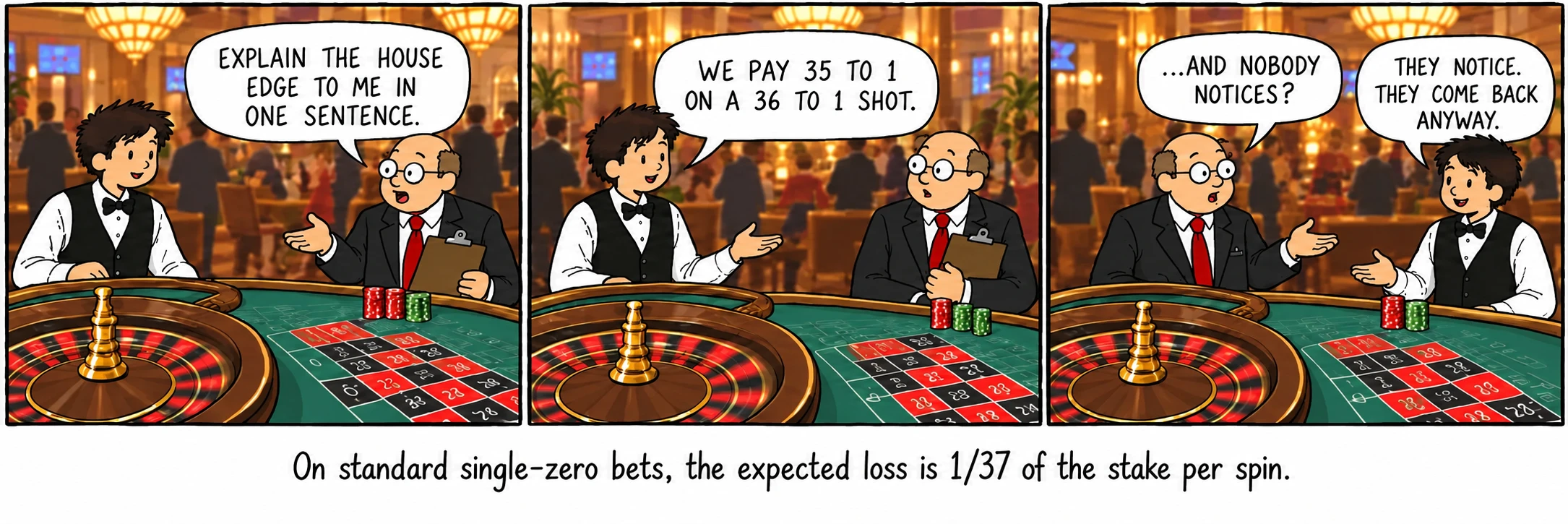
ꯊꯝꯂꯕ ꯁꯦꯜ ꯈꯨꯗꯤꯡꯒꯤ 1/37, ꯕꯦꯠ ꯈꯨꯗꯤꯡꯗ, ꯁ꯭ꯄꯤꯟ ꯈꯨꯗꯤꯡꯗ꯫
ꯍꯧꯔꯛꯐꯃꯁꯤꯡ
- Ethier, S. N. The Doctrine of Chances: Probabilistic Aspects of Gambling.
- Epstein, R. A. The Theory of Gambling and Statistical Logic, 2nd ed.
- Bollman, M. Mathematics of the Big Four Casino Table Games: Blackjack, Baccarat, Craps, & Roulette.
- Hunacek, M. Quantitative Literacy Through Games and Gambling.