ꯈꯣꯡꯊꯥꯡ ꯈꯣꯡꯊꯥꯡ: ꯑꯉꯥꯡꯕꯗ $100 ꯒꯤ ꯅꯨꯡꯊꯤꯜ ꯑꯃꯥ
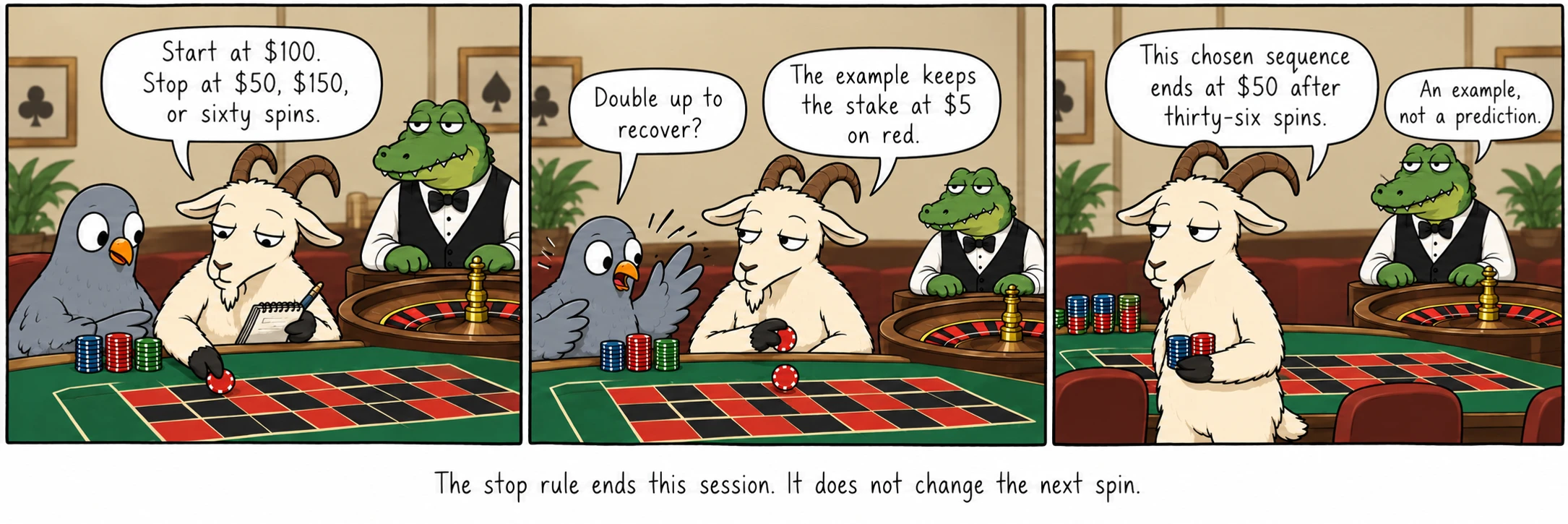
A $100 starting balance, $5 on red and two stop limits. Follow a constructed sequence that reaches the loss limit on spin 36.

ꯂꯥꯏꯕ ꯇꯦꯕꯜ ꯑꯃꯗ ꯁꯤꯃꯨꯂꯦꯠ ꯇꯧꯔꯕ ꯅꯨꯡꯊꯤꯜ ꯑꯃꯥ: $100 ꯒꯤ ꯕꯖꯦꯠꯇꯒꯤ ꯑꯉꯥꯡꯕꯗ $5 ꯊꯝꯗꯨꯅ ꯁ꯭ꯄꯤꯟ 60 ꯐꯥꯑꯣꯕ, $50 ꯒꯤ ꯁ꯭ꯇꯣꯞ-ꯂꯣꯁ ꯑꯃꯁꯨꯡ $50 ꯒꯤ ꯁ꯭ꯇꯣꯞ-ꯋꯤꯟꯒ ꯂꯣꯌꯅꯅ꯫ ꯁ꯭ꯇꯣꯞ-ꯂꯣꯁꯅ ꯁ꯭ꯄꯤꯟ 36 ꯗ ꯂꯣꯏꯁꯤꯅꯈꯤ꯫ ꯁꯦꯁꯟ ꯑꯁꯤꯅ ꯚꯦꯌꯔꯤꯌꯦꯟꯁ ꯑꯁꯤ ꯃꯇꯝ ꯑꯗꯨꯃꯛꯇꯗ ꯀꯔꯝꯅ ꯎꯕꯒꯦ ꯑꯃꯁꯨꯡ ꯀꯔꯤꯒꯤ ꯂꯦꯞꯄꯒꯤ ꯅꯤꯌꯝ ꯑꯗꯨꯈꯛ ꯃꯔꯨ ꯑꯣꯏꯕ ꯋꯥꯔꯦꯞꯅꯤ ꯍꯥꯌꯕ ꯎꯠꯂꯤ꯫
ꯊꯧꯔꯥꯡ
Use a standard single-zeroꯆꯛꯔꯖꯤꯔꯣꯆꯞ ꯃꯥꯟꯅꯕ, ꯗꯖꯟ ꯅꯠꯔꯒ ꯀꯂꯝ ꯕꯦꯠ ꯑꯃꯠꯇꯅ ꯀꯨꯞꯇꯕ ꯑꯁꯪꯕ ꯄꯣꯀꯦꯠ ꯑꯃꯈꯛꯇ; ꯍꯥꯎꯁ ꯑꯦꯖꯀꯤ ꯍꯧꯔꯀꯐꯝꯅꯤ꯫ ꯑꯇꯣꯞꯄ ꯃꯃꯤꯡ: ꯁꯤꯡꯒꯜ ꯖꯤꯔꯣ, 0꯫ꯃꯄꯨꯡ ꯄꯥꯕꯤꯌꯨ → wheel. Start with $100, stake $5 on redꯕꯦꯠꯑꯉꯥꯡꯕꯑꯉꯥꯡꯕ ꯃꯁꯤꯡ 18 ꯗ ꯊꯝꯕ ꯆꯞ ꯃꯥꯟꯅꯕ ꯕꯦꯠ꯫ ꯐ꯭ꯔꯦꯟꯆ: ꯔꯨꯖ꯫ꯃꯄꯨꯡ ꯄꯥꯕꯤꯌꯨ →, and stop at a $50 or $150 balance, or after sixty spins, whichever comes first. These are illustrative settings, not a claim that $100 or $5 is suitable for every player. At exactly sixty fixed-stake spins, expected lossꯃꯦꯊꯃꯦꯇꯤꯛꯁꯃꯥꯡꯒꯗꯕ ꯁꯦꯜꯐꯪꯒꯗꯕ ꯃꯃꯂꯕꯨ ꯕꯦꯠ ꯊꯝꯂꯕ ꯁꯦꯜ ꯄꯨꯝꯅꯃꯛꯅ ꯃꯅꯥꯡꯕ; ꯁꯦꯁꯟ ꯅꯠꯔꯒ ꯃꯇꯝ ꯑꯃꯒꯤ ꯃꯅꯨꯡꯗ ꯃꯥꯡꯕ ꯑꯦꯚꯔꯦꯖ ꯁꯦꯜ꯫ꯃꯄꯨꯡ ꯄꯥꯕꯤꯌꯨ → would be $300/37, about $8.11. A rule that can stop earlier has a different expected number of spins.
ꯁ꯭ꯄꯤꯟ 1–20
The first twenty chosen results are R B B R R 0 B R R B R B B B R R B R B R. Ten reds, nine blacksꯕꯦꯠꯑꯃꯨꯕꯑꯃꯨꯕ ꯃꯁꯤꯡ 18 ꯗ ꯊꯝꯕ ꯆꯞ ꯃꯥꯟꯅꯕ ꯕꯦꯠ꯫ ꯐ꯭ꯔꯦꯟꯆ: ꯅꯣꯌꯥꯔ꯫ꯃꯄꯨꯡ ꯄꯥꯕꯤꯌꯨ → and one zero leave the balance at $100. Zero at spin 6 is neither early nor late in a predictive sense: each spin has the same 1/37 chance of zero.
ꯁ꯭ꯄꯤꯟ 21–36
The next sixteen results are B B B B B R B B R B B R B B B B. Three reds and thirteen blacks lose $50. The balance first reaches the $50 stop-lossꯊꯧꯔꯥꯡꯁ꯭ꯇꯣꯞ-ꯂꯣꯁꯃꯃꯥꯡꯗ ꯂꯦꯞꯂꯕ ꯃꯥꯡꯈꯤꯕ ꯁꯦꯜ, ꯃꯗꯨ ꯌꯧꯔꯕꯗꯤ ꯁꯦꯁꯟ ꯂꯣꯏꯁꯤꯜꯂꯤ꯫ꯃꯄꯨꯡ ꯄꯥꯕꯤꯌꯨ → at spin 36. We stop there. This worked example does not claim that a live table takes a particular amount of time to deal those spins.

ꯁ꯭ꯄꯤꯟ 37–60, ꯑꯩꯈꯣꯌ ꯌꯥꯎꯗꯅ
The ledger totals $180 wagered and −$50 net, leaving $50 from a $100 starting balance. At each spin, the expected loss under these standard single-zero rules is the stake divided by 37. Because later bets or stopping can depend on earlier results, expected session loss depends on expected total turnoverꯁꯦꯜꯇꯔꯅꯑꯣꯚꯔꯁꯦꯁꯟ ꯅꯠꯔꯒ ꯃꯇꯝ ꯑꯃꯒꯤ ꯃꯅꯨꯡꯗ ꯕꯦꯠ ꯊꯝꯂꯕ ꯁꯦꯜ ꯄꯨꯝꯅꯃꯛ, ꯑꯃꯨꯛ ꯍꯟꯅꯥ ꯊꯝꯂꯕ ꯃꯥꯏꯄꯥꯛꯇꯨꯅ ꯐꯪꯂꯕ ꯁꯦꯜꯁꯨ ꯌꯥꯎꯅ꯫ ꯑꯇꯣꯞꯄ ꯃꯃꯤꯡ: ꯍꯦꯟꯗꯜ, ꯑꯦꯛꯁꯟ꯫ꯃꯄꯨꯡ ꯄꯥꯕꯤꯌꯨ →. A single worked sequence does not establish the average session result.
ꯀꯔꯤ ꯊꯣꯀꯈꯤꯕꯒꯦ
The realized loss is $50. It is not a fixed admission price plus a separately charged luck fee. At each placed $5 bet, the expected loss was $5/37; the actual result could be +$5 or −$5. Stopping can reduce expected turnover. It does not make any future red more or less likely.
ꯋꯥꯍꯪꯁꯤꯡ
ꯆꯤꯞ ꯇꯔꯥꯒꯤ ꯃꯍꯨꯠꯇ ꯀꯨꯟ ꯈꯨꯠꯇ ꯂꯩꯏ꯫ ꯅꯨꯡꯊꯤꯜ ꯑꯗꯨ ꯁꯥꯡꯅ ꯆꯠꯂꯤ; ꯁ꯭ꯄꯤꯟ ꯈꯨꯗꯤꯡꯒꯤ ꯃꯃꯜ ꯁꯔꯨꯛ ꯑꯅꯤꯗ ꯑꯃꯗ ꯍꯟꯊꯔꯛꯂꯤ꯫
On a French even-money betꯕꯦꯠꯆꯞ ꯃꯥꯟꯅꯕ ꯕꯦꯠꯑꯉꯥꯡꯕ/ꯑꯃꯨꯕ, ꯕꯤꯖꯣꯔ/ꯖꯣꯔ, ꯑꯋꯥꯡꯕ/ꯑꯅꯦꯝꯕ꯫ ꯃꯁꯤꯡ 18, 1:1 ꯄꯦꯑꯥꯎꯠ꯫ꯃꯄꯨꯡ ꯄꯥꯕꯤꯌꯨ →, zero loses half the stake. For exactly sixty $5 bets, expected loss is $300/74, about $4.05. With stop rules, the changed payoutsꯁꯦꯜꯄꯦꯑꯥꯎꯠꯃꯥꯏꯄꯥꯛꯄ ꯕꯦꯠ ꯑꯃꯅ ꯍꯜꯂꯛꯄ ꯁꯦꯜ, ꯍꯜꯂꯀꯄ ꯊꯝꯂꯕ ꯁꯦꯜꯒꯤ ꯃꯊꯛꯇ “X ꯗꯒꯤ 1” ꯍꯥꯌꯅ ꯍꯥꯌꯏ꯫ꯃꯄꯨꯡ ꯄꯥꯕꯤꯌꯨ → can also change when you stop.
About 0.7975% for a particular sixteen-spin block on a fair single-zero wheel. It is not the probabilityꯃꯦꯊꯃꯦꯇꯤꯛꯁꯊꯣꯛꯄꯒꯤ ꯈꯨꯗꯣꯡꯆꯥꯕꯃꯍꯩ ꯑꯃꯥ ꯊꯣꯛꯄꯒꯤ ꯈꯨꯗꯣꯡꯆꯥꯕ, 0 ꯗꯒꯤ 1 ꯐꯥꯑꯣꯕ ꯅꯠꯔꯒ 0% ꯗꯒꯤ 100% ꯐꯥꯑꯣꯕ꯫ ꯃꯁꯤꯡ ꯑꯃꯥ: 1/37 = 2.70%꯫ꯃꯄꯨꯡ ꯄꯥꯕꯤꯌꯨ → of seeing such a block somewhere during an entire evening.
ꯅꯣꯛꯅꯕꯒꯤ ꯀꯃꯤꯛ
ꯊꯝꯂꯕ ꯁꯦꯜ ꯑꯃꯁꯨꯡ ꯁ꯭ꯄꯤꯟꯁꯤꯡꯅ ꯃꯃꯜ ꯂꯦꯞꯄꯤ꯫ ꯆꯛꯔꯅ ꯃꯤꯒꯤ ꯊꯋꯥꯏꯒꯤ ꯐꯤꯚꯝ ꯂꯦꯞꯄꯤ꯫
ꯍꯧꯔꯛꯐꯃꯁꯤꯡ
- Ethier, S. N. The Doctrine of Chances: Probabilistic Aspects of Gambling.