ꯁ꯭ꯇꯣꯞ-ꯂꯣꯁ / ꯁ꯭ꯇꯣꯞ-ꯋꯤꯟ
ꯂꯦꯞꯄꯒꯤ ꯅꯤꯌꯝ ꯑꯁꯤ “ꯁꯤꯁ꯭ꯇꯦꯝ” ꯑꯃꯒꯤ ꯇꯁꯦꯡꯕ ꯐꯜ ꯄꯤꯕ ꯁꯔꯨꯛ ꯑꯃꯈꯛꯇꯅꯤ, ꯃꯔꯃꯗꯤ ꯃꯁꯤꯅ ꯅꯍꯥꯛꯅ ꯀꯌꯥ ꯊꯝꯕꯒꯦ ꯍꯥꯌꯕ ꯍꯣꯡꯗꯣꯀꯏ꯫
ꯊꯨꯅ ꯂꯦꯞꯄꯅ ꯊꯝꯂꯕ ꯄꯨꯝꯅꯃꯛ ꯍꯟꯊꯍꯜꯂꯤ ꯑꯃꯁꯨꯡ ꯃꯔꯝ ꯑꯗꯨꯅ ꯃꯥꯡꯒꯗꯕ ꯁꯦꯜ ꯍꯟꯊꯍꯜꯂꯤ꯫ ꯃꯁꯤꯅ ꯑꯦꯖ ꯑꯃꯥ ꯁꯦꯝꯗꯦ; ꯁ꯭ꯇꯣꯞ-ꯋꯤꯟ ꯑꯃꯅ ꯃꯊꯪꯒꯤ ꯁ꯭ꯄꯤꯟꯅ ꯄꯤꯕ ꯅꯠꯔꯒ ꯂꯧꯕ ꯉꯃꯗꯕ ꯀꯔꯤꯒꯨꯝꯕ ꯑꯃꯠꯇ “ꯂꯣꯛ ꯇꯧꯗꯦ”꯫
ꯁ꯭ꯇꯣꯞ-ꯂꯣꯁ
Set a loss limit before starting and do not place a stake that could take the session below it. Simply checking the balance after a large bet may allow the limit to be exceeded. A limit protects the budget only if it is followed; it does not change the probabilityꯃꯦꯊꯃꯦꯇꯤꯛꯁꯊꯣꯛꯄꯒꯤ ꯈꯨꯗꯣꯡꯆꯥꯕꯃꯍꯩ ꯑꯃꯥ ꯊꯣꯛꯄꯒꯤ ꯈꯨꯗꯣꯡꯆꯥꯕ, 0 ꯗꯒꯤ 1 ꯐꯥꯑꯣꯕ ꯅꯠꯔꯒ 0% ꯗꯒꯤ 100% ꯐꯥꯑꯣꯕ꯫ ꯃꯁꯤꯡ ꯑꯃꯥ: 1/37 = 2.70%꯫ꯃꯄꯨꯡ ꯄꯥꯕꯤꯌꯨ → of the next result.
ꯁ꯭ꯇꯣꯞ-ꯋꯤꯟ
A profit target ends a session when a chosen gain is reached. It can change the chance of finishing ahead and the sizes of wins and losses, but does not guarantee a profit. The table compares specific rules under identical stakes and a 100-spin cap. Different settings produce different results.
ꯑꯔꯤꯕ ꯌꯥꯅꯕ ꯑꯃꯥ
The question is whether choosing when to stop can turn unfavorable bets into a favorable game. For a bounded number of independent standard single-zeroꯆꯛꯔꯖꯤꯔꯣꯆꯞ ꯃꯥꯟꯅꯕ, ꯗꯖꯟ ꯅꯠꯔꯒ ꯀꯂꯝ ꯕꯦꯠ ꯑꯃꯠꯇꯅ ꯀꯨꯞꯇꯕ ꯑꯁꯪꯕ ꯄꯣꯀꯦꯠ ꯑꯃꯈꯛꯇ; ꯍꯥꯎꯁ ꯑꯦꯖꯀꯤ ꯍꯧꯔꯀꯐꯝꯅꯤ꯫ ꯑꯇꯣꯞꯄ ꯃꯃꯤꯡ: ꯁꯤꯡꯒꯜ ꯖꯤꯔꯣ, 0꯫ꯃꯄꯨꯡ ꯄꯥꯕꯤꯌꯨ → bets with bounded stakes, expected lossꯃꯦꯊꯃꯦꯇꯤꯛꯁꯃꯥꯡꯒꯗꯕ ꯁꯦꯜꯐꯪꯒꯗꯕ ꯃꯃꯂꯕꯨ ꯕꯦꯠ ꯊꯝꯂꯕ ꯁꯦꯜ ꯄꯨꯝꯅꯃꯛꯅ ꯃꯅꯥꯡꯕ; ꯁꯦꯁꯟ ꯅꯠꯔꯒ ꯃꯇꯝ ꯑꯃꯒꯤ ꯃꯅꯨꯡꯗ ꯃꯥꯡꯕ ꯑꯦꯚꯔꯦꯖ ꯁꯦꯜ꯫ꯃꯄꯨꯡ ꯄꯥꯕꯤꯌꯨ → equals expected turnoverꯁꯦꯜꯇꯔꯅꯑꯣꯚꯔꯁꯦꯁꯟ ꯅꯠꯔꯒ ꯃꯇꯝ ꯑꯃꯒꯤ ꯃꯅꯨꯡꯗ ꯕꯦꯠ ꯊꯝꯂꯕ ꯁꯦꯜ ꯄꯨꯝꯅꯃꯛ, ꯑꯃꯨꯛ ꯍꯟꯅꯥ ꯊꯝꯂꯕ ꯃꯥꯏꯄꯥꯛꯇꯨꯅ ꯐꯪꯂꯕ ꯁꯦꯜꯁꯨ ꯌꯥꯎꯅ꯫ ꯑꯇꯣꯞꯄ ꯃꯃꯤꯡ: ꯍꯦꯟꯗꯜ, ꯑꯦꯛꯁꯟ꯫ꯃꯄꯨꯡ ꯄꯥꯕꯤꯌꯨ → divided by 37, even when the stopping rule uses past results. Unlimited-credit arguments require care: a rule with unbounded expected turnover is outside this simple statement.

ꯑꯦꯚꯔꯦꯖ ꯀꯔꯤꯒꯤ ꯐꯒꯠꯂꯛꯄꯅꯣ
For a fixed $10 stake, each additional funded standard single-zero spin has expected loss $10/37. A stopping rule changes the expected number of spins, so multiply that expected count by $10/37. In the table, using both boundaries reduces expected spins to about 69.46 and expected loss to about $18.77.
ꯃꯁꯤꯡꯁꯤꯡ ꯈꯅꯕ
Choose limits from money and time you can afford to spend, rather than a promise that a target is likely to be reached. No percentage of a budget makes gambling safe or guarantees a particular session length. The chart below has no $100 stop rule applied; it shows why an actual limit must be implemented, not just drawn on a chart.
- p10 −$460
- p25 −$300
- ꯃꯤꯗꯤꯌꯥꯟ −$140
- p75 +$0
- p90 +$140
ꯅꯤꯌꯝꯁꯤꯡꯒꯤ ꯃꯔꯃꯗ ꯅꯤꯌꯝ
ꯂꯦꯞꯄꯒꯤ ꯅꯤꯌꯝ ꯑꯃꯥ ꯁꯦꯁꯟꯒꯤ ꯃꯃꯥꯡꯗ ꯂꯦꯄꯈꯔꯕ ꯑꯃꯁꯨꯡ ꯃꯔꯛꯇ ꯍꯣꯡꯗꯣꯛꯇꯔꯕꯗ ꯈꯛꯇ ꯊꯕꯛ ꯇꯧꯏ꯫ “ꯆꯞ ꯃꯥꯟꯅꯕꯗ ꯍꯜꯂꯛꯅꯕ ꯁ꯭ꯄꯤꯟ ꯑꯃꯈꯛ ꯍꯦꯟꯅꯥ” ꯍꯥꯌꯕꯁꯤ ꯁ꯭ꯇꯣꯞ-ꯂꯣꯁ ꯑꯗꯨꯅ ꯉꯥꯛꯇꯨꯅ ꯊꯝꯅꯕ ꯁꯦꯃꯈꯤꯕ ꯃꯤ ꯑꯗꯨꯅ ꯃꯗꯨ ꯑꯃꯨꯛ ꯍꯟꯅꯥ ꯋꯥꯔꯤ ꯁꯥꯅꯕꯅꯤ꯫ ꯃꯗꯨ ꯊꯣꯛꯂꯤ ꯍꯥꯌꯕ ꯎꯔꯕꯗ, ꯉꯝꯈꯩ ꯍꯦꯅꯒꯠꯍꯅꯕꯒꯤ ꯃꯍꯨꯠꯇ ꯊꯝꯂꯕ ꯁꯦꯜ ꯍꯟꯊꯍꯅꯕꯤꯌꯨ꯫
ꯋꯥꯍꯪꯁꯤꯡ
ꯃꯥꯏꯊꯤꯍꯟꯗꯦ꯫ ꯃꯁꯤꯅ ꯑꯄꯤꯛꯄ ꯃꯥꯏꯄꯥꯛꯄꯁꯤꯡ ꯍꯦꯟꯅꯥ ꯌꯥꯝꯅ ꯊꯣꯀꯍꯜꯂꯤ ꯑꯃꯁꯨꯡ ꯃꯇꯝ ꯁꯥꯡꯅ ꯑꯦꯚꯔꯦꯖ ꯑꯗꯨ ꯅꯍꯥꯛꯅ ꯊꯃꯈꯤꯕꯒꯤ −2.70% ꯗ ꯊꯃꯏ꯫
ꯃꯁꯤꯅ ꯃꯑꯣꯡ ꯑꯗꯨꯃꯛꯇ ꯇꯔꯅꯑꯣꯚꯔ ꯍꯟꯊꯍꯜꯂꯤ ꯑꯃꯁꯨꯡ ꯉꯥꯛꯄ ꯍꯦꯟꯅꯥ ꯂꯥꯏ꯫ ꯑꯅꯤꯃꯛ ꯁꯤꯖꯤꯟꯅꯕꯤꯌꯨ꯫
ꯆꯠꯂꯨ꯫ ꯃꯗꯨꯅꯤ ꯅꯤꯌꯝ꯫ ꯅꯍꯥꯛꯅ ꯁꯥꯟꯗꯕ ꯁ꯭ꯄꯤꯟꯁꯤꯡꯅ ꯀꯔꯤꯒꯨꯝꯕ ꯑꯃꯠꯇ ꯌꯥꯎꯗꯦ꯫
ꯅꯣꯛꯅꯕꯒꯤ ꯀꯃꯤꯛ
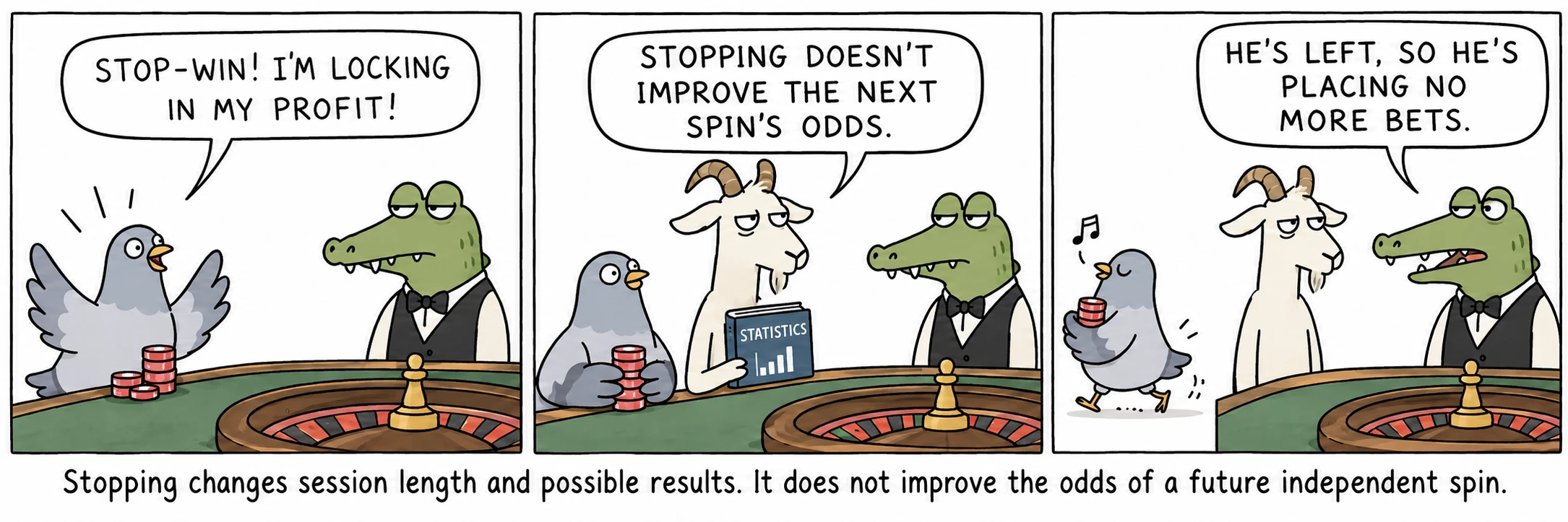
ꯂꯦꯞꯄꯅ ꯇꯔꯅꯑꯣꯚꯔ ꯍꯟꯊꯍꯜꯂꯤ꯫ ꯃꯁꯤꯅ ꯇꯧꯕ ꯄꯨꯝꯅꯃꯛ ꯃꯗꯨꯅꯤ, ꯑꯃꯁꯨꯡ ꯃꯗꯨ ꯃꯇꯤꯛ ꯆꯥꯏ꯫
ꯍꯧꯔꯛꯐꯃꯁꯤꯡ
- RouletteDoc꯫ ꯔꯨꯂꯦꯠ ꯊꯧꯔꯥꯡꯁꯤꯡꯒꯤ ꯄꯨꯝꯅꯃꯛ ꯌꯦꯡꯕ꯫
- Roulette77꯫ ꯔꯨꯂꯦꯠ ꯊꯧꯔꯥꯡꯁꯤꯡꯒꯤ ꯄꯨꯝꯅꯃꯛ ꯌꯦꯡꯕ꯫
- Ethier, S. N. The Doctrine of Chances: Probabilistic Aspects of Gambling.
- Epstein, R. A. The Theory of Gambling and Statistical Logic, 2nd ed.