ꯈꯣꯡꯊꯥꯡ ꯈꯣꯡꯊꯥꯡ: ꯐꯤꯕꯣꯅꯥꯆꯤꯒꯤ ꯀꯥꯛꯄ ꯑꯃꯥ
Follow $5 Fibonacci stakes through two completed attempts and a nine-loss run that reaches the table limit.

ꯌꯨꯅꯤꯠ ꯑꯃꯗ $5 ꯊꯝꯗꯨꯅ ꯁꯤꯃꯨꯂꯦꯠ ꯇꯧꯔꯕ ꯁ꯭ꯄꯤꯟ 90 ꯒꯤ ꯐꯤꯕꯣꯅꯥꯆꯤ ꯁꯦꯁꯟ ꯑꯃꯥ꯫ ꯁꯥꯏꯀꯜ ꯀꯨꯟ ꯂꯣꯏꯁꯤꯟꯗꯨꯅ ꯈꯨꯗꯤꯡꯗ $5 ꯐꯪꯈꯤ, ꯃꯥꯄꯟꯁꯨꯕ ꯇꯔꯝ ($170 ꯊꯝꯂꯕ ꯁꯦꯜ) ꯐꯥꯑꯣꯕ ꯆꯠꯈꯤꯕ ꯐꯠꯇꯕ ꯁ꯭ꯇ꯭ꯔꯤꯛ ꯑꯃꯅ ꯁꯦꯁꯟ ꯑꯗꯨ $340 ꯃꯥꯡꯍꯅꯈꯤ꯫ ꯑꯅꯤ ꯊꯥꯛꯄꯗꯒꯤ ꯇꯞꯅ ꯆꯠꯂꯤ, ꯇꯞꯅ ꯆꯠꯇꯕ ꯃꯇꯝ ꯑꯗꯨ ꯐꯥꯑꯣꯕ꯫
ꯁꯤꯛꯋꯦꯟꯁ ꯑꯗꯨꯗ ꯆꯠꯄ
ꯃꯥꯏꯊꯤꯕ ꯑꯃꯅ ꯈꯣꯡꯊꯥꯡ ꯑꯃꯥ ꯃꯃꯥꯡꯗ ꯆꯠꯍꯜꯂꯤ꯫ ꯃꯥꯏꯄꯥꯛꯄ ꯑꯃꯅ ꯈꯣꯡꯊꯥꯡ ꯑꯅꯤ ꯃꯇꯨꯡꯗ ꯍꯜꯂꯛꯍꯜꯂꯤ꯫
ꯊꯝꯂꯕ ꯁꯦꯜ ꯑꯃꯁꯨꯡ ꯃꯍꯩꯁꯤꯡ ꯑꯁꯤ ꯍꯧꯔꯛꯐꯃꯒꯤ ꯕꯦꯠꯀꯤ ꯌꯨꯅꯤꯠꯇꯅꯤ꯫
ꯊꯧꯔꯥꯡ
Bet on blackꯕꯦꯠꯑꯃꯨꯕꯑꯃꯨꯕ ꯃꯁꯤꯡ 18 ꯗ ꯊꯝꯕ ꯆꯞ ꯃꯥꯟꯅꯕ ꯕꯦꯠ꯫ ꯐ꯭ꯔꯦꯟꯆ: ꯅꯣꯌꯥꯔ꯫ꯃꯄꯨꯡ ꯄꯥꯕꯤꯌꯨ → on a standard single-zeroꯆꯛꯔꯖꯤꯔꯣꯆꯞ ꯃꯥꯟꯅꯕ, ꯗꯖꯟ ꯅꯠꯔꯒ ꯀꯂꯝ ꯕꯦꯠ ꯑꯃꯠꯇꯅ ꯀꯨꯞꯇꯕ ꯑꯁꯪꯕ ꯄꯣꯀꯦꯠ ꯑꯃꯈꯛꯇ; ꯍꯥꯎꯁ ꯑꯦꯖꯀꯤ ꯍꯧꯔꯀꯐꯝꯅꯤ꯫ ꯑꯇꯣꯞꯄ ꯃꯃꯤꯡ: ꯁꯤꯡꯒꯜ ꯖꯤꯔꯣ, 0꯫ꯃꯄꯨꯡ ꯄꯥꯕꯤꯌꯨ → wheel. Use stakes of $5, $5, $10, $15, $25, $40, $65, $105, $170, $275 and so on. Move one position right after a loss and two left after a win, never before the first position. Start with $1,000 and a $200 stake limit. Stop if the next required stake exceeds the limit or balance.
ꯁ꯭ꯄꯤꯟ 1–40
ꯁꯥꯏꯀꯜ ꯇꯔꯥꯑꯃꯥ ꯂꯣꯏꯁꯤꯅꯈꯤ, ꯈ꯭ꯕꯥꯏꯗꯒꯤ ꯁꯥꯡꯕ ꯑꯗꯨ ꯃꯉꯥꯁꯨꯕ ꯇꯔꯝ ($25) ꯐꯥꯑꯣꯕ ꯆꯠꯈꯤ꯫ ꯂꯣꯏꯁꯤꯅꯈꯤꯕ ꯁꯥꯏꯀꯜ ꯈꯨꯗꯤꯡꯅ ꯆꯨꯃꯅ $5 ꯀꯥꯟꯅꯈꯤ; ꯍꯤꯁꯥꯕ ꯊꯝꯕ ꯅꯨꯡꯉꯥꯏ ꯑꯃꯁꯨꯡ ꯊꯝꯂꯕ ꯁꯦꯜ ꯑꯄꯤꯛꯅ ꯂꯩꯈꯤ꯫ ꯃꯍꯩ +$55꯫ ꯀꯤꯕ ꯂꯧꯊꯣꯀꯈ꯭ꯔꯕ ꯃꯥꯔꯇꯤꯟꯒꯦꯜ ꯑꯃꯒꯨꯝ ꯐꯥꯑꯣꯏ꯫
ꯁ꯭ꯄꯤꯟ 41–70
ꯁ꯭ꯄꯤꯟ 60 ꯐꯥꯑꯣꯕꯗ ꯁꯥꯏꯀꯜ ꯃꯉꯥ ꯍꯦꯟꯅꯥ ꯂꯣꯏꯁꯤꯜꯂꯤ (+$25)꯫ ꯃꯇꯨꯡꯗ ꯂꯣꯏꯁꯤꯅꯗꯕ ꯁꯥꯏꯀꯜ ꯑꯗꯨ ꯂꯥꯀꯏ꯫ ꯃꯥꯏꯊꯤ ꯃꯥꯏꯊꯤ ꯃꯥꯏꯊꯤ ꯃꯥꯏꯊꯤ ꯃꯥꯏꯊꯤ ꯃꯥꯏꯊꯤ ꯃꯥꯏꯊꯤ ꯃꯥꯏꯄꯥꯛ ꯃꯥꯏꯊꯤ ꯃꯥꯏꯊꯤ: ꯊꯝꯂꯕ ꯁꯦꯜ 5, 5, 10, 15, 25, 40, 65 (ꯃꯥꯏꯊꯤꯕ ꯇꯔꯦꯠ, −$165), $105 ꯗ ꯃꯥꯏꯄꯥꯛꯄ ꯑꯃꯥ (+$105, ꯈꯣꯡꯊꯥꯡ ꯑꯅꯤ ꯍꯜꯂꯛꯇꯨꯅ $40), ꯃꯇꯨꯡꯗ $40 ꯑꯃꯁꯨꯡ $65 ꯗ ꯃꯥꯏꯊꯤꯕ ꯑꯅꯤ꯫ ꯍꯧꯖꯤꯛ ꯑꯩꯈꯣꯌ ꯅꯤꯄꯥꯟꯁꯨꯕ ꯇꯔꯃꯗ, $105 ꯗ ꯂꯩ, ꯁꯥꯏꯀꯜ ꯑꯁꯤꯗ −$165 ꯒ ꯂꯣꯌꯅꯅ, ꯑꯃꯁꯨꯡ ꯃꯊꯪꯒꯤ ꯃꯥꯏꯊꯤꯕꯅ $200 ꯒꯤ ꯇꯦꯕꯜꯒꯤ ꯉꯝꯈꯩꯇꯦꯕꯜꯇꯦꯕꯜꯒꯤ ꯉꯝꯈꯩꯌꯥꯍꯜꯂꯤꯕ ꯈ꯭ꯕꯥꯏꯗꯒꯤ ꯅꯦꯝꯕ ꯑꯃꯁꯨꯡ ꯈ꯭ꯕꯥꯏꯗꯒꯤ ꯋꯥꯡꯕ ꯕꯦꯠ꯫ ꯈ꯭ꯕꯥꯏꯗꯒꯤ ꯋꯥꯡꯕ ꯉꯝꯈꯩ ꯑꯗꯨꯅ ꯑꯅꯤ ꯊꯥꯛ ꯍꯦꯅꯒꯠꯍꯟꯕ ꯄ꯭ꯔꯣꯒ꯭ꯔꯦꯁꯅꯁꯤꯡ ꯊꯤꯡꯏ꯫ꯃꯄꯨꯡ ꯄꯥꯕꯤꯌꯨ →ꯒ ꯆꯥꯡꯗꯝꯅꯕꯗ $170 ꯗ ꯊꯥꯛꯀꯅꯤ꯫ ꯁꯔꯨꯛ ꯑꯁꯤꯒꯤ ꯃꯍꯩ −$140꯫
ꯁꯦꯟꯒꯤ ꯍꯤꯁꯥꯕ
The ledger totals $460 wagered and −$430 net, leaving $570 from a $1,000 starting balance. At each spin, the expected lossꯃꯦꯊꯃꯦꯇꯤꯛꯁꯃꯥꯡꯒꯗꯕ ꯁꯦꯜꯐꯪꯒꯗꯕ ꯃꯃꯂꯕꯨ ꯕꯦꯠ ꯊꯝꯂꯕ ꯁꯦꯜ ꯄꯨꯝꯅꯃꯛꯅ ꯃꯅꯥꯡꯕ; ꯁꯦꯁꯟ ꯅꯠꯔꯒ ꯃꯇꯝ ꯑꯃꯒꯤ ꯃꯅꯨꯡꯗ ꯃꯥꯡꯕ ꯑꯦꯚꯔꯦꯖ ꯁꯦꯜ꯫ꯃꯄꯨꯡ ꯄꯥꯕꯤꯌꯨ → under these standard single-zero rules is the stake divided by 37. Because later bets or stopping can depend on earlier results, expected session loss depends on expected total turnoverꯁꯦꯜꯇꯔꯅꯑꯣꯚꯔꯁꯦꯁꯟ ꯅꯠꯔꯒ ꯃꯇꯝ ꯑꯃꯒꯤ ꯃꯅꯨꯡꯗ ꯕꯦꯠ ꯊꯝꯂꯕ ꯁꯦꯜ ꯄꯨꯝꯅꯃꯛ, ꯑꯃꯨꯛ ꯍꯟꯅꯥ ꯊꯝꯂꯕ ꯃꯥꯏꯄꯥꯛꯇꯨꯅ ꯐꯪꯂꯕ ꯁꯦꯜꯁꯨ ꯌꯥꯎꯅ꯫ ꯑꯇꯣꯞꯄ ꯃꯃꯤꯡ: ꯍꯦꯟꯗꯜ, ꯑꯦꯛꯁꯟ꯫ꯃꯄꯨꯡ ꯄꯥꯕꯤꯌꯨ →. A single worked sequence does not establish the average session result.
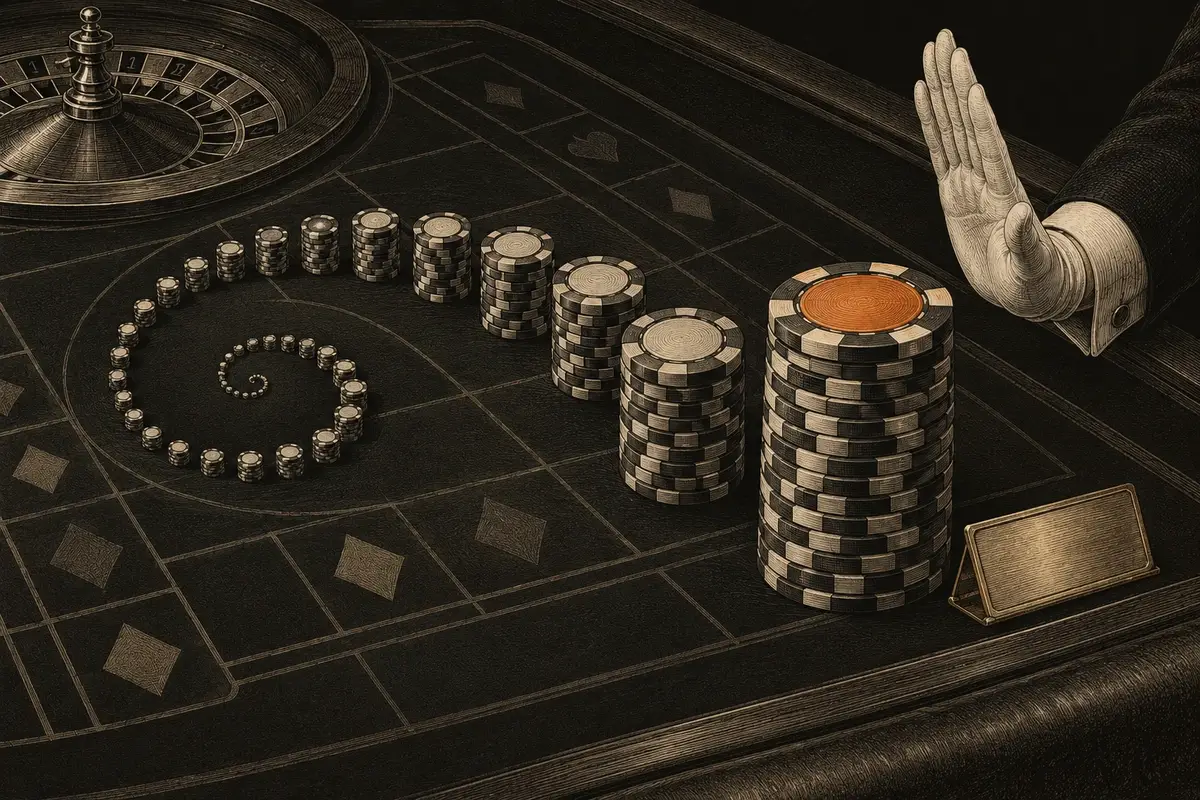
ꯁꯦꯁꯟ ꯑꯁꯤꯅ ꯎꯠꯂꯤꯕ
Fibonacciꯊꯧꯔꯥꯡꯐꯤꯕꯣꯅꯥꯆꯤ1, 1, 2, 3, 5, 8, 13… ꯁꯤꯛꯋꯦꯟꯁ ꯃꯇꯨꯡ ꯏꯟꯕ ꯄ꯭ꯔꯣꯒ꯭ꯔꯦꯁꯟ: ꯃꯥꯏꯊꯤꯔꯕꯥ ꯃꯇꯨꯡꯗ ꯈꯣꯡꯊꯥꯡ ꯑꯃꯥ ꯃꯃꯥꯡꯗ, ꯃꯥꯏꯄꯥꯛꯂꯕꯥ ꯃꯇꯨꯡꯗ ꯈꯣꯡꯊꯥꯡ ꯑꯅꯤ ꯃꯇꯨꯡꯗ꯫ꯃꯄꯨꯡ ꯄꯥꯕꯤꯌꯨ → stakes rise more slowly than Martingaleꯊꯧꯔꯥꯡꯃꯥꯔꯇꯤꯟꯒꯦꯜꯃꯥꯏꯊꯤꯕ ꯈꯨꯗꯤꯡꯒꯤ ꯃꯇꯨꯡꯗ ꯕꯦꯠ ꯑꯗꯨ ꯑꯅꯤ ꯊꯥꯛ ꯍꯦꯅꯒꯠꯍꯟꯕ ꯄ꯭ꯔꯣꯒ꯭ꯔꯦꯁꯟ꯫ ꯃꯁꯤꯅ ꯀꯔꯤ ꯇꯧꯕꯒꯦ ꯑꯃꯁꯨꯡ ꯀꯔꯤ ꯇꯧꯗꯕꯒꯦ ꯍꯥꯌꯕ ꯊꯧꯔꯥꯡꯒꯤ ꯁꯦꯛꯁꯅꯗ ꯌꯦꯡꯕꯤꯌꯨ꯫ꯃꯄꯨꯡ ꯄꯥꯕꯤꯌꯨ → stakes over the same loss count, but they still grow. The ratio of successive terms approaches 1.618; it is not exactly 1.6 at every step. A smaller required stake after a particular run is not a general guarantee of a safer or profitable session.
ꯋꯥꯍꯪꯁꯤꯡ
ꯇꯔꯝ n ꯗ ꯃꯥꯏꯄꯥꯛꯄꯅ ꯇꯔꯝ n−1 ꯑꯃꯁꯨꯡ n−2 ꯒꯤ ꯃꯥꯡꯈꯤꯕ ꯁꯦꯜ ꯍꯟꯅꯥ ꯄꯨꯔꯛꯂꯤ, ꯃꯈꯣꯌ ꯄꯨꯟꯁꯤꯟꯂꯕꯗ ꯃꯗꯨꯒ ꯃꯥꯟꯅꯩ꯫ ꯃꯊꯧ ꯑꯁꯤ ꯅꯤꯌꯝ ꯑꯁꯤꯒꯤꯗꯃꯛ ꯁꯦꯃꯈꯤꯕꯅꯤ꯫
The twelfth stake, $720. The first eleven are $5, $5, $10, $15, $25, $40, $65, $105, $170, $275 and $445. Your balance may become the binding limit earlier.
No. For example, after losing $5 and then winning $5, the result is still zero. Returning to the first position and reaching a positive target are different things.
ꯅꯣꯛꯅꯕꯒꯤ ꯀꯃꯤꯛ
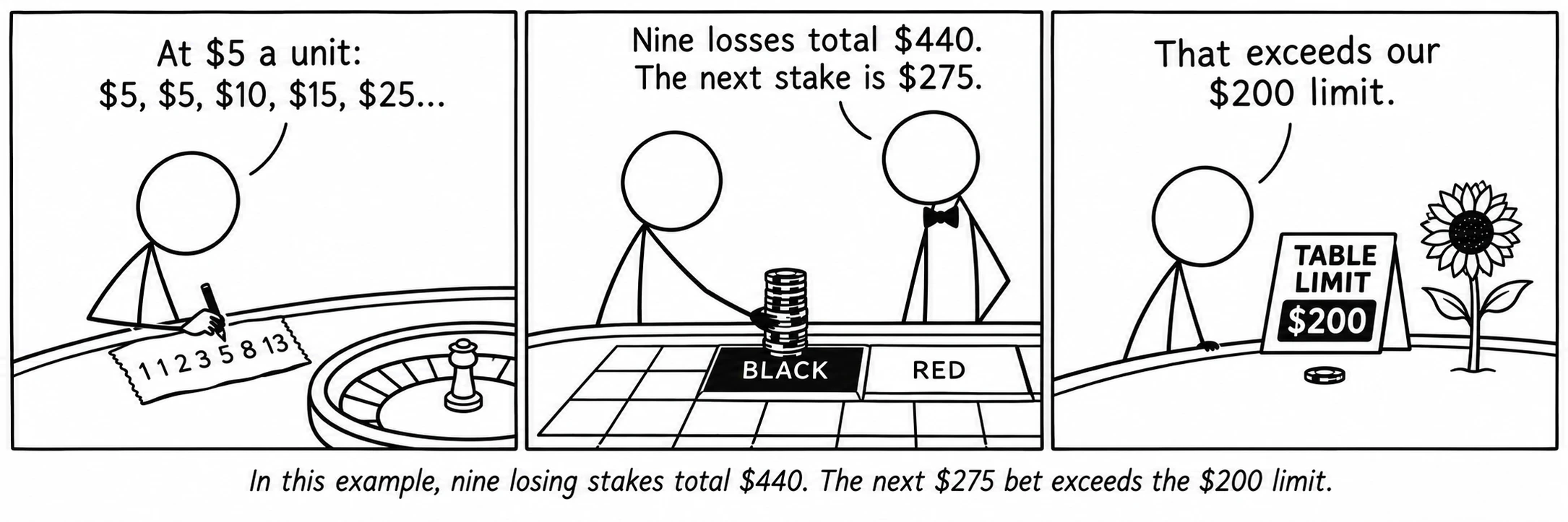
ꯒꯣꯜꯗꯦꯟ ꯔꯦꯁꯤꯑꯣ 1.618꯫ ꯍꯥꯎꯁ ꯑꯦꯖ ꯍꯧꯖꯤꯛꯁꯨ 2.70%꯫
ꯍꯧꯔꯛꯐꯃꯁꯤꯡ
- Ethier, S. N. The Doctrine of Chances: Probabilistic Aspects of Gambling.