ꯈꯣꯡꯊꯥꯡ ꯈꯣꯡꯊꯥꯡ: ꯑꯣꯁ꯭ꯀꯔꯒꯤ ꯒ꯭ꯔꯥꯏꯟꯗ
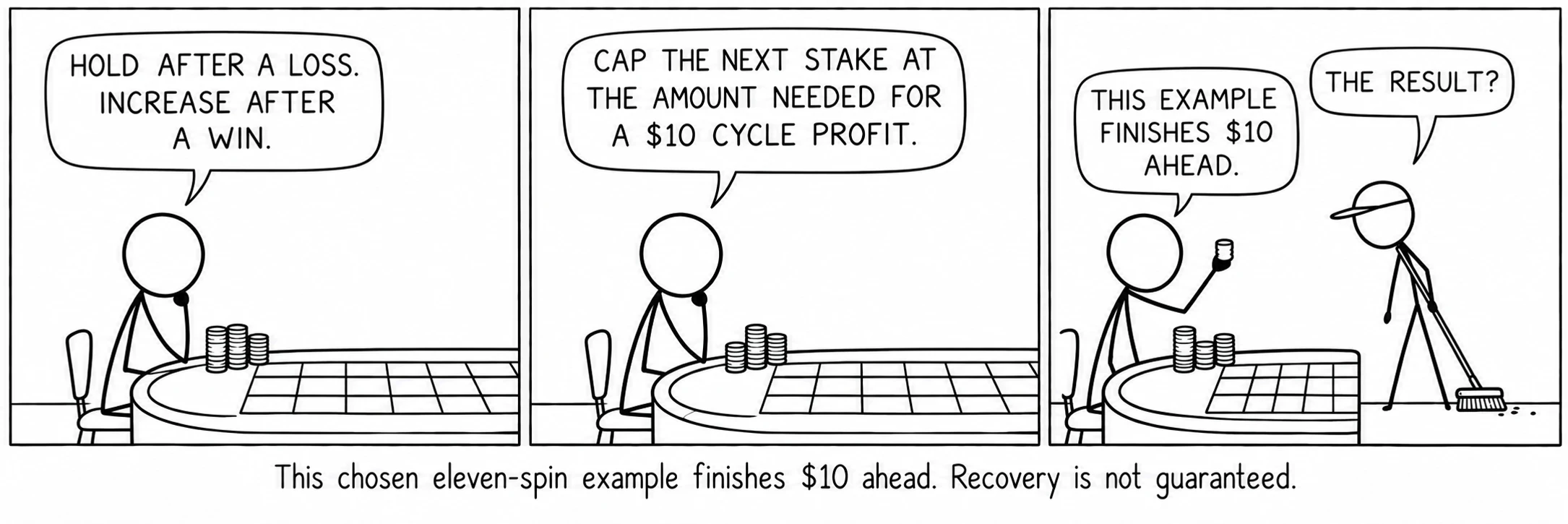
Hold the stake after a loss, increase it after a win, and aim to finish one unitꯁꯦꯜꯌꯨꯅꯤꯠꯁꯤꯁ꯭ꯇꯦꯝ ꯅꯠꯔꯒ ꯁꯥꯟꯅꯔꯤꯕ ꯑꯃꯅ ꯁꯤꯖꯤꯟꯅꯕ ꯃꯔꯨꯑꯣꯏꯕ ꯊꯝꯂꯕ ꯁꯦꯜ꯫ ꯄ꯭ꯔꯣꯒ꯭ꯔꯦꯁꯅꯁꯤꯡ ꯌꯨꯅꯤꯠꯇ ꯁꯟꯗꯣꯛꯂꯤ, ꯃꯔꯝ ꯑꯗꯨꯅ ꯃꯈꯣꯌ ꯀꯔꯤꯒꯨꯝꯕ ꯇꯦꯕꯜꯗ ꯆꯠꯂꯤ꯫ꯃꯄꯨꯡ ꯄꯥꯕꯤꯌꯨ → ahead. Follow an eleven-spin Oscar’s Grind cycle.
This constructed cycle wagers $190, falls $60 below its starting balance and finishes $10 ahead. Its largest stake is $30. The eventual recovery is part of this example, not a feature every cycle is guaranteed to share.
ꯁꯤꯁ꯭ꯇꯦꯝ ꯑꯗꯨꯗ ꯆꯠꯄ
ꯃꯥꯏꯊꯤꯕ ꯑꯃꯅ ꯊꯝꯂꯕ ꯁꯦꯜ ꯑꯗꯨꯃꯛ ꯊꯝꯂꯤ꯫ ꯃꯥꯏꯄꯥꯛꯄ ꯑꯃꯅ ꯌꯨꯅꯤꯠ ꯑꯃꯥ ꯍꯥꯄꯆꯤꯜꯂꯤ, ꯑꯗꯨꯕꯨ ꯁꯥꯏꯀꯜ ꯑꯗꯨꯅ +1 ꯌꯧꯅꯕ ꯃꯊꯧ ꯇꯥꯕꯗꯒꯤ ꯀꯩꯗꯧꯉꯩꯗꯁꯨ ꯍꯦꯟꯗꯦ꯫ +1ꯗ ꯑꯅꯧꯕ ꯁꯥꯏꯀꯜ ꯑꯃꯥ ꯍꯧꯏ꯫
ꯊꯝꯂꯕ ꯁꯦꯜ ꯑꯃꯁꯨꯡ ꯃꯍꯩꯁꯤꯡ ꯑꯁꯤ ꯍꯧꯔꯛꯐꯃꯒꯤ ꯕꯦꯠꯀꯤ ꯌꯨꯅꯤꯠꯇꯅꯤ꯫
ꯁꯦꯝꯕ ꯑꯁꯤꯅ ꯊꯝꯂꯕ ꯁꯦꯜ ꯑꯁꯤ ꯌꯨꯝꯐꯝ ꯌꯨꯅꯤꯠ ꯅꯤꯄꯥꯟꯗ ꯉꯝꯈꯩ ꯊꯝꯃꯤ꯫ ꯉꯝꯈꯩ ꯂꯩꯇꯕ ꯁꯤꯁ꯭ꯇꯦꯝ ꯑꯗꯨꯅ ꯍꯦꯟꯅꯥ ꯆꯥꯎꯕ ꯕꯦꯠꯁꯤꯡ ꯃꯊꯧ ꯇꯥꯕ ꯌꯥꯏ꯫
ꯊꯧꯔꯥꯡ
Bet $10 on blackꯕꯦꯠꯑꯃꯨꯕꯑꯃꯨꯕ ꯃꯁꯤꯡ 18 ꯗ ꯊꯝꯕ ꯆꯞ ꯃꯥꯟꯅꯕ ꯕꯦꯠ꯫ ꯐ꯭ꯔꯦꯟꯆ: ꯅꯣꯌꯥꯔ꯫ꯃꯄꯨꯡ ꯄꯥꯕꯤꯌꯨ → on a standard single-zeroꯆꯛꯔꯖꯤꯔꯣꯆꯞ ꯃꯥꯟꯅꯕ, ꯗꯖꯟ ꯅꯠꯔꯒ ꯀꯂꯝ ꯕꯦꯠ ꯑꯃꯠꯇꯅ ꯀꯨꯞꯇꯕ ꯑꯁꯪꯕ ꯄꯣꯀꯦꯠ ꯑꯃꯈꯛꯇ; ꯍꯥꯎꯁ ꯑꯦꯖꯀꯤ ꯍꯧꯔꯀꯐꯝꯅꯤ꯫ ꯑꯇꯣꯞꯄ ꯃꯃꯤꯡ: ꯁꯤꯡꯒꯜ ꯖꯤꯔꯣ, 0꯫ꯃꯄꯨꯡ ꯄꯥꯕꯤꯌꯨ → wheel. Hold the stake after a loss. After a win, increase it by $10, but cap the next stake at the amount needed to finish the cycle $10 ahead. Once that target is reached, a new cycle would start at $10. This example starts with $1,000 and a $500 stake limit.
ꯁ꯭ꯄꯤꯟ 1–30
ꯁꯥꯏꯀꯜ ꯃꯔꯤ ꯂꯣꯏꯁꯤꯅꯈꯤ꯫ ꯈ꯭ꯕꯥꯏꯗꯒꯤ ꯁꯥꯡꯕ ꯑꯗꯨ ꯁ꯭ꯄꯤꯟ ꯇꯔꯥꯑꯃꯥ ꯆꯠꯈꯤ: ꯃꯥꯏꯊꯤ ꯃꯥꯏꯊꯤ ꯃꯥꯏꯊꯤ ($10 ꯗ −$30), ꯃꯥꯏꯄꯥꯛ (−$20, ꯊꯝꯂꯕ ꯁꯦꯜ $20), ꯃꯥꯏꯊꯤ ꯃꯥꯏꯊꯤ (−$60), ꯃꯥꯏꯄꯥꯛ (−$40, ꯊꯝꯂꯕ ꯁꯦꯜ $30), ꯃꯥꯏꯄꯥꯛ (−$10; $40 ꯐꯥꯑꯣꯕ ꯍꯥꯄꯆꯤꯟꯂꯕꯗꯤ ꯃꯊꯛꯇ ꯆꯠꯀꯅꯤ, ꯃꯔꯝ ꯑꯗꯨꯅ ꯊꯝꯂꯕ ꯁꯦꯜ $20), ꯃꯥꯏꯊꯤ (−$30), ꯃꯥꯏꯄꯥꯛ (−$10), ꯃꯥꯏꯄꯥꯛ: ꯁꯥꯏꯀꯜ +$10 ꯗ, ꯂꯣꯏꯁꯤꯅꯈꯤ꯫ ꯁ꯭ꯄꯤꯟ 30 ꯒꯤ ꯃꯇꯨꯡꯗ ꯃꯍꯩ +$40꯫ ꯊꯝꯂꯕ ꯁꯦꯜ ꯀꯩꯗꯧꯉꯩꯗꯁꯨ $30 ꯒꯤ ꯃꯊꯛꯇ ꯆꯠꯈꯤꯗꯦ꯫ ꯃꯁꯤ ꯁꯥꯏꯠ ꯑꯁꯤꯗ ꯂꯩꯕ ꯈ꯭ꯕꯥꯏꯗꯒꯤ ꯊꯋꯥꯏ ꯌꯥꯎꯍꯟꯗꯕ ꯁꯤꯁ꯭ꯇꯦꯝꯅꯤ, ꯃꯁꯤ ꯊꯥꯒꯠꯄꯒꯤ ꯋꯥꯍꯩꯅꯤ꯫
ꯁ꯭ꯄꯤꯟ 31–71
ꯁꯥꯡꯕ ꯁꯥꯏꯀꯜ꯫ ꯑꯍꯥꯅꯕ ꯁ꯭ꯄꯤꯟ ꯇꯔꯥꯗ ꯃꯥꯏꯊꯤꯕ ꯅꯤꯄꯥꯟꯅ −$50 ꯇꯨꯡꯈꯤ꯫ ꯃꯥꯏꯄꯥꯛꯄꯁꯤꯡꯅ ꯊꯝꯂꯕ ꯁꯦꯜ $20, $30, $40, $50 ꯐꯥꯑꯣꯕ ꯍꯦꯟꯒꯠꯍꯅꯈꯤ; ꯊꯝꯂꯕ ꯁꯦꯜ ꯑꯗꯨꯁꯤꯡꯗ ꯃꯥꯏꯊꯤꯕꯁꯤꯡꯅ ꯍꯦꯟꯅꯥ ꯇꯨꯡꯈꯤ, ꯁ꯭ꯄꯤꯟ 52 ꯗ −$230 ꯐꯥꯑꯣꯕ꯫ ꯃꯐꯝ ꯑꯗꯨꯗꯒꯤ ꯐꯕ ꯁꯔꯨꯛ ꯑꯃꯥ, $40–$50 ꯒꯤ ꯊꯝꯂꯕ ꯁꯦꯜꯗ ꯁ꯭ꯄꯤꯟ ꯇꯔꯥꯇꯔꯨꯛꯇ ꯃꯥꯏꯄꯥꯛꯄ ꯇꯔꯥꯑꯃꯥ, ꯍꯟꯅꯥ ꯀꯥꯈꯤ, ꯑꯃꯁꯨꯡ ꯁꯥꯏꯀꯜ ꯑꯗꯨ ꯁ꯭ꯄꯤꯟ 71 ꯗ +$10 ꯒ ꯂꯣꯌꯅꯅ ꯂꯣꯏꯁꯤꯅꯈꯤ꯫ ꯁ꯭ꯄꯤꯟ 41, ꯈ꯭ꯕꯥꯏꯗꯒꯤ ꯐꯠꯇꯕ ꯃꯐꯃꯗ $230 ꯈꯨꯗꯣꯡꯊꯤꯕꯗ ꯂꯩꯈꯤ, ꯌꯨꯅꯤꯠ ꯑꯃꯥ ꯐꯪꯈꯤ꯫
ꯁꯦꯟꯒꯤ ꯍꯤꯁꯥꯕ
The ledger totals $190 wagered and +$10 net, leaving $1,010 from a $1,000 starting balance. At each spin, the expected lossꯃꯦꯊꯃꯦꯇꯤꯛꯁꯃꯥꯡꯒꯗꯕ ꯁꯦꯜꯐꯪꯒꯗꯕ ꯃꯃꯂꯕꯨ ꯕꯦꯠ ꯊꯝꯂꯕ ꯁꯦꯜ ꯄꯨꯝꯅꯃꯛꯅ ꯃꯅꯥꯡꯕ; ꯁꯦꯁꯟ ꯅꯠꯔꯒ ꯃꯇꯝ ꯑꯃꯒꯤ ꯃꯅꯨꯡꯗ ꯃꯥꯡꯕ ꯑꯦꯚꯔꯦꯖ ꯁꯦꯜ꯫ꯃꯄꯨꯡ ꯄꯥꯕꯤꯌꯨ → under these standard single-zero rules is the stake divided by 37. Because later bets or stopping can depend on earlier results, expected session loss depends on expected total turnoverꯁꯦꯜꯇꯔꯅꯑꯣꯚꯔꯁꯦꯁꯟ ꯅꯠꯔꯒ ꯃꯇꯝ ꯑꯃꯒꯤ ꯃꯅꯨꯡꯗ ꯕꯦꯠ ꯊꯝꯂꯕ ꯁꯦꯜ ꯄꯨꯝꯅꯃꯛ, ꯑꯃꯨꯛ ꯍꯟꯅꯥ ꯊꯝꯂꯕ ꯃꯥꯏꯄꯥꯛꯇꯨꯅ ꯐꯪꯂꯕ ꯁꯦꯜꯁꯨ ꯌꯥꯎꯅ꯫ ꯑꯇꯣꯞꯄ ꯃꯃꯤꯡ: ꯍꯦꯟꯗꯜ, ꯑꯦꯛꯁꯟ꯫ꯃꯄꯨꯡ ꯄꯥꯕꯤꯌꯨ →. A single worked sequence does not establish the average session result.
ꯁꯦꯁꯟ ꯑꯁꯤꯅ ꯎꯠꯂꯤꯕ
Holding a stake during consecutive losses prevents doubling within that run. It does not cap the total loss: repeated losses still drain the balance, and later losses can occur at higher stakes. A cycle need not close before you reach a time, balance or table limitꯇꯦꯕꯜꯇꯦꯕꯜꯒꯤ ꯉꯝꯈꯩꯌꯥꯍꯜꯂꯤꯕ ꯈ꯭ꯕꯥꯏꯗꯒꯤ ꯅꯦꯝꯕ ꯑꯃꯁꯨꯡ ꯈ꯭ꯕꯥꯏꯗꯒꯤ ꯋꯥꯡꯕ ꯕꯦꯠ꯫ ꯈ꯭ꯕꯥꯏꯗꯒꯤ ꯋꯥꯡꯕ ꯉꯝꯈꯩ ꯑꯗꯨꯅ ꯑꯅꯤ ꯊꯥꯛ ꯍꯦꯅꯒꯠꯍꯟꯕ ꯄ꯭ꯔꯣꯒ꯭ꯔꯦꯁꯅꯁꯤꯡ ꯊꯤꯡꯏ꯫ꯃꯄꯨꯡ ꯄꯥꯕꯤꯌꯨ →.
ꯋꯥꯍꯪꯁꯤꯡ
ꯑꯦꯂꯟ ꯋꯤꯜꯁꯅꯅ The Casino Gambler’s Guide (1965) ꯗ ꯄꯥꯎꯇꯥꯛ ꯄꯤꯈꯤꯕ ꯀ꯭ꯔꯦꯞꯁ ꯁꯥꯟꯅꯔꯤꯕ ꯑꯃꯥ꯫ ꯁꯤꯁ꯭ꯇꯦꯝ ꯑꯁꯤ ꯃꯃꯤꯡ ꯑꯗꯨꯗꯒꯤ ꯍꯦꯟꯅꯥ ꯑꯔꯤꯕꯅꯤ꯫
The rule aims for exactly one unit of cycle profit. If the cycle stands at −$10, a $20 win reaches the +$10 target; a larger bet would overshoot it.
Set your own time and loss limits before starting. The staking rule does not supply a guaranteed recovery or a deadline for one.
ꯅꯣꯛꯅꯕꯒꯤ ꯀꯃꯤꯛ
2.70% ꯃꯥꯡꯅꯕꯒꯤ ꯈ꯭ꯕꯥꯏꯗꯒꯤ ꯇꯞꯅ ꯆꯠꯄ ꯃꯑꯣꯡ꯫ ꯈ꯭ꯕꯥꯏꯗꯒꯤ ꯅꯤꯡꯊꯤꯅ ꯆꯠꯄꯁꯨ꯫
ꯍꯧꯔꯛꯐꯃꯁꯤꯡ
- Wilson, A. The Casino Gambler’s Guide.
- Ethier, S. N. The Doctrine of Chances: Probabilistic Aspects of Gambling.